The SMB Guide to Choosing an LMS: Why Simplicity Wins and Content is King
Discover the best LMS for SMBs in 2026, focusing on easy setup, engaging content, and AI-powered training solutions.
.png)


Is your LMS actually a "Speed Bump" for your growth?
You've decided your team needs training. Maybe onboarding is taking too long, compliance requirements are piling up, or you're simply tired of repeating the same information in endless Slack messages. The logical next step? Find a Learning Management System (LMS).
Then reality hits.
The enterprise LMS market feels like it was built for Fortune 500 companies, not businesses like yours. You're drowning in feature lists that read like rocket science manuals, sales cycles that stretch for months, and price tags that require board approval. The platforms promise everything but deliver complexity that demands a dedicated IT team just to get started.
Here's what most SMBs discover the hard way: the LMS itself isn't your biggest challenge. Slow deployment timelines, convoluted interfaces, and feature bloat are just symptoms of a deeper problem—the industry has been selling you the wrong solution.
The real secret weapon? Content.
This guide cuts through the noise to help you choose an LMS that actually fits your reality—one that's simple, fast, and gets out of your way so you can focus on what truly drives results: creating engaging training content your team will actually use. We'll walk you through practical LMS recommendations built for SMBs, show you why content quality trumps platform complexity, and reveal how AI tools are democratizing professional training creation for businesses without Hollywood budgets.
Understanding the Unique Needs of SMBs in LMS Selection
Small businesses operate in a fundamentally different reality than their enterprise counterparts. When you're running a company with 10 to 250 employees, every software decision carries weight—and choosing an LMS for SMB operations requires a completely different lens than what works for Fortune 500 companies.
Growth-Driven Scalability Without the Enterprise Price Tag
Your team might be 15 people today and 45 people next year. A scalable LMS for startups needs to flex with your hiring velocity without triggering massive price jumps or requiring a complete platform migration. The right system grows seamlessly from onboarding your first remote hire to training an entire department, maintaining the same intuitive experience regardless of user count.
Key scalability factors for small teams:
- Per-user pricing that makes sense at 20 users and 200 users
- Ability to add courses and content without technical overhead
- Administrative controls that don't require a dedicated L&D team
- Integration capabilities that expand as your tech stack matures
The Budget Reality: Affordable Doesn't Mean Compromising
Most SMBs allocate between $2,000 to $10,000 annually for their entire training infrastructure. This budget constraint doesn't reflect a lack of commitment to employee development—it reflects smart resource allocation. An affordable learning management system should deliver professional-grade training experiences without the enterprise bloat that drives costs into five figures.
The sweet spot? Platforms offering rich feature sets at $3-8 per user per month, with transparent pricing and no hidden implementation fees.
Cloud-Based Architecture for Today's Distributed Workforce
A cloud-based LMS isn't just a nice-to-have feature—it's the foundation for training modern small teams. Your sales rep in Austin, customer success manager in Portland, and warehouse team in Ohio all need instant access to the same training materials. Cloud infrastructure eliminates IT headaches, enables automatic updates, and ensures your team can learn from any device, anywhere, without VPN configurations or server maintenance. Leveraging top cloud cost optimization tools can help businesses manage expenses while maintaining a robust, scalable LMS infrastructure across distributed teams.
Simple, Fast, and Easy: Top LMS Recommendations for SMBs in 2025
The right easy-to-use LMS can transform your training program from a daunting project into a manageable system that actually gets used. The platforms below have earned their reputation as corporate training software for SMBs by prioritizing speed, simplicity, and practical features that matter to growing businesses.
TalentLMS: The Versatile Workhorse
TalentLMS stands out as a fast setup training platform that gets you operational in hours, not weeks. The interface feels intuitive from day one—no technical background required.
Key features for SMBs:
- Pre-built course library with hundreds of ready-to-use training modules covering compliance, soft skills, and technical topics
- Customizable branding that makes the platform feel like an extension of your company
- Automated notifications and reminders that reduce administrative overhead
- Gamification elements including points, badges, and leaderboards to boost engagement
- Pricing that scales with your team size, starting at accessible entry points for small businesses
The platform shines when you need to mix and match your own content with off-the-shelf courses, making it ideal for businesses building their training library incrementally.
Trainual: Purpose-Built for Process Documentation
Trainual takes a different approach as simple onboarding software that doubles as your company playbook. Think of it as the intersection between an LMS and a knowledge management system.
Key features for SMBs:
- Process documentation templates that guide you through capturing tribal knowledge
- Role-based training paths that automatically assign relevant content to new hires
- Testing and accountability features that ensure employees actually absorb critical information
- Chrome extension for quick access to procedures while working
- Delegation tracking to monitor who's responsible for what
This platform excels when your primary goal is standardizing operations and creating repeatable onboarding experiences. Companies with 5-50 employees find particular value in Trainual's structured approach to capturing "how we do things here." For those interested in understanding more about effective process documentation, Trainual offers invaluable resources.
Sana: AI-Native Learning Platform
Sana represents the new generation of learning technology, built from the ground up with artificial intelligence at its core.
Key features for SMBs:
- AI-powered content generation that transforms existing documents, presentations, and videos into structured courses
- Intelligent search that helps employees find answers across all your training materials instantly
- Automated course creation from URLs, PDFs, or even meeting recordings
- Live session integration that blends synchronous and asynchronous learning
- Personalized learning paths that adapt based on individual progress and knowledge gaps
Sana's standout capability is dramatically reducing the time investment required to create professional training content. A 50-page employee handbook can become an interactive course in minutes rather than days, making it particularly valuable for resource-constrained teams looking to leverage AI for efficiency gains.
Why Content is King in Effective Training Programs for Small Businesses
Choosing the Right LMS: Why Content is Your Real Secret Weapon
Here's the hard truth: the fanciest LMS platform in the world won't save a training program built on boring, irrelevant content. Think of your LMS as a delivery vehicle—it can be sleek and efficient, but if you're delivering stale goods, nobody's going to care.
Content quality in training directly impacts whether your employees actually learn and apply new skills. When training materials resonate with real workplace scenarios, employees see immediate value. They're not just checking boxes to complete a course; they're gaining tools they can use tomorrow morning.
For SMBs competing for talent and trying to scale quickly, this matters even more. You can't afford to waste employee time on training that doesn't stick. Every minute spent in a training module should translate to improved performance, reduced errors, or faster onboarding.
The Microlearning Advantage for Time-Strapped Teams
Bite-sized learning content has become the gold standard for modern training, especially in small business environments where employees wear multiple hats. A 45-minute course on compliance procedures? That's getting postponed indefinitely. A 5-minute module on handling customer complaints? That fits between meetings.
Engaging training materials for SMBs should follow these principles:
- Focus on one concept per module — Teach password security separately from phishing awareness
- Keep videos under 7 minutes — Attention spans are real, and your sales team has calls to make
- Make it immediately applicable — "Here's how to update the CRM after a client call" beats abstract theory every time
- Use real examples from your business — Generic stock scenarios don't resonate like actual situations your team faces
The beauty of microlearning? Employees can consume it on their phones during a coffee break, revisit specific topics when they need a refresher, and actually retain the information because it's focused and relevant.
Using AI to Boost Content Creation for SMB Training Programs
Creating professional training content used to be a complicated process that required specialized experts and a lot of time. But now, thanks to AI-powered tools, it's much easier and faster.
How AI Can Help You Create Training Content
With the help of AI, you can now create training materials without needing a team of experts. Here's how it works:
- Text Conversion with ChatGPT or Claude: These AI models can take long sections of text, like an employee handbook, and convert them into shorter, more engaging scripts for microlearning. This saves you time and ensures that the content is tailored to your needs.
- Video Generation with HeyGen or Synthesia: Once you have the scripts ready, you can use video generation platforms to bring them to life. These platforms allow you to create videos with AI avatars or presenters, eliminating the need for on-camera appearances by subject matter experts.
- Cost Savings: Traditional video production can be expensive, costing anywhere from $5,000 to $15,000 per training module. In contrast, AI video tools offer subscription plans starting at around $30 to $120 per month, allowing you to produce unlimited content at a fraction of the cost.
A Step-by-Step Workflow for SMBs
Here's a practical workflow that resource-strapped small and medium-sized businesses (SMBs) can follow:
- Extract key information from existing documents, standard operating procedures (SOPs), or recorded meetings.
- Use ChatGPT or Claude to structure this information into microlearning scripts with clear learning objectives.
- Feed these scripts into HeyGen or Synthesia to generate professional video content.
- Review and make any necessary tweaks before uploading the final videos to your learning management system (LMS).
By leveraging AI technology in this way, SMBs can create high-quality training videos without breaking the bank or sacrificing time.
Interactive Video Trend: Engaging Learners with Hotspots & Branching Scenarios
Static training videos are quickly becoming relics of the past. The interactive video training trend is reshaping how SMBs approach employee development by transforming passive viewing experiences into active learning opportunities. When employees can click, choose, and explore content at their own pace, retention rates soar and engagement metrics tell a completely different story.
Hotspots: Making Training Videos Interactive
Hotspots are clickable parts of a video that reveal additional information, quizzes, or resources. They turn standard training footage into dynamic learning experiences. Here are a couple of examples:
Picture a customer service training video where learners click on different parts of a phone screen to explore various software features, or a safety training module where clicking on equipment reveals proper usage protocols.
These interactive elements keep employees mentally engaged rather than letting them zone out during a 10-minute presentation.
Branching Scenarios: Personalized Learning Paths
Branching scenarios in eLearning take this concept even further by creating "choose your own adventure" style training paths. Here's how it works:
- An employee watches a scenario unfold
- At a critical moment, they make a decision
- The video branches to show the consequences of that choice
A sales rep might choose between different objection-handling techniques and immediately see how each approach plays out with a virtual customer. This type of experiential learning builds decision-making skills in a risk-free environment.
No Technical Skills Required
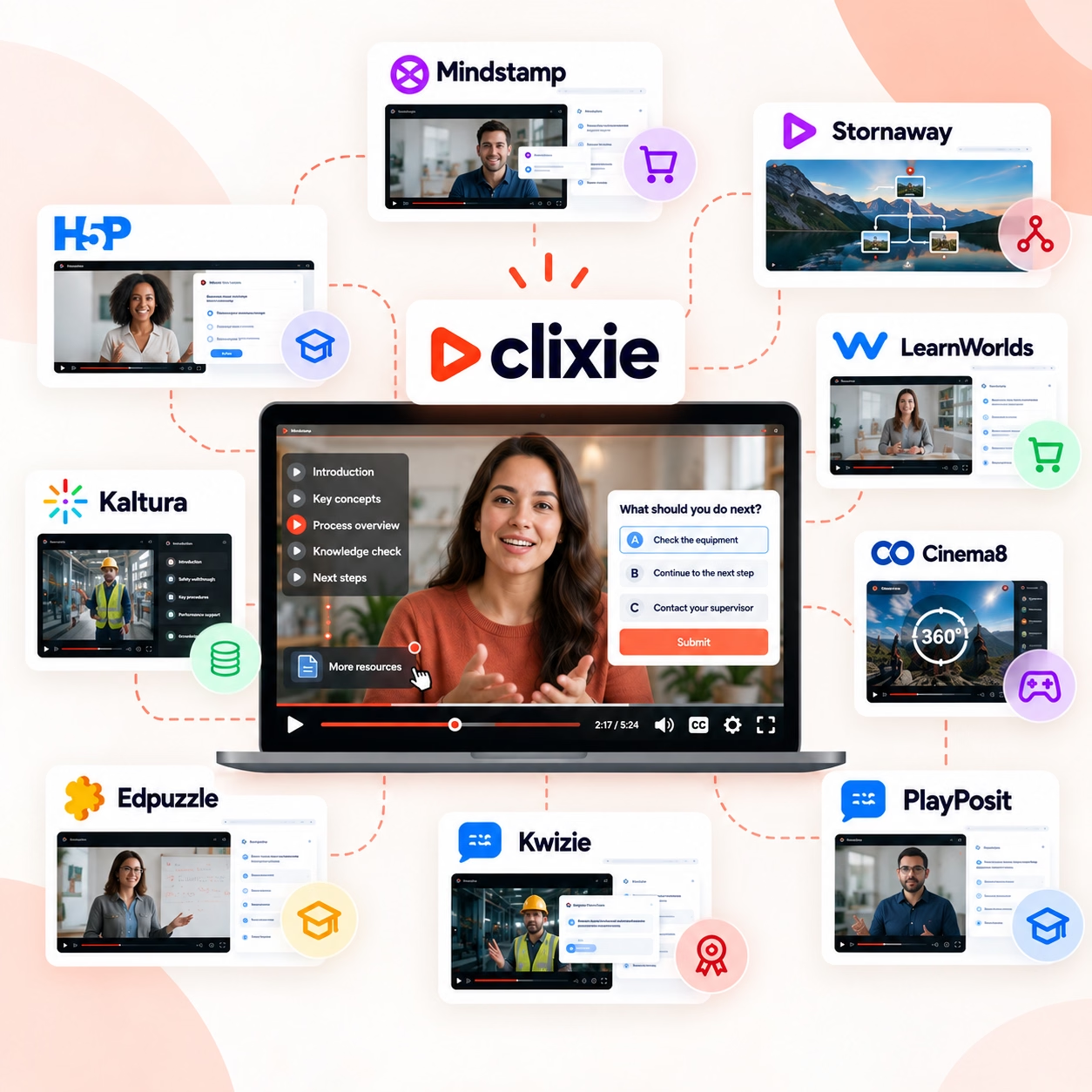
The best news? You don't need a video production team or coding expertise to create these experiences. Mindstamp and H5P interactive videos are no-code tools specifically designed for non-technical users. Both platforms let you upload existing videos and layer on interactive elements through simple drag-and-drop interfaces:
- Mindstamp excels at adding clickable hotspots, knowledge checks, and lead capture forms directly into your videos
- H5P offers a free, open-source option that integrates seamlessly with most LMS platforms and includes branching scenario templates
These tools democratize sophisticated training techniques that were once exclusive to companies with six-figure L&D budgets. Your team can create professional interactive video content in hours rather than weeks.
Lean Launch Plan for SMBs Implementing an LMS in Four Weeks
The path from decision to deployment doesn't need to drag on for months. Small business LMS implementation thrives on momentum, not perfection. This lean LMS launch plan SMBs can execute in just four weeks transforms the overwhelming process into manageable sprints.
Week 1: Audit and Organize
Start by gathering what you already have. Most SMBs discover they possess more training materials than they realized—scattered across email threads, shared drives, and individual computers. Document your existing processes, onboarding checklists, and any informal training guides your team currently uses. This isn't about creating polished content yet; it's about understanding your baseline.
Week 2: Platform Setup and Structure
Launch your TalentLMS trial onboarding or set up your chosen platform's basic framework. Create your course categories, user groups, and learning paths. Keep the structure simple: think "Sales Basics," "Product Knowledge," and "Company Culture" rather than complex hierarchies. Upload 2-3 of your most critical training documents, even if they're just PDFs or simple videos. The goal is getting comfortable with the interface, not building a content empire.
Week 3: Content Conversion Sprint
Transform your audit findings into bite-sized learning modules. Use AI tools to convert dense documents into conversational scripts. These tools can dramatically accelerate the content creation phase. Create 5-10 short lessons (5-7 minutes each) covering your most urgent training needs. This is where choosing the right LMS matters—platforms with built-in content creation tools dramatically accelerate this phase.
Week 4: Pilot and Refine
Select 5-8 employees representing different roles and learning styles. Run your Trainual pilot course feedback sessions or equivalent testing with your chosen platform. Gather specific input: Which lessons felt too long? Where did they get confused? What questions remained unanswered? Use this real-world data to adjust before company-wide rollout.
Incorporating elements of conversational learning during the content conversion phase can enhance engagement and retention rates, making the training process more effective overall.
Checklist for SMB Owners Evaluating Their LMS Needs Before Making a Decision (with 3 Do's and 3 Don'ts)
Before signing any contracts or committing your budget, use this SMB LMS evaluation checklist to cut through the marketing noise and focus on what actually matters for your business.
Essential Evaluation Criteria
Ease of Use: Can your team start creating courses without watching hours of tutorial videos? Test the platform yourself—if you're confused after 15 minutes, your employees will be too.
Setup Speed: How quickly can you go from signup to launching your first course? The best platforms for SMBs get you operational in days, not months.
Scalability Potential: Does the pricing model grow reasonably with your team? Check if adding 50 more users doubles your costs or increases them incrementally.
Mobile Compatibility: Your field technicians and remote workers need mobile access. Verify that the mobile experience isn't just an afterthought—test it on actual phones, not just responsive desktop browsers.
Affordability: Look beyond the monthly fee. Factor in implementation costs, content creation tools, and whether you'll need to hire consultants.
3 Critical Do's
- Do request a hands-on trial with your actual content loaded in
- Do involve end-users in the testing process—their feedback matters more than feature lists
- Do verify integration capabilities with your existing tools (Slack, Zoom, HR systems)
3 Dangerous Don'ts
- Don't choose a platform based solely on brand recognition or enterprise features you'll never use
- Don’t skip reading the contract terms — or consider the best contract management software to help compare and track vendor agreements before committing.
- Don't assume "more features" equals "better fit"—complexity kills adoption in small teams
Conclusion
Choosing the Right LMS: Why Content is Your Real Secret Weapon
The platform you select matters less than what you put inside it. You've seen the checklist, explored the tools, and learned about AI-powered shortcuts that make professional training accessible. Now comes the most important step: start internal process documentation SMBs need to build a foundation for lasting training success.
Before you sign any contract or schedule another demo, grab a notebook (digital or physical) and capture how your team actually works:
- Record the questions new hires ask most frequently
- Document the workarounds your top performers use
- Screenshot the tools and dashboards employees interact with daily
- Note the mistakes that cost time or money when they happen
This raw material becomes your training gold. The companies that win with LMS implementation aren't those with the fanciest platform—they're the ones who know exactly what knowledge needs to transfer from veteran employees to new team members.
Your content strategy drives engagement. Your documented processes create relevance. The LMS simply delivers both at scale.
Start documenting today. Pick one critical process. Capture it in writing. You're already building the training program that will transform how your business grows.
FAQs (Frequently Asked Questions)
What are the common challenges SMBs face when choosing an LMS?
Small and medium-sized businesses (SMBs) often encounter challenges such as LMS complexity, slow deployment, and balancing affordability with quality. These pain points can hinder effective training program implementation if not addressed properly.
Why is content considered the real secret weapon in selecting the right LMS for SMBs?
Content quality plays a critical role in training effectiveness for SMBs. Engaging, relevant, and bite-sized learning materials drive higher learner engagement and retention, making content the key factor in maximizing the benefits of any LMS platform.
Which LMS platforms are recommended for SMBs in 2025 for simple and fast deployment?
Top LMS recommendations tailored for SMBs include TalentLMS, Trainual, and Sana. These platforms offer easy-to-use interfaces, fast setup processes, AI-powered content creation tools, and focus on smooth onboarding experiences ideal for small teams.
How can AI tools enhance content creation for SMB training programs?
AI-assisted content creation tools like ChatGPT and Claude enable SMBs to efficiently convert existing text into engaging microlearning scripts. Additionally, AI video generation platforms such as HeyGen and Synthesia help create professional training videos without incurring heavy production costs.
What interactive video features can SMBs use to increase learner engagement?
SMBs can leverage interactive video elements like hotspots—clickable parts within videos—and branching scenarios to encourage active participation. No-code tools such as Mindstamp and H5P make it easy to add these engaging layers to training videos without technical expertise.
What steps should SMBs follow to implement an LMS effectively within four weeks?
A lean launch plan involves auditing existing training materials, selecting a suitable LMS platform, piloting courses with a small group of employees, gathering feedback, and iterating accordingly. This structured approach ensures timely deployment while maintaining training quality.
.png)
.png)