


How AI is Rewriting the Job Application Process: A New Era for Hiring
Explore how AI transforms hiring with smart tools for resumes, interviews, career guidance, and bias-free recruitment.


A New Era for Hiring
AI has fundamentally changed the way people apply for jobs and how employers hire. Now, algorithms can quickly scan thousands of résumés, AI can create personalized cover letters, and machine learning can predict which candidates will do well even before the first interview.
This change isn’t just about doing things faster—it’s about being more accurate, handling large numbers of applicants, and making the process easier for everyone.
- Job seekers can use tools to improve their applications so they get past automated systems.
- Recruiters can find the best candidates from huge talent pools without personal bias getting in the way.
Instead of just sending out a résumé and waiting, both sides now use smart technology to make better decisions more quickly. AI’s impact goes beyond individual job applications; it’s creating new types of jobs (like machine learning engineers and AI ethicists) while also automating routine work across many fields.
As companies expand their talent searches across borders, AI tools become even more essential. These systems not only streamline the process of sifting through vast pools of global applicants but also ensure that organizations can assess candidates from different cultures and backgrounds with consistency and fairness. In a world where remote work and international teams are becoming the norm, AI is pivotal in reshaping how global hiring processes are managed, from sourcing talent to onboarding. Tools like reliable global EOR platforms help companies hire employees in foreign countries without setting up a local entity, ensuring compliance with local laws. Additionally, global recruitment platforms integrate AI to further optimize hiring workflows, enabling businesses to efficiently manage a diverse, international workforce.
To succeed now, you need adaptability, critical thinking, and continuous learning.
The Role of AI Technologies in Modern Recruitment
Recruitment has entered a new technological era where several distinct AI systems work together to transform how companies identify, evaluate, and hire talent. Understanding these technologies reveals how dramatically the hiring landscape has shifted from traditional methods.
1. Machine Learning Algorithms (ML)
ML algorithms form the backbone of modern recruitment platforms. These systems analyze thousands of historical hiring decisions, performance reviews, and employee success metrics to identify patterns that predict candidate success. The technology continuously learns from past hiring outcomes to refine its candidate recommendations.
2. Natural Language Processing (NLP)
NLP revolutionizes how recruitment systems interpret human communication. This technology enables software to read and comprehend résumés, cover letters, and job descriptions with a nuanced understanding.
- NLP algorithms parse complex industry terminology and recognize equivalent skills across different job titles.
- These tools also analyze job descriptions to ensure clarity and detect potentially biased language.
3. Generative AI Tools (GenAI)
Generative AI has emerged as a powerful assistant for both job seekers and recruiters, creating customized content based on specific inputs and requirements. Much like how content creators now make AI videos in minutes with a video generator, applicants can use GenAI tools to instantly create customized résumés and cover letters.
- Job seekers use GenAI to draft compelling cover letters, optimize résumé bullet points for maximum impact, and generate strong interview responses.
- The technology adapts tone, style, and content, producing professional-quality materials in minutes rather than hours.
4. Computer Vision and Voice Analysis
These technologies introduce objective assessment methods for evaluating soft skills and cultural fit during video interviews.
- Computer Vision systems analyze facial expressions, body language, and presentation skills, providing standardized metrics that reduce subjective bias.
- Voice analysis examines speech patterns, confidence levels, and communication clarity.
Benefits of AI for Job Seekers
The job search landscape has shifted dramatically in your favor with AI-powered tools designed to tackle the most frustrating barrier: getting past the Applicant Tracking System (ATS).
1. Résumé Optimization Tools (Beating the ATS)
AI-driven résumé optimization tools analyze your résumé against specific job descriptions, identifying gaps in keywords, formatting issues, and content weaknesses that would otherwise trigger automatic rejection.
- ATS Optimization: Tools like Jobscan scan your résumé and provide a match score (typically a percentage) against the target job posting.
- Deeper Understanding: Modern tools use NLP to understand context, recognizing connections between phrases like "project management experience" and "led cross-functional initiatives."
2. Cover Letter Generators
Cover letter generators powered by GenAI have eliminated the painful hours spent crafting personalized letters for each application.
- You input basic information, and the AI produces a tailored, professional cover letter in seconds.
- Time Saving: What once took 30–45 minutes per application now takes 5–10 minutes, allowing you to apply to more positions without sacrificing quality.
3. Personalized Career Guidance and Skill Assessment with AI
The AI career coach is a game-changing resource that analyzes your profile against real-time labor market data to deliver customized guidance.
How AI Career Coaches Work:
- Data Analysis: Collects and analyzes your résumé, LinkedIn profile, and job preferences.
- Market Research: Accesses real-time labor market data to understand the demand for roles and skills.
- Recommendations: Generates personalized advice, including job titles, salary ranges, and skill development areas.
Skill Assessment Powered by AI:
These platforms evaluate your professional capabilities through interactive exercises and behavioral analysis.
- Interactive Assessments: Simulate real-world tasks to accurately measure your abilities.
- Learning Pathways: You receive detailed reports showing your strengths and weaknesses, along with learning pathways tailored to close identified skill gaps.
4. Interview Practice with AI Platforms
AI interview platforms have emerged as powerful training grounds that simulate real interview scenarios in a risk-free environment. Modern AI-powered interview platforms combine speech recognition, NLP, and behavioral analytics to provide structured, real-time candidate feedback.
- Real-Time Feedback: Platforms use advanced speech recognition and NLP to analyze your answers, tracking:
- Delivery metrics: Tracking your pace, filler words ("um," "uh," "like"), and speech clarity.
- Body language analysis: Evaluating eye contact, facial expressions, and posture through computer vision.
- Repetitive practice builds muscle memory for articulating experiences using frameworks like STAR (Situation, Task, Action, Result).
Advantages of Using AI for Employers in Hiring Processes
AI transforms recruitment strategies, extending far beyond simple automation to reshape how companies identify, attract, and secure top talent.
While AI has changed how employers source and evaluate candidates, it hasn’t removed the need for more hands-on recruiting approaches. Automated screening can narrow large applicant pools, but identifying truly suitable candidates still depends on clear role understanding and careful matching. For this reason, some companies complement AI tools with recruitment services like SaviorHire, which focus on connecting businesses with pre-screened candidates who already meet specific job requirements. Used together, AI and traditional recruiting methods help reduce noise while keeping the hiring process both efficient and intentional.
Proactive Talent Sourcing
AI-powered platforms continuously scan professional networks, industry forums, and career sites to build talent pipelines before roles become vacant. This approach:
- Identifies high-potential passive candidates months in advance.
- Reduces time-to-hire dramatically when positions open.
- Integrates seamlessly with EORs like Rippling or Deel to streamline onboarding once candidates are hired.
2. Bias Elimination in Job Descriptions
Tools like Textio analyze job postings in real-time, highlighting language that might discourage diverse applicants. The platform identifies:
- Gender-coded words.
- Age-biased terminology.
- Overly aggressive language.
Companies using these AI tools report measurably more diverse applicant pools.
3. Predictive Analytics for Retention
Predictive analytics allows you to evaluate candidates based on factors that historically correlate with long-term success at your organization.
How Employee Tenure Prediction Models Work:
These models use machine learning to assess whether a candidate will thrive, evaluating factors like:
- Previous job stability patterns and career progression trajectories.
- Cultural indicators derived from communication styles.
- Compensation expectations relative to market benchmarks.
The Financial Benefits of Predictive Analytics:
The financial impact is substantial. Companies report reduced turnover costs of 20-30% of an employee's annual salary for each departure prevented.
4. Shortened Time-to-Fill Critical Roles and Compliance Improvements
- Speed: AI-powered recruitment platforms compress hiring timelines dramatically. Companies using AI recruitment tools report reducing their hiring cycles from 45 days to as few as 15 days.
Compliance: Modern platforms document every algorithmic decision, creating transparent audit trails that prove your hiring process evaluates candidates based on skills and qualifications.
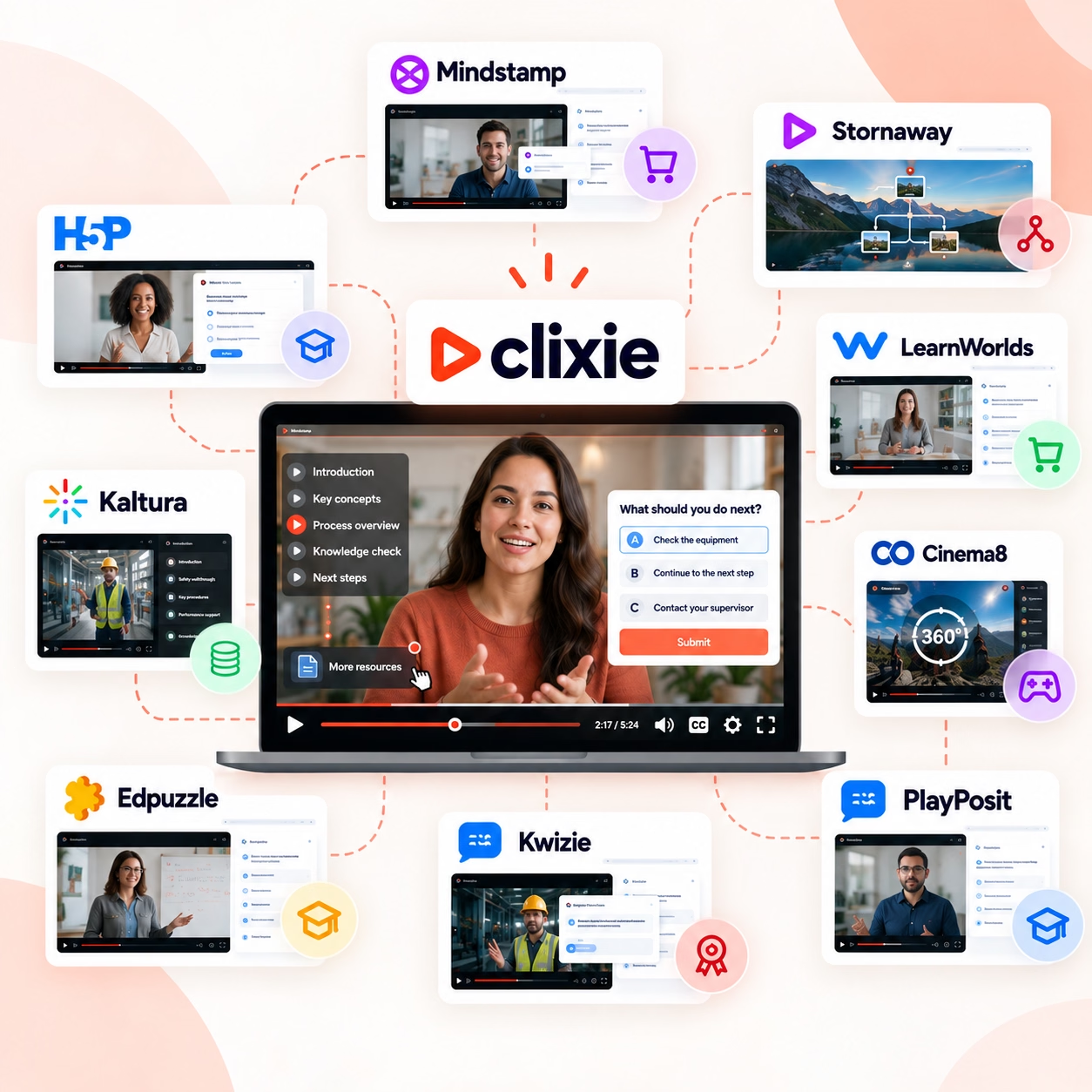
Leading AI Platforms Revolutionizing Hiring Today
Enhancing Onboarding with Artificial Intelligence
AI onboarding transforms the critical first weeks of employment from generic orientation sessions into dynamic, personalized experiences. Interactive video content adapts in real-time based on your position, department, and learning pace.
- Custom Content: Training material is dynamically presented based on your specific role (e.g., code repositories for engineers).
- Connection Facilitation: AI-enabled platforms intelligently match new hires with mentors and colleagues based on shared interests or complementary skills. Tools like Walls.io also help strengthen the connection by showcasing authentic AI-curated content and fostering employee engagement throughout the onboarding experience.
- Adaptive Learning Paths: The system tracks your progress, identifies knowledge gaps, and adjusts the curriculum accordingly, accelerating you to advanced topics.
Companies that use AI for onboarding report significant improvements in new-hire productivity and retention.
Ethical Considerations in the Use of AI for Hiring
The ethical use of AI in recruitment demands careful attention to prevent the perpetuation of historical inequities. AI systems learn from historical hiring data, which often contains embedded biases.
1. Bias Mitigation Strategies
Proactive intervention is required:
- Organizations must audit their training datasets to identify and remove discriminatory patterns.
- Regular testing of algorithmic outputs helps detect unexpected biases.
- Diversify the teams building these AI tools.
2. Transparency in Algorithms (Explainable AI)
Transparency is a non-negotiable requirement. Candidates deserve to understand how automated systems evaluate their applications.
- Black-box algorithms erode trust.
- Hiring platforms must articulate why specific candidates advanced or were rejected, using clear, human-understandable reasoning.
3. Human Oversight
Human oversight remains the critical safeguard. AI should augment human decision-making, not replace it entirely. Recruiters and hiring managers must review AI recommendations with a critical eye. Accountability is maintained by ensuring humans make final hiring decisions, using AI insights as one input among many factors.
Conclusion
The future of job applications with AI promises a fundamental shift in how talent connects with opportunity. AI tools create advantages for both candidates and employers:
With AI, you can now make data-backed decisions at scale. This means job seekers compete more effectively, and hiring teams identify hidden talent that traditional methods might overlook.
Key Ethical Principles to Remember:
- Prioritize transparency in algorithmic decision-making.
- Maintain meaningful human oversight.
- Continuously audit systems for unintended biases.
This is an opportunity to participate in a workforce evolution—one that values merit, reduces discrimination, and creates more inclusive pathways to employment.
FAQs (Frequently Asked Questions)
How is AI transforming the job application and recruitment process?
AI is revolutionizing hiring by integrating machine learning, NLP, and generative AI to optimize résumés, tailor cover letters, and objectively assess candidates' skills, enabling more efficient recruitment cycles.
What are the key AI technologies used in modern recruitment?
Modern recruitment leverages machine learning algorithms, Natural Language Processing (NLP), generative AI tools, computer vision, and voice analysis.
In what ways does AI improve hiring outcomes for employers?
Employers benefit from proactive talent sourcing, bias elimination, predictive analytics that forecast employee success and retention, and shortened time-to-fill critical roles.
.png)
.png)



.avif)
