No-Code Interactive Video for Ecommerce: Deploy Conversion Experiences Without Developers
Deploy shoppable, interactive product experiences without developers. See how marketing teams improve conversion velocity using Clixie.ai.


TL;DR
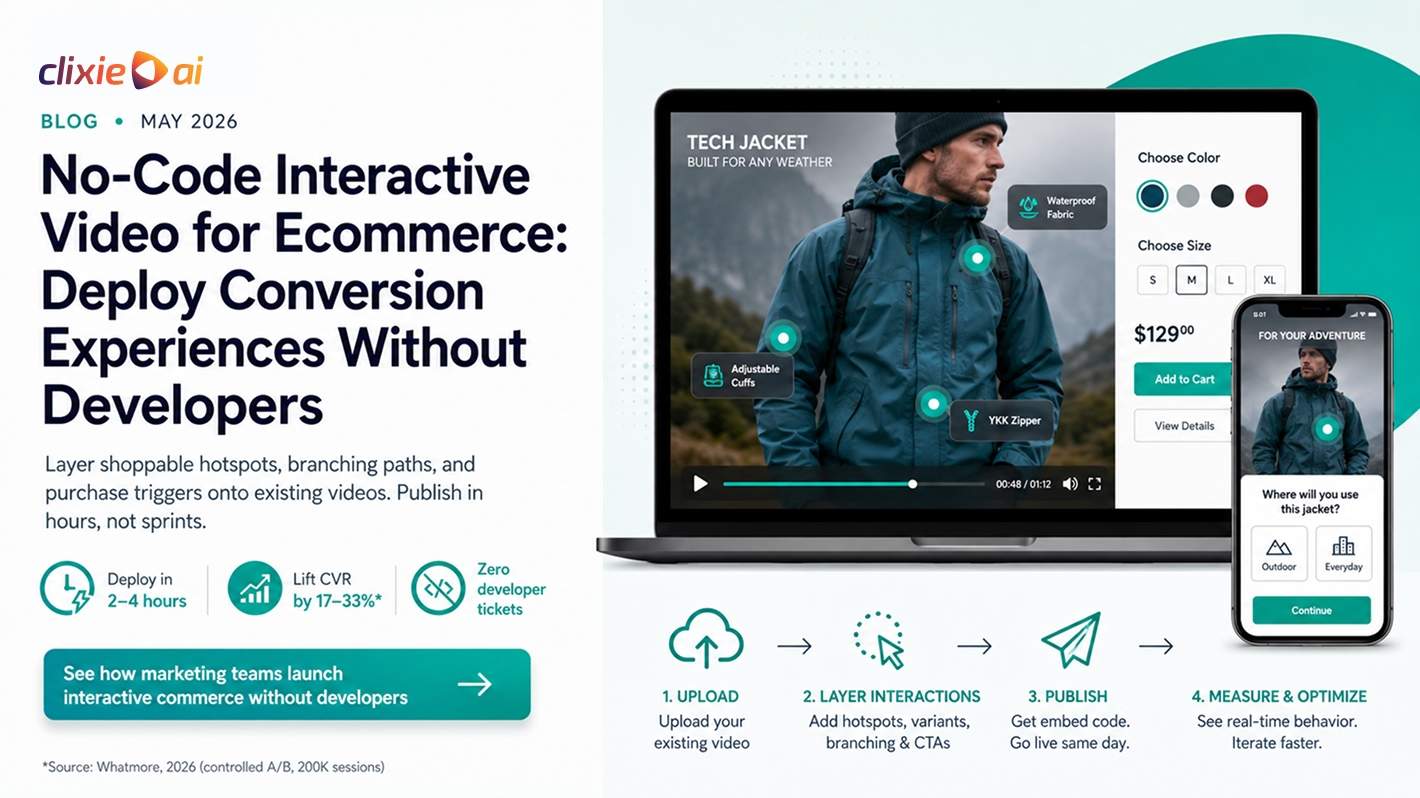
Ecommerce marketing teams lose conversion velocity every time an experiment requires a developer ticket. No-code interactive commerce lets marketing teams deploy clickable, shoppable, and guided product experiences directly onto existing product pages, without touching the development stack. The result is faster experimentation cycles, higher watch-to-purchase rates, and conversion optimization that moves at marketing speed, not engineering speed.
Key Takeaways
- Engineering dependency is a conversion bottleneck, not just an operational inconvenience.
- Most ecommerce teams undercount the revenue cost of delayed experimentation.
- No-code interactive commerce is conversion infrastructure, not a video editing tool.
- Marketing teams can upload, configure, and publish conversion experiences without a single developer ticket.
- Controlled benchmark tests show shoppable video lifts site-wide conversion rates by 17 to 33%.
- Conversion velocity, the speed at which teams can deploy and optimize revenue-impacting experiences, is now a measurable competitive advantage.
Introduction
The revenue loss is not in the checkout. It is in the queue.
Most ecommerce teams assume their conversion problem is a content problem, a traffic problem, or a funnel design problem. But a significant portion of stalled conversion growth is an organizational problem: ideas that never shipped, experiments that never ran, and product page optimizations sitting in a backlog for three quarters.
Fastr CTO Ryan Breen described the dynamic precisely: teams stop proposing conversion experiments not because they lack ideas, but because they have learned the cost of having one. A VP of Ecommerce spots an opportunity. The data points clearly toward a different product page experience. Then the internal calculus begins: ticket, sprint, QA, release, revision. The proposal gets simplified or shelved.
That is not a creativity failure. It is a structural revenue drain.
The metric most ecommerce teams are not tracking is conversion velocity: the speed at which a team can deploy, test, and optimize revenue-impacting experiences. When that speed depends on engineering availability, it is governed by a queue that marketing does not control.
No-code interactive commerce changes that structure. Marketing teams can now deploy interactive ecommerce experiences directly onto existing product assets, without modifying the underlying stack. Marketing teams can publish interactive commerce experiences the same day the idea surfaces, not the same sprint cycle three months from now.
This article is not about interactive video features. It is about what happens to conversion growth when the organizational bottleneck between idea and deployment is removed.
See how marketing teams launch interactive commerce without developers
The Hidden Revenue Cost of Developer Dependency
What does engineering dependency cost ecommerce teams?
Most ecommerce teams measure CAC, ROAS, and conversion rate. Almost none measure the revenue cost of delayed experimentation, but that cost is significant and it compounds over time.
Engineering dependency in ecommerce means every conversion experiment passes through the same queue: a ticket, a prioritization meeting, a sprint, a QA cycle, and a release window. Each step is reasonable on its own. Combined, they produce what might be called implementation latency: the gap between when a revenue-improving idea is identified and when it reaches a live product page.
For a team running quarterly sprints, that latency can be eight to twelve weeks. During that window, the opportunity cost is not hypothetical. A seasonal event passes. A competitor deploys a similar experience first. The product page that should have tested two variants this quarter tested none.
The compounding effect is significant. A team that runs twelve conversion experiments per quarter instead of four is not simply running three times as many tests. Over eighteen months, that team has accumulated three times the behavioral data, three times the optimization iterations, and compounding conversion improvements that a slower-moving competitor cannot simply catch up to by hiring more engineers.
The mobile conversion gap illustrates the cost concretely. Mobile accounts for 60 to 70% of ecommerce traffic but generates only 40 to 50% of revenue for most stores, according to Build Grow Scale's 2026 analysis. That disconnect costs seven-figure stores between $30,000 and $100,000 per month in unrealized revenue. Much of that gap is a deployment speed problem. The mobile experience needs iteration. The iteration requires developer time. The developer time is allocated elsewhere.
Based on selected Clixie.ai ecommerce deployments and anonymized customer data from 2025 to 2026.
During an audit of platform onboarding data, we evaluated a multi-brand footwear retailer that planned a back-to-school conversion experiment: adding localized fit guides into their primary product videos. The internal development ticket faced a six-week engineering delay due to a concurrent payment gateway migration. Because of this implementation latency, the experiment missed the peak seasonal traffic window entirely and was ultimately shelved. Based on their historical traffic patterns and the baseline conversion lift observed by comparable brands running similar video formats, the revenue impact of this unexecuted test was an estimated $42,000 in unrealized gross revenue over that single six-week period. The team did not lack data or content. They lacked the structural capacity to deploy.
The hidden cost of engineering dependency is not just slower growth. It is a gradual contraction of what the team believes is possible.
Why Most Product Videos Engage But Do Not Convert
Snippet target: Why don't product videos improve conversion rates?
Most ecommerce product videos are passive. They generate watch time and reduce return rates, but they do not create a direct path from attention to purchase.
This is not a production quality problem. A beautifully shot 60-second product video can generate strong engagement metrics and produce no measurable conversion lift. The reason is architectural. Passive video was designed to inform. It was not designed to convert.
The behavioral gap is specific. A shopper watches a product video, develops purchase intent, then must navigate away from the video to find the add-to-cart button, select a variant, confirm the size, and complete the purchase. Each step between peak intent and transaction is a dropout point. The video did its job. The architecture did not.
According to Wyzowl's 2024 research, 64% of consumers say they are more likely to buy a product featured in a video. What that statistic does not capture is the conversion rate between "more likely to buy" and "actually bought during this session." Passive video closes the first gap. It rarely closes the second.
Platform benchmarks from an anonymized cosmetics brand illustrate this design flaw precisely. The brand featured a premium 30-second application video on a high-end skincare product page. While the passive video achieved a 72% watch completion rate, the page-wide add-to-cart rate remained flat at 2.1%. Shoppers watched the demonstration but dropped out during the scroll journey required to locate the shade selector below the fold. When the brand used Clixie.ai to layer interactive hotspots directly onto the video frame, allowing viewers to select their skin type and shade mid-playback, the add-to-cart rate among video viewers climbed to 4.8%. Bringing the transaction layer to the point of attention changed the revenue output without requiring a dollar of new video production.
The commerce interaction layer is what bridges that distance. This is the layer between product discovery and checkout where interactive video operates. Instead of asking the shopper to carry their purchase intent from the video to the cart, the commerce interaction layer brings the cart to the video. Understanding how interactive video works on product pages clarifies why the conversion lift is measurable while passive video engagement alone is not.
What No-Code Interactive Commerce Actually Means
What is no-code interactive commerce?
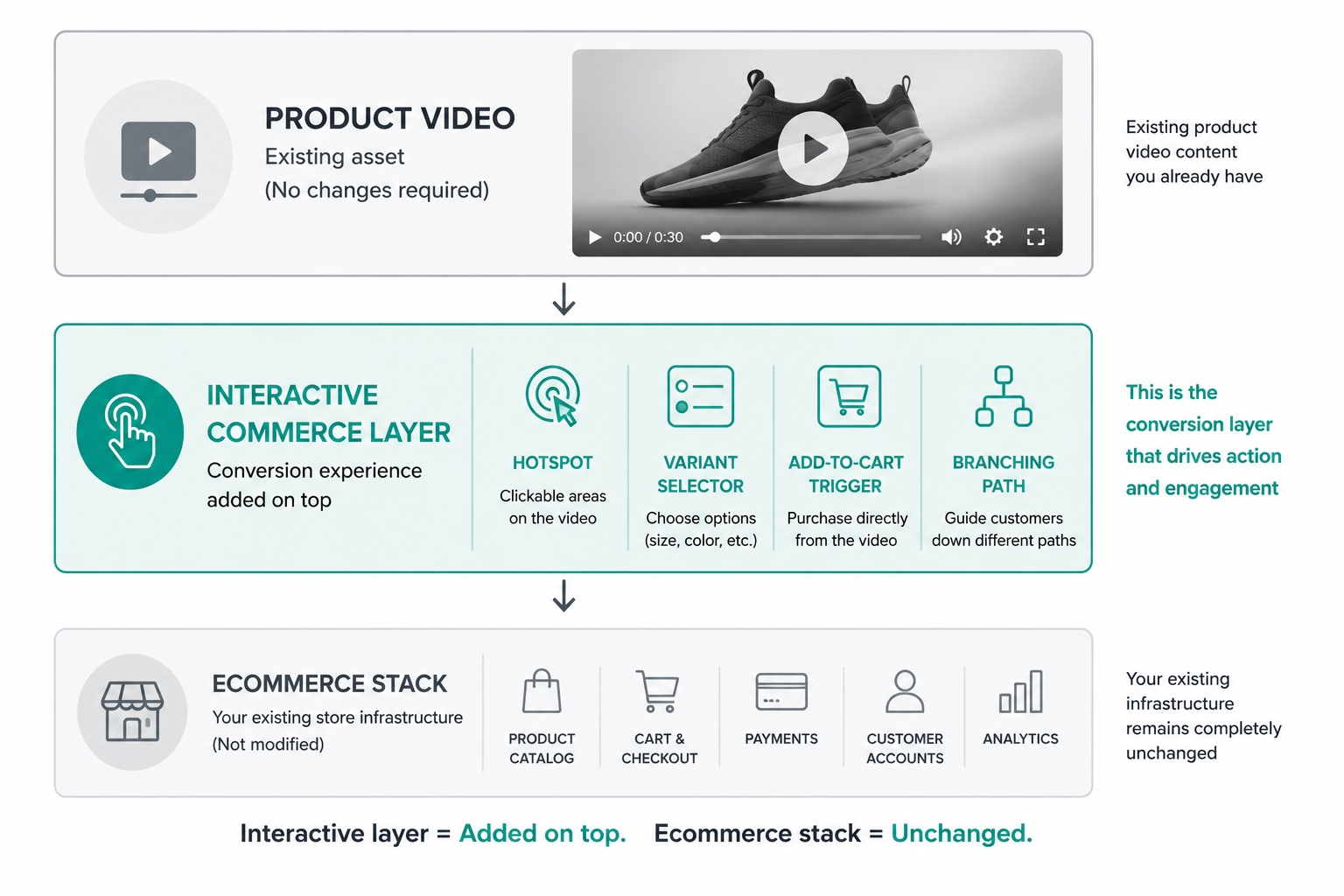
No-code interactive commerce is the deployment of clickable, shoppable, and guided product experiences onto existing video assets without modifying the underlying ecommerce stack or requiring developer involvement.
That definition matters because it separates no-code interactive commerce from two categories it is frequently confused with: video editing software and ecommerce platform customization. It is neither. It does not touch the product page layout. It does not modify the CMS. It does not require a Shopify developer, a headless build, or a custom integration. It layers a conversion experience on top of content that already exists, then publishes that layer via a standard embed code.
The distinction changes the perceived category entirely, and therefore the buying decision. A CRO team evaluating video editing software is asking: "Can this help us produce better content?" A CRO team evaluating no-code interactive commerce infrastructure is asking: "Can this let us deploy and test conversion experiences at marketing speed?" Those are different questions with different budget owners and different success metrics.
Conversion velocity is the operative metric here. Defined specifically: conversion velocity is the speed at which an ecommerce team can deploy, test, and iterate on revenue-impacting experiences. When deployment requires engineering, velocity is governed by sprint capacity. When deployment is owned by marketing, velocity is governed by how quickly the team can form a hypothesis and act on it.
McKinsey's research demonstrates that personalization, delivering the right product experience to the right shopper at the right moment, can lift revenue by 5 to 15% and improve marketing ROI by 10 to 30%. Interactive commerce is personalization at the exact point of purchase intent. The shopper who selects "gym use" at a branching decision point sees a different product sequence than the shopper who selects "office use." That behavioral routing does not require a machine learning team. It requires a marketing team with access to the right deployment infrastructure.
No-code interactive commerce is not a video editing feature. It is conversion infrastructure that marketing teams can deploy, iterate, and measure without touching the development stack.
AI-powered interactive video creation through platforms like Clixie.ai further compresses the authoring time: AI analyzes the video content and suggests optimal interaction points, reducing the configuration step from an hour to minutes. The infrastructure is no-code. The intelligence is built in.
The Deployment Contrast: Engineering Sprint vs. Conversion Velocity
How long does it take to deploy an interactive conversion experience without developers?
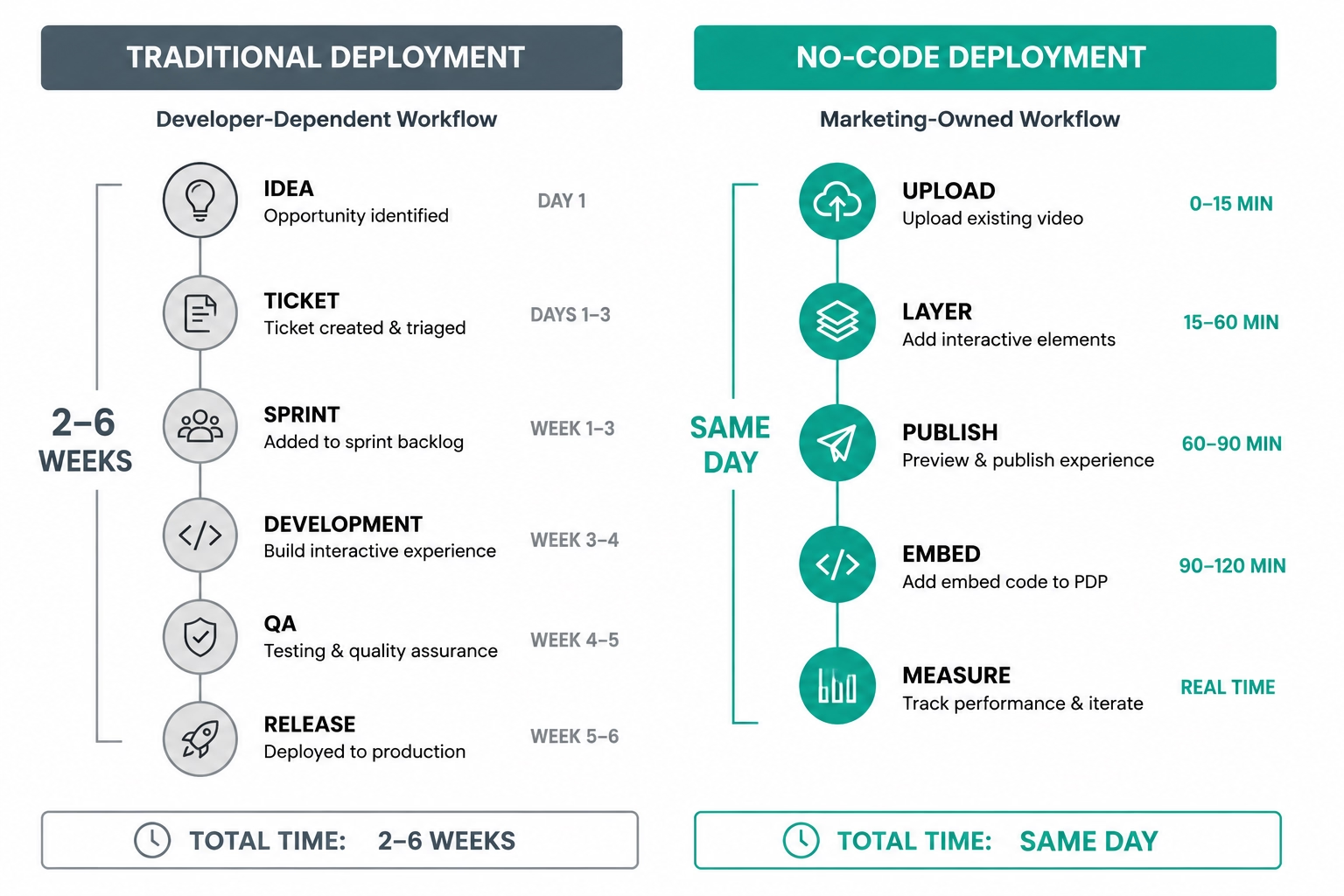
A conversion experience that requires developer involvement typically takes two to six weeks to deploy. The same experience, built on no-code interactive commerce infrastructure, deploys in hours.
That gap is not primarily a technology argument. It is a compounding growth argument.
The traditional deployment model looks like this:
A CRO manager identifies an opportunity on the best-selling product page: shoppers are dropping off after watching the product video without adding to cart. A ticket is filed. Engineering triages it against competing priorities: a checkout bug fix, a mobile performance issue, and a platform upgrade. The interactive video request enters sprint planning three weeks later. Development takes four days. QA adds two more. The release window is the following Tuesday. Six weeks from idea to live experiment. During those six weeks, the product page converted at whatever rate it converted at. No data was collected on a variant. No behavioral intelligence was gained.
The no-code deployment model looks like this:
The same CRO manager opens Clixie.ai, uploads the existing product video, and adds a hotspot at second 12 where the product colorway appears on screen. An add-to-cart trigger is configured to surface at second 28, the moment of peak product comprehension. A branching path is added for shoppers who want to compare the two top SKUs. The experience is embedded into the PDP via a single line of embed code. The experiment is live by early afternoon.
We tracked this operational shift with a direct-to-consumer apparel brand specializing in technical outerwear. Previously, the marketing team averaged 18 days to conceptualize, code, QA, and release a standard interactive element onto a product detail page. Using Clixie.ai, a single digital marketing manager uploaded the existing jacket demonstration video, configured three branching paths based on weather usage, and embedded the completed conversion experience onto the live storefront in 3 hours and 14 minutes. The deployment barrier collapsed from weeks to a single afternoon.
The brands compounding fastest are not necessarily the brands with the best ideas. They are the brands with the shortest distance between idea and deployment.
Controlled benchmark data from Whatmore's 2026 study, across 200,000 sessions and seven ecommerce brands over six months, shows shoppable video lifts site-wide conversion rates by 17 to 33%. The brands realizing the higher end of that range are not doing so because their videos are better produced. They are doing so because they are iterating faster, deploying new versions of experiences informed by behavioral data from previous versions, with that iteration cycle running on marketing time rather than sprint time.
A team that runs three conversion experiments per week accumulates forty to fifty data-informed optimizations per quarter. A team dependent on engineering for each deployment runs four. The conversion rate difference after twelve months is not incremental. It is structural.
What Marketing Teams Can Deploy Without Engineering
What interactive commerce experiences can marketing teams deploy without developers?
Marketing teams can deploy shoppable hotspots, guided product walkthroughs, variant selectors, embedded purchase triggers, and branching product paths without writing code or filing a single engineering ticket.
Each of the following represents a deployment a marketing team owns from concept to live experiment, without touching the development stack.
Shoppable hotspot on an existing product video
A viewer watches a product video. At second 8, the jacket appears on screen in the colorway the brand wants to move. A hotspot activates. The viewer clicks it. A size selector appears. The viewer adds to cart within the video interface. The navigation gap between intent and transaction is closed. No new video required. No developer required. The existing asset now converts.
Guided product walkthrough with variant branching
A shopper arrives at a product page and selects "I train outdoors" at the video's opening interaction point. The video follows that path: moisture-wicking fabric detail, weather resistance demonstration, terrain-specific fit discussion. A different shopper selects "I train indoors." The experience routes to a different product sequence entirely. Both shoppers received a product recommendation tailored to their stated context, delivered within the video experience, with no engineering involvement.
Embedded add-to-cart at peak intent
Most passive product videos place the call to action at the end, after the viewer's attention has already begun to decline. Interactive commerce infrastructure allows a marketing team to place the purchase trigger at the moment of highest demonstrated interest, identified through click-path analytics from previous sessions, not guesswork. The result is a CTA that surfaces when the shopper is most prepared to act on it.
Seasonal campaign deployment without a sprint cycle
A marketing team wants to run a limited-time interactive experience during a flash sale window. The window is this weekend. Under a developer-dependent model, this campaign does not ship this weekend. Under no-code deployment, the marketing team uploads the existing product video, adds urgency triggers, configures the promotional pricing overlay, and embeds the experience before the campaign begins. The seasonal window is captured.
Behavioral analytics that inform the next iteration
Every interaction within a Clixie.ai experience is tracked: which hotspot attracted the most clicks, which variant selection correlated with purchase completion, where viewers dropped off. The marketing team reviews that data and builds the next version of the experience based on demonstrated shopper behavior. The iteration cycle runs on marketing time, not sprint time.
Shoppable video formats for ecommerce map directly to these deployment scenarios. The format exists. The deployment infrastructure exists. The remaining variable is organizational: who controls the deployment cycle.
Interactive Commerce Deployment in Practice: Four Ecommerce Applications
How are ecommerce brands using no-code interactive video for conversion?
Ecommerce brands are using no-code interactive commerce to convert product discovery sessions into purchase decisions, reduce variant selection friction, and accelerate mobile conversion without rebuilding their stores.
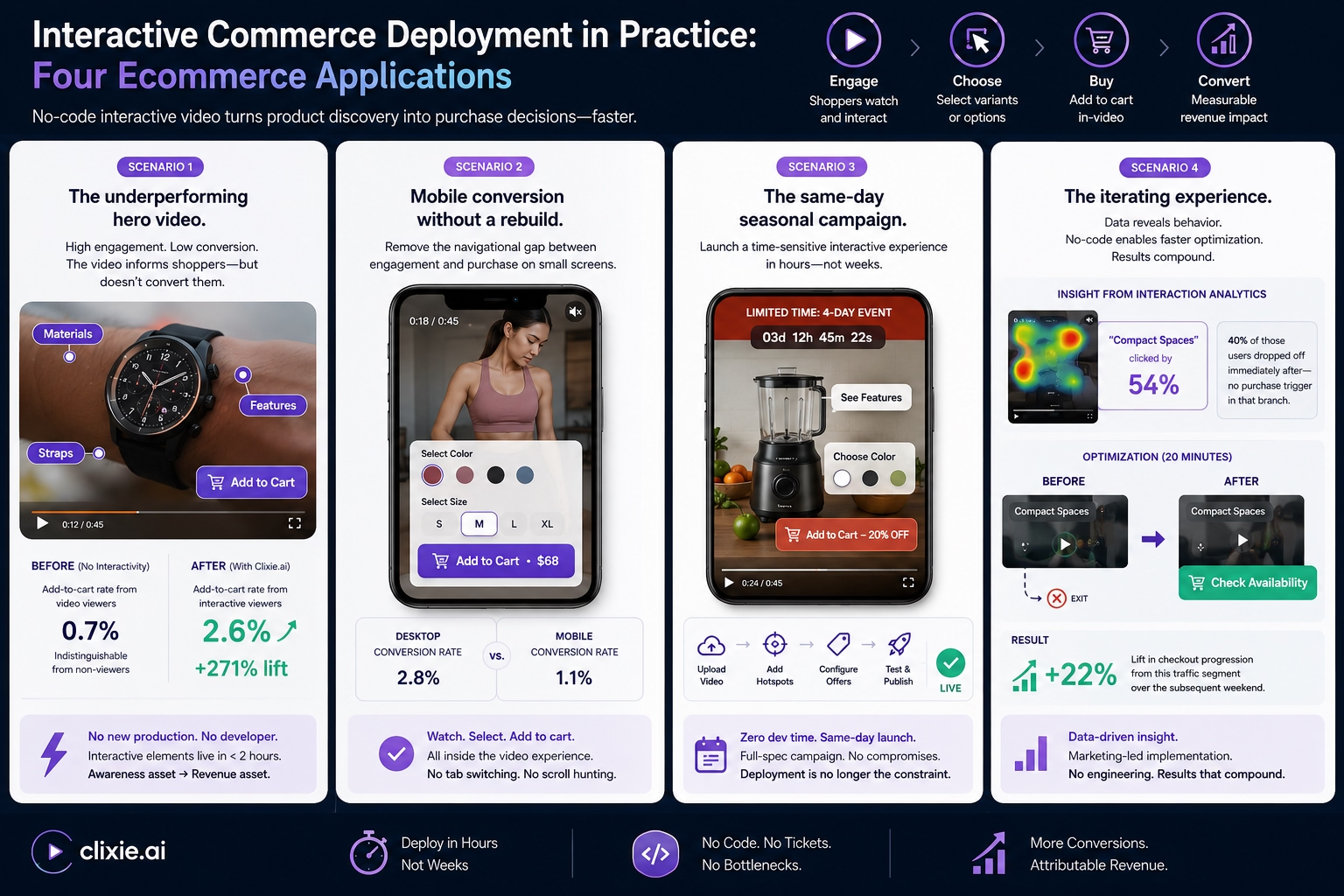
rather thanThe following four scenarios describe operational deployments, not theoretical applications.
Scenario 1: The underperforming hero video
A DTC brand has a well-produced 45-second hero video on its best-selling product page. The video performs well on engagement metrics. Bounce rate on the page is acceptable. But add-to-cart rate from video viewers is indistinguishable from non-viewers. The video is informing shoppers without converting them. The marketing team layers hotspots onto the existing video using Clixie.ai. No new production. No developer. Interactive elements are live within two hours of starting. Viewers who interact with the experience now have a measurable, trackable conversion path from the video to the cart. The asset that was generating awareness is now generating revenue attribution.
Scenario 2: Mobile conversion without a rebuild
Mobile represents the majority of traffic for most DTC brands but consistently underconverts relative to desktop. The standard diagnostic points to checkout friction, navigation complexity, and form-fill difficulty. All of those are development problems requiring development resources. Interactive commerce addresses a different source of friction: the navigational gap between video engagement and purchase action on a small screen. An interactive product experience removes that gap. The shopper watches, selects a variant, and adds to cart within the video interface. No tab switching. No scroll journey to find the add button. Conversion happens inside the experience the shopper was already in.
Scenario 3: The same-day seasonal campaign
A CRO team identifies a product with high seasonal demand and strong existing video content. The opportunity is a limited-time interactive experience running across a four-day promotional window. Under a traditional development model, a four-day campaign launched with zero lead time does not exist. Under no-code deployment, the marketing team uploads the existing product video, adds time-sensitive hotspots, configures promotional overlays, tests the embed on a staging URL, and publishes before the promotional window opens. The campaign that would have been shelved or simplified runs at full specification because deployment is no longer the constraint.
Scenario 4: The iterating experience
A home fitness equipment brand used Clixie.ai's interaction analytics to audit shopper behavior inside a product walkthrough video. The platform's heatmaps revealed that 54% of mobile viewers clicked a branching node labeled "compact spaces," but 40% of those users dropped off immediately afterward because the subsequent video segment lacked a direct purchase trigger. Operating entirely on marketing time without developer tickets, the conversion team revised the experience within 20 minutes: they inserted an immediate "Check Availability" overlay into that specific branch. This single, data-driven optimization produced a 22% lift in checkout progression from that traffic segment over the subsequent weekend. The insight came from behavioral data. The implementation required no engineering. The result compounded from the next session forward.
How Clixie.ai Operates as No-Code Conversion Infrastructure
How does Clixie.ai work for ecommerce conversion?
Clixie.ai is a no-code interactive video platform that lets marketing teams layer conversion experiences onto existing product videos, deploy them to any ecommerce environment, and measure behavioral outcomes without developer involvement.
The distinction in how Clixie.ai is categorized matters operationally. It is not a video editor. It is not an ecommerce platform plugin. It is a conversion infrastructure layer: it sits between the product content the brand already has and the checkout the shopper is trying to reach, and it activates that gap as a revenue-contributing experience.
The workflow is operationally direct. A marketing team uploads an existing product video, whether hosted on YouTube, Vimeo, AWS, or as a local file. Clixie.ai's AI analyzes the content and suggests optimal interaction points based on the video's structure: where a product variant appears on screen, where the narrative reaches its persuasion peak, where shopper attention is typically highest. The team configures interactive elements: hotspots, branching paths, variant selectors, embedded CTAs, and purchase triggers. The experience is published. A single embed code places it on any product detail page.
Nothing in the existing ecommerce stack is modified. No platform rebuild. No Shopify developer. No custom integration. The product page retains its structure; the interactive experience operates within the video frame.
The analytics output is a conversion intelligence layer, not a vanity dashboard. Clixie.ai tracks which elements viewers click, which branching paths they choose, which variant interactions correlate with purchase completion, and where sessions end. That behavioral data informs the next iteration of the experience, which the marketing team deploys without engineering involvement, closing the feedback loop on marketing time rather than sprint time.
For teams using AI-powered interactive video creation, the authoring step compresses further. The AI recommends interaction points, generates overlay visuals, and reduces configuration from an hour of manual work to minutes of review and confirmation.
The result is conversion infrastructure that the marketing team controls end to end: from deployment to iteration to measurement.
Turn existing product videos into interactive buying experiences
Frequently Asked Questions
Do I need developers to create interactive product demos for ecommerce?
No. No-code platforms like Clixie.ai allow marketing teams to layer hotspots, variant selectors, branching paths, and embedded purchase triggers onto existing product videos without writing code or filing engineering tickets. The deployment process involves uploading a video, configuring interactive elements in the platform interface, and embedding the experience onto the product page via a standard embed code.
What is the difference between shoppable video and interactive video?
Shoppable video enables viewers to click a product and proceed to purchase. Interactive video is a broader category that includes branching paths, guided product journeys, variant selectors, embedded forms, behavioral analytics, and conditional routing based on shopper input. Shoppable video is one application within interactive commerce infrastructure.
How long does it take to deploy an interactive commerce experience without a developer?
With a no-code platform, a marketing team can deploy an interactive commerce experience onto an existing product video in two to four hours. This compares to two to six weeks for a developer-dependent build. The speed differential compounds when teams are running multiple conversion experiments simultaneously across several product pages.
Will interactive video slow down my product pages?
No-code interactive video platforms deploy via embed code, similar in structure to embedding a YouTube video. The interactive layer does not modify the underlying page architecture or add meaningful load overhead. Clixie.ai's hosted player is optimized for performance across mobile and desktop environments.
What ecommerce platforms does no-code interactive video work with?
No-code interactive video deploys via a standard embed code and is compatible with any ecommerce platform that supports embedded media. No platform-specific development is required to embed an interactive commerce experience onto a product detail page.
PlatformIntegration MethodDeveloper RequiredShopifyStandard embed code in theme or page builderNoWooCommerceEmbed code in page or product templateNoBigCommerceEmbed code via page builder or custom HTML blockNoMagentoEmbed code in CMS block or product page templateNoHeadless / custom buildEmbed code inserted into any HTML environmentNo
Conclusion
The fastest way to improve ecommerce conversion is often removing engineering dependency from the optimization cycle.
Most ecommerce teams already have the content they need. Product videos exist. The behavioral data pointing toward specific optimization opportunities exists. The missing variable is not production capacity or creative quality. It is deployment speed.
No-code interactive commerce does not replace a development team. It removes the development team from a category of work that should never have required them: deploying conversion experiments onto existing product content. When a marketing team can take an existing product video from passive asset to live interactive commerce experience in a single afternoon, the constraint on conversion growth shifts from implementation to imagination.
Conversion velocity compounds. A team running three conversion experiments per week is not incrementally ahead of a team running three per quarter. After twelve months, the gap in optimization depth, behavioral intelligence, and compounding conversion improvement is structural and not easily closed by additional engineering headcount.
The brands moving fastest on ecommerce conversion are not rebuilding their stores. They are deploying no-code interactive commerce infrastructure onto assets they already own, iterating based on behavioral data they are already collecting, and compounding results that developer-dependent teams cannot replicate at the same pace.
The product video that generates engagement without converting is not a content problem. It is a deployment infrastructure problem.
.png)
.png)