How to Turn a Recorded Lecture into a Study Plan with AI
Learn how to turn a recorded lecture into a study plan with AI. Map key concepts, prioritize topics, build a schedule, and quiz yourself.



If you’re a college student, you know how overwhelming it can be to keep track of all the lectures you have to sit through. A recorded lecture can be a useful resource, but listening to multiple hour-long recordings can get dry. That’s where AI is being a game changer.
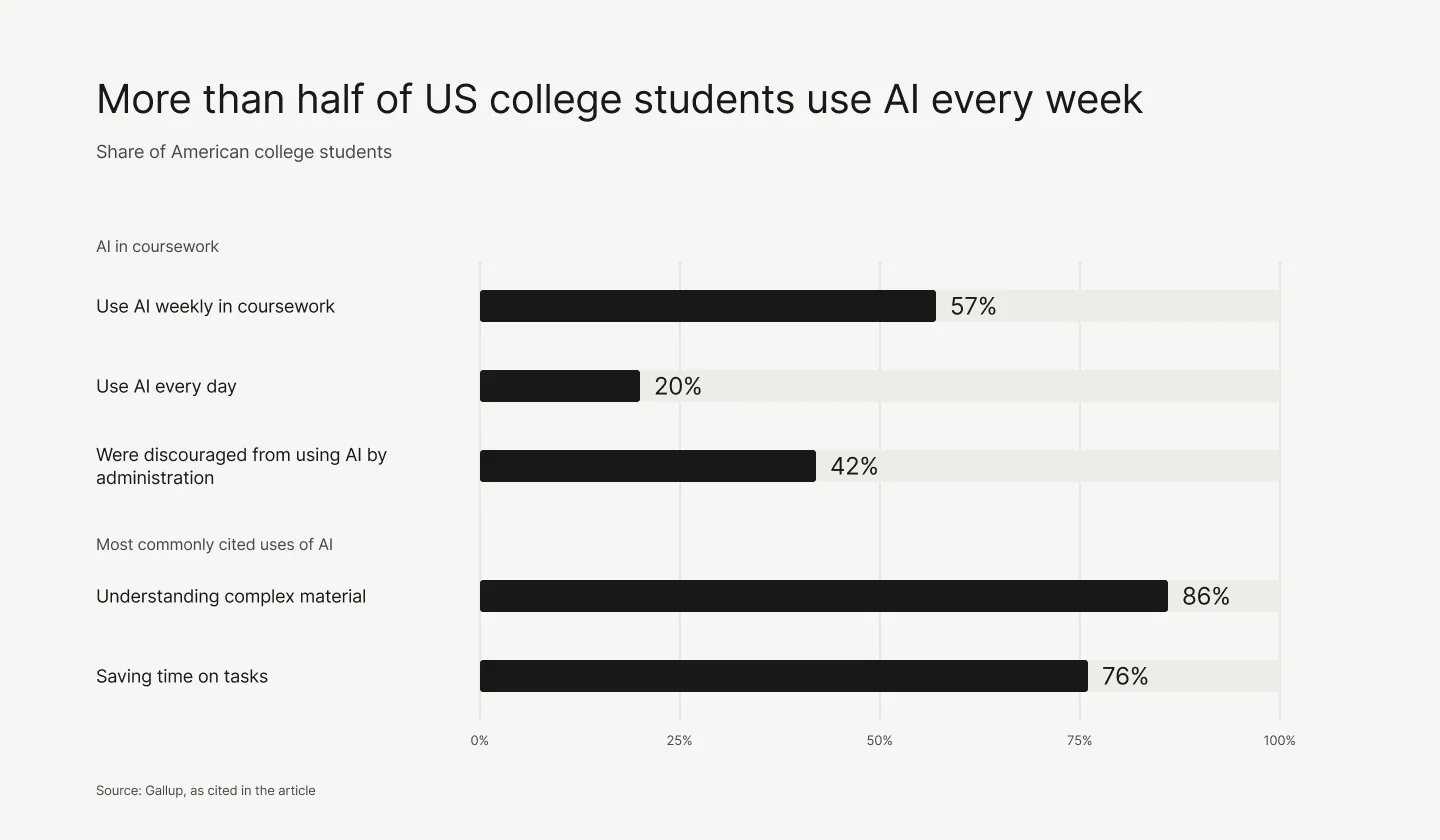
A report by Gallup notes that 57% of American college students used AI weekly in their coursework and about 20% use AI every day. In terms of what students found important to use AI for, 86% cited ‘understanding complex material.’ Another 76% said they used AI to ‘save time doing tasks.’
Essentially, AI can help you turn your recordings into a practical study plan, complete with organized topics, revision sessions, and questions. You might think it’s just about dumping a transcript into ChatGPT, but that’s not all there is to it.
Let’s find out more below.
Turn the Recording Into a Structured Map of What You Need To Learn
Before building a study schedule, you need to know what the lecture actually covers. You will obviously start by converting the recording into a transcript. If possible, retain timestamps so you can return to the original explanation whenever something in the transcript seems unclear.
Next, when you upload the transcript to AI, make sure you prompt it to organize the material into
- Major concepts
- Supporting details
- Definitions
- Examples
- Questions raised during the lecture
You can also ask it to identify connections between topics. For instance, a physics lecture might introduce a formula that becomes necessary for understanding a later principle. Similarly, a psychology lecture might compare theories that are easier to understand if they are placed side by side.
You will also want to ask AI to separate any concepts your professor explicitly emphasized from concepts used as examples or metaphors. Otherwise, you could end up paying attention to themes that weren’t even important. It may take some experience with prompt editing, but you’ll eventually have a learning map that shows what was covered and how the ideas connect.
Use AI To Prioritize Topics and Build a Realistic Study Schedule
Once you have organized the lecture, the next step is deciding what to study first. You can ask AI to help rank topics according to
- Your current understanding
- Relevance to course objectives
- Amount of work required to learn them
You can improve its recommendations by providing your syllabus, past work submitted, feedback, and exam dates. That said, if you’re in a field with cutting-edge research and novel ideas, it might be worth taking a pause here. The big AI models like ChatGPT and Claude can learn from your data.
A lot of people are realizing that it’s probably not a good idea to let AI have access to all your info. This is even more relevant after the recent news of AI solving complex math problems that stumped scientists for decades. So, it’s probably worth looking for a ChatGPT alternative if you care about data privacy.
Regardless of what AI you use, your next focus should be to create a schedule around the time you actually have available. If you have 20 days before an exam, ask AI to create a structured plan for you. This isn’t just for fun because data shows AI can be a fantastic tool for self-regulated learning.
A study published in Frontiers showed that AI-based interventions produced statistically significant improvements in both self-regulated learning (SRL) and self-directed learning (SDL). It noted moderate gains in aspects like planning, monitoring, emotional control, and motivation, and moderate improvements in learning outcomes.
Your schedule works best when the same material comes back more than once. Instead of rewatching a full lecture, break the recording into short chapters and assign each one to a different revision day. Review a chapter the day after the lecture, again a few days later, and once more the week before your exam. Each time, you only revisit the sections that gave you trouble last round. If you load the recording into an interactive video platform like Clixie AI, the chapters are generated automatically and stay editable, so you can match them to your study calendar. Then ask your AI assistant to turn each chapter into a five-minute review session with a short summary, two or three recall questions, and one problem to solve. Short, repeated sessions are easier to fit around classes, work, and sleep than one long cram session, and they make it clear which topics still need attention.
Turn Each Study Session into Active Practice
A schedule gives you direction, but you still need a way to find out whether you are learning anything. This is where AI can become a useful practice partner. Give it a section of your lecture transcript and ask it to generate questions that test recall, explanation, and application.
Try asking the assistant to quiz you one question at a time, waiting for your answer before offering feedback. If you make a mistake, ask for a hint or an explanation of the reasoning you missed before attempting the question again. You can also request follow-up questions to check whether you have corrected the misunderstanding.
It’s a rigorous form of testing and can increase your test scores by a substantial margin. That’s right, research by Harvard University on over 194 undergraduate physics students showed that AI tutoring can be superior to in-class active learning. Students who used an AI tutor scored twice as high on post-tests as those in active learning classes.
If you use AI to quiz you in this manner, make sure to keep a record of questions you:
- Answered correctly
- Answered with hints
- Answered wrong
Feed these results back into your study plan so AI can recommend which topics deserve another session. Throughout this process, try to listen to the actual lecture now and then if you have time. This is what will help you actively learn, which is a sentiment even leaders in education share.
Frequently Asked Questions
How do you study effectively from recorded lectures?
Start by reviewing the lecture transcript and identifying the main concepts rather than watching the entire recording again. Turn those concepts into questions, test yourself without looking at your notes, and revisit areas where you struggle. Spacing out revision sessions also helps you retain information longer.
Can AI predict what will be on an exam?
AI cannot reliably predict exactly what will appear on an exam, but it can help you prioritize revision. Provide your syllabus, learning objectives, past papers, and lecture notes, then ask it to identify recurring themes and likely areas of emphasis. Treat its suggestions as guidance, not guarantees.
Are AI-generated study guides accurate?
AI-generated study guides can be useful, but they may contain factual errors, omit important details, or misinterpret your lecturer's explanations. Check definitions, formulas, and major claims against your course materials. You should also verify that the guide covers your syllabus rather than relying entirely on an AI-generated summary.
Key Numbers & Facts at a Glance
AI can make studying feel more manageable, particularly when you have several lectures to get through and limited time before an exam. Still, you need to pay attention to what happens if you sit down to study without the tool beside you. Can you explain the concept in your own words, solve a problem independently, or remember the main arguments without looking at your notes?
These are useful ways to judge whether your study plan is working. Give AI a role in organizing your material and helping you practice, but leave yourself enough room to struggle with difficult ideas and work through them. After all, those are the skills you will need after the exam is over.