


Best AI Tools for Corporate Training: Top 5 Picks [+ How to Choose the Right One]
Discover the 5 best AI tools for corporate training in 2026 — compared by L&D use case, engagement data, and ROI proof. Find your fit in 60 seconds.


TL;DR
The Problem
- 49% of employees skip required training just to hit "complete" — the engagement crisis is real, and it's getting worse. (Continu, 2025)
- 63% of employers say skills gaps are their #1 barrier to growth, yet most training still can't prove it changed anything. (WEF, 2025)
The Solution
- The best AI training tools in 2026 don't just deliver content — they capture learner intent, adapt in real time, and generate proof of impact.
- Interactive video with branching logic delivers 2–3× higher engagement than passive video. (Research.com, 2026)
The Stack — Our Top 5 Picks
- Clixie.ai — Interactive video + behavioral analytics (engagement and intent capture)
- Synthesia — AI video production at scale, no studio required
- Articulate 360 — Custom course authoring for instructional designers
- Docebo — AI-first LMS for personalized learning at scale
- 360Learning — Collaborative, peer-driven learning at speed
Key Takeaways
- Clixie.ai is an interactive video platform that converts any training video into a branching, decision-based learning experience with real-time engagement analytics.
- AI corporate training tools are software systems that use machine learning to personalize content delivery, automate course creation, and surface actionable learner data.
- Branching scenarios are decision-tree pathways inside interactive video that route learners to different content based on their choices — increasing both retention and measurable intent capture.
- The skills gap is the measurable mismatch between the competencies employees have today and those employers need — currently projected to affect 59% of the global workforce by 2030. (WEF Future of Jobs Report, 2025)
- xAPI and SCORM are technical standards that allow AI training tools to pass learner data to a Learning Management System (LMS).
- An LMS is a software platform that hosts, tracks, and reports on employee training — AI-first LMS platforms add personalization, coaching, and content generation on top of that foundation.
Introduction
Nearly half of your employees — 49% of them — are skipping through their required training just to hit "complete." They're not learning. They're checking a box.
That stat, from Continu's 2025 corporate eLearning research, should stop every L&D leader cold. It means the problem isn't that your people don't want to grow — it's that the format of most corporate training is structurally broken. Passive videos, linear click-through modules, and compliance content built to be forgotten don't build skills. They build completion theater.
AI changes the equation — but only if you choose the right tool for the right problem. The market is flooded with platforms claiming to be AI-powered. Every LMS has updated its homepage. Separating tools that actually move the needle from tools that just auto-generate a course outline requires a sharper lens.
In this guide, I'll walk through the 5 best AI tools for corporate training in 2026, what makes each one worth your time and budget, and a five-criteria framework for matching the right tool to your specific training challenge. I've also mapped out exactly where each tool fits in a modern L&D stack — so you know what to use together, not just what to choose.
If you're thinking about how AI is reshaping the modern workforce and what that means for your L&D strategy, this guide picks up right where that conversation starts. And if you've never seen scenario-based training that actually sticks, the tools below will show you what's now possible.
📣 Want to see how interactive video training works before reading further? Book a free Clixie.ai demo →
Why AI Training Tools Are No Longer Optional
AI training tools are software platforms that use machine learning to personalize content delivery, automate course creation, and track learner behavior — replacing the static, one-size-fits-all programs that L&D teams have relied on for decades.
Here's the pressure L&D leaders are operating under right now. According to the World Economic Forum's Future of Jobs Report 2025, 63% of employers name skills gaps as the single biggest barrier to business transformation over the next five years. At the same time, 59% of the global workforce will need reskilling or upskilling by 2030. Those two numbers together describe a treadmill: the gap is growing faster than traditional training can close it.
The adoption data tells a parallel story. AI usage in L&D technology stacks nearly tripled in a single year — from 9% in 2023 to 25% in 2024, according to VirtualSpeech's 2026 AI training research. The LinkedIn Workplace Learning Report 2025 adds a tension worth sitting with: 80% of L&D professionals say AI is important to their strategy, yet only 25% factor it in routinely. Most teams are aware the shift is happening — far fewer have committed to it.
The results for those who do are significant. AI-tailored learning paths produce a 57% increase in learning efficiency and a 30% lift in employee engagement, per VirtualSpeech's data. That's not incremental improvement — that's a different category of outcome. The global interactive learning market backs this momentum, valued at $27.85 billion in 2024 and growing at a 15.1% CAGR through 2030 per ElectroIQ — and the L&D teams moving now are building a compounding advantage.
When I sit down with training directors — whether they're managing telecommunications teams or rolling out new product knowledge — the frustration is almost always the same. One client recently told me, "We spent six months and a massive budget producing hours of high-fidelity video modules, and I still have absolutely no idea if anyone actually learned the tactical skills we need them to know." They are tired of having zero visibility into what happens between hitting "play" and seeing a checkmark on a completion report.
The 5 Best AI Tools for Corporate Training in 2026
The best AI tools for corporate training in 2026 are platforms that go beyond content delivery — they adapt to each learner, surface skill gaps in real time, and give L&D teams measurable proof that training actually worked.
To build this list, I evaluated tools across five factors: depth of AI capability, learner engagement features, analytics and reporting quality, implementation ease for L&D teams, and real-world outcome evidence. I've included Clixie.ai — a platform I know inside and out — and I'll be direct about where it leads the field and where other tools have distinct strengths.
Here are the five best.
#1 — Clixie.ai: Best for Interactive Video Training & Learner Intent Capture
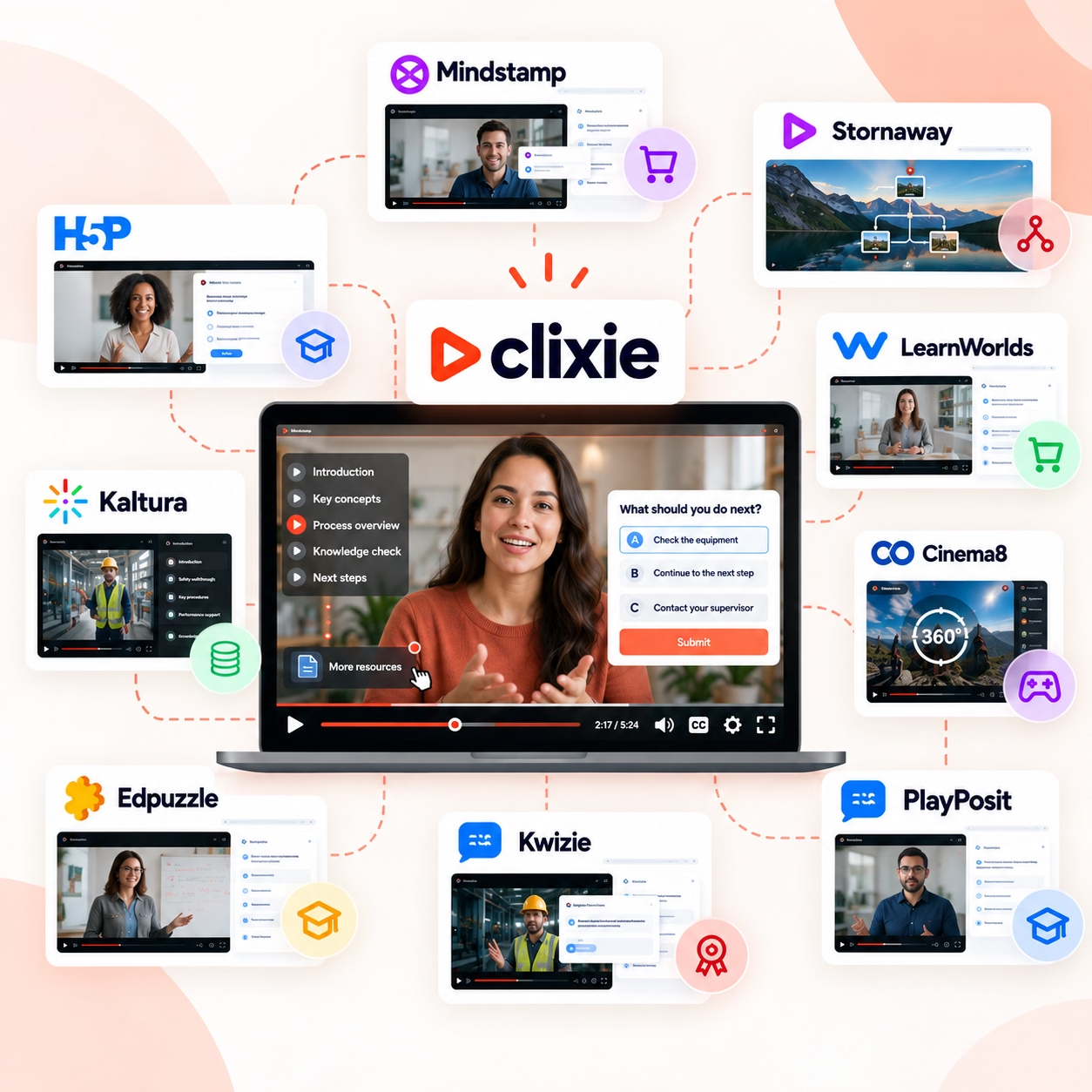
Clixie.ai is an AI-powered interactive video platform that turns any training video — a recorded Zoom session, a product walkthrough, a safety demonstration — into a branching, decision-based learning experience with real-time engagement analytics.
Who it's for: L&D teams that have existing video content, or are actively creating it, and want to add interactivity, branching paths, and behavioral data without rebuilding their training library from scratch.
What makes it different from every other tool on this list: Every other platform either creates training content or hosts it. Clixie.ai captures what learners actually do inside the video — which branching path they chose, where they rewound, which question tripped them up, which segment triggered a drop-off. That behavioral data layer is something no standard LMS completion report gets close to.
The platform's AI automatically segments video into logical chapters, generates quiz questions with correct and incorrect answers based on video content, and produces engagement heatmaps for every viewer. Conditional branching routes learners to different content paths based on their choices — so a compliance scenario gives a different outcome to someone who makes the wrong call, rather than just flagging them incorrect and moving on.
Recognition from outside Clixie supports this: the platform earned a spot on the Top 100 Tools for Learning 2025 from Top Tools for Learning, one of the most-cited independent rankings in the L&D field. And Research.com's 2026 video training data puts the core value proposition plainly — interactive videos achieve engagement rates 2–3× higher than linear video content. The average completion rate for non-interactive training video dropped to 60% in 2024. Interactive formats hold the gap.
Best use cases: New hire onboarding, compliance training, product knowledge, sales enablement, customer education.
Integration note: Clixie.ai works alongside Synthesia, Articulate 360, and your existing LMS — not instead of them. The practical stack is: Synthesia produces video at scale, Clixie makes it interactive and measurable, your LMS manages the records.
Clixie.ai also integrates directly with Zoom, Microsoft Teams, and Cisco Webex — which means every recorded meeting, training session, or product walkthrough your team already produces can be transformed into a fully interactive learning experience without any additional production work. Instead of those recordings sitting unwatched in a shared drive, Clixie layers on branching paths, quizzes, hotspots, and timed CTAs, turning passive playback into an active, decision-driven experience. The result is a complete analytics picture — completion rates, engagement heatmaps, skill-gap flags — built automatically from the content your teams are already creating every day.
For a closer look at the AI-side of this workflow, see our post on AI-generated interactive video workflows.
When you shift a learner from passive viewing to active decision-making, the metrics completely change. In a recent interactive training course developed for a tactical operator program, we replaced linear video with a decision-driven narrative. By forcing operators to make real-time branching choices under pressure, we didn't just see a massive spike in engagement — we were able to map exactly where their decision-making broke down in the field scenarios. It transformed the video from a broadcast into a two-way diagnostic tool that drastically reduced their time-to-competency.
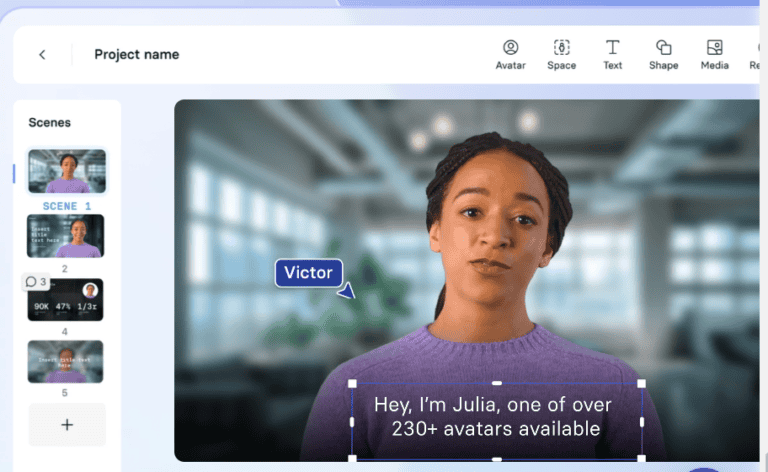
#2 — Synthesia: Best for Scalable AI Video Content Creation
Synthesia is an AI video generation platform that creates professional training videos using AI avatars and text-to-script — no cameras, studios, or production budget required.
Who it's for: L&D teams that need to produce high volumes of training video quickly, especially for global audiences that require content in multiple languages.
Standout AI features: 230+ AI avatars in 140+ languages, script-to-video in minutes, auto-translation and localization, SCORM and xAPI export for LMS compatibility, slide-to-video conversion.
The real advantage is speed and scale. A compliance update that used to take weeks to film, edit, and localize can be produced in an afternoon. That changes the economics of keeping training content current — one of the biggest hidden costs in most L&D operations when regulations shift, products update, or processes change quarterly.
The limitation to know going in: Synthesia creates the video. It doesn't make it interactive and doesn't capture what learners took from it. Completion tracking in most LMS systems tells you someone pressed play and reached the end. It doesn't tell you what they understood, retained, or would do differently under pressure.
This is why Synthesia and Clixie.ai work well in sequence: Synthesia handles production at scale, and Clixie.ai adds the engagement layer and behavioral data on top. Neither replaces the other.
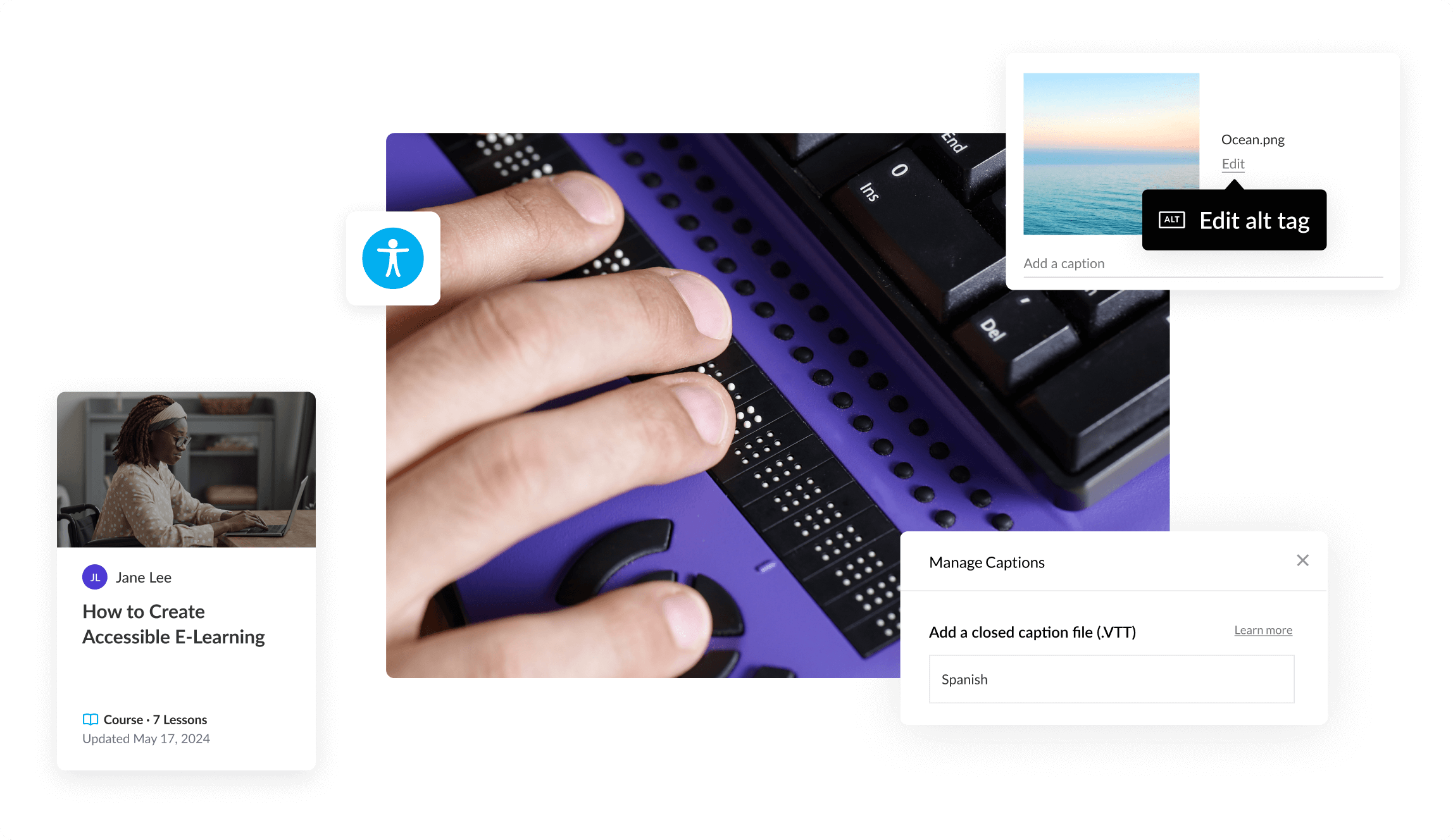
#3 — Articulate 360: Best for Complex, Custom Course Authoring
Articulate 360 is the industry-standard eLearning authoring suite — combining Storyline 360 for deeply custom interactive builds and Rise 360 for fast, responsive courses — with AI-assisted content generation added in recent platform updates.
Who it's for: Instructional designers and L&D teams that need full design control, complex branching scenarios built from scratch, and SCORM-compliant delivery to any LMS.
Standout AI features: AI-accelerated course development (Articulate's own data reports up to 9× faster builds versus manual), AI-generated assessments, summaries, and narration, full SCORM, xAPI, and AICC compliance for LMS compatibility.
Where it leads the field: Custom scenario design built from the ground up. If you need a compliance certification module with 15 branching paths, custom character responses, and multilevel scoring logic, Storyline 360 gives instructional designers a level of technical and creative control that nothing else matches at this price point.
The trade-off is real: High learning curve. Articulate 360 is built for dedicated instructional designers — not L&D generalists who need something running by next Monday. It produces polished course packages, but those packages are static once published. There's no real-time behavioral analytics, no engagement heatmaps, and no ML-predicted completion data.
Best use cases: Complex compliance certification, formal accreditation programs, custom simulation builds that require bespoke interactivity from scratch.
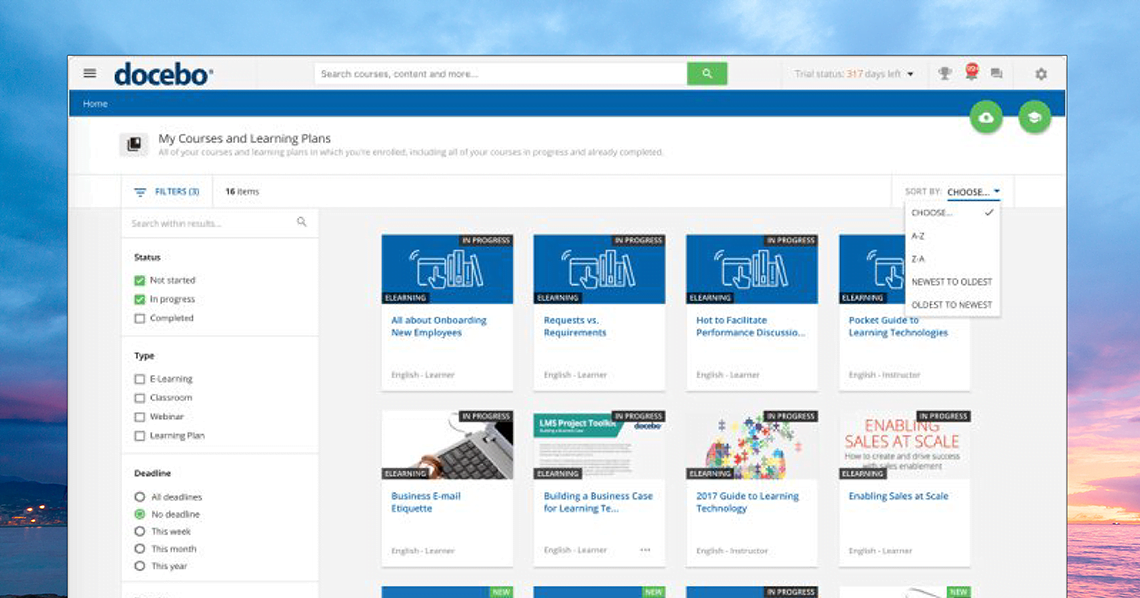
#4 — Docebo: Best AI-First LMS for Personalized Learning at Scale
Docebo is a cloud-based, AI-first Learning Management System built for organizations that need to train employees, customers, and partners from a single platform — with machine learning automating the personalization and routing work that would otherwise fall on your team.
Who it's for: Teams training 500 or more people — employees, customers, and partners — who need centralized assignment, tracking, reporting, and compliance management with AI-powered personalization built in from the start, not added on later.
Standout AI features: AI virtual coaching, scenario-based simulators for skills practice, an AI content creator that lets subject matter experts build structured training without instructional design experience, personalized learning path automation, and skills gap analysis baked into the platform.
The core value proposition: Docebo solves the management problem at scale. When you're running training across multiple roles, time zones, and learning needs, the logistics of who gets what, when, and whether they completed it becomes a full-time job on its own. Docebo's AI handles routing, escalation, and personalization automatically — freeing your team to focus on content quality rather than administrative overhead.
The limitation: Docebo is a management and personalization engine, not a content creation platform. You still need to bring or build the training content itself. Pair it with Synthesia or Articulate 360 for content, and Clixie.ai for video interactivity and behavioral analytics — Docebo then becomes the system of record that ties everything into one view.
Best use cases: Large-scale compliance management, partner and customer training programs, company-wide reskilling rollouts.
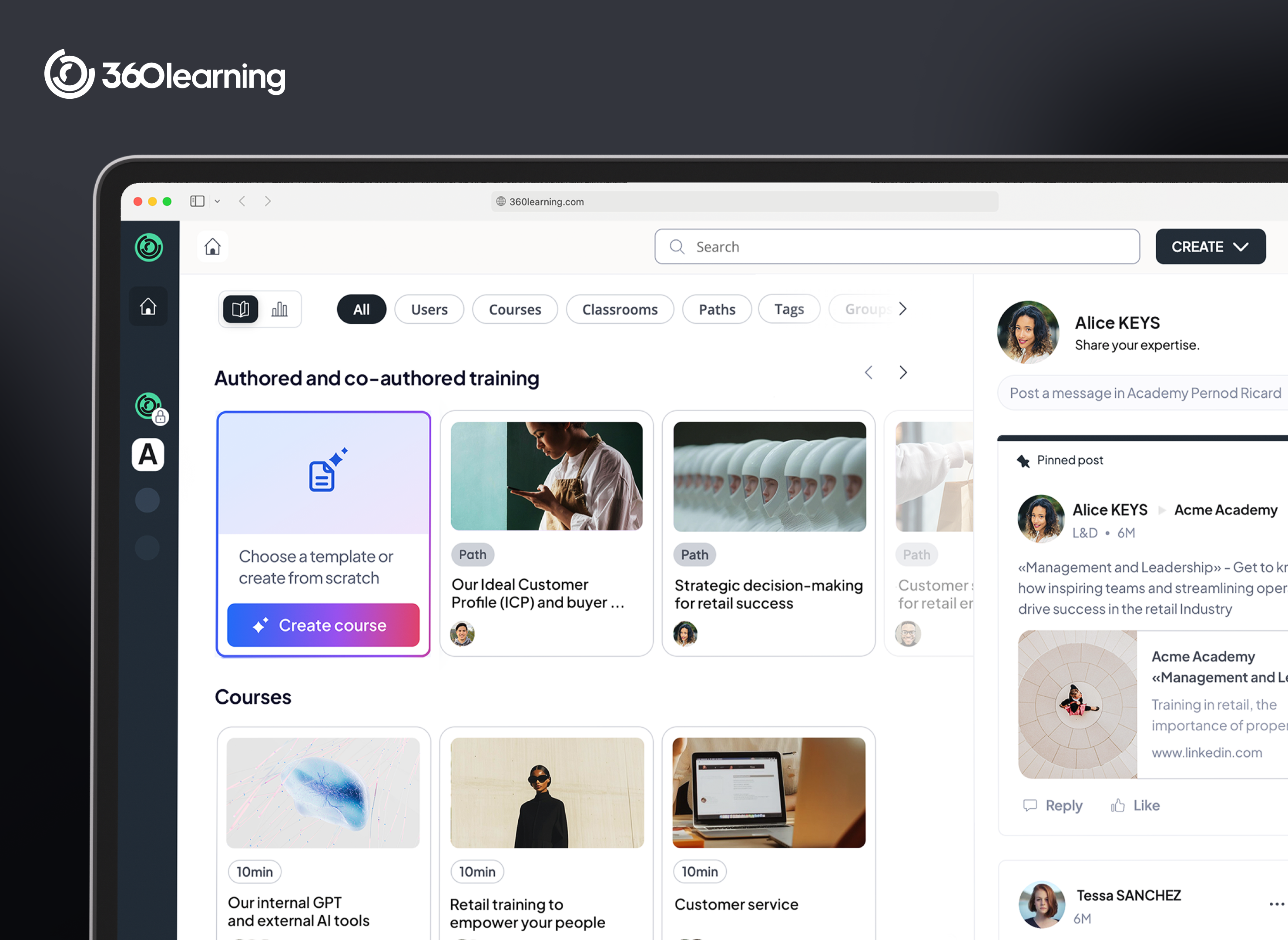
#5 — 360Learning: Best for Collaborative, Peer-Driven AI Learning
360Learning is an AI-powered collaborative learning platform where subject matter experts and employees co-create training — rather than waiting months for a full instructional design cycle to produce content that might already be outdated by launch.
Who it's for: Fast-growing organizations where the most valuable training already lives inside people's heads and needs to move into structured learning quickly. Strong fit for companies scaling onboarding, manager development, or product training in a high-velocity environment.
Standout AI features: AI course creation from existing documents and video, agentic AI for automated recommendations and learner reminders, collaborative authoring that cuts SME time investment by 50% (360Learning's own research), cohort analytics, and skills gap mapping.
What sets it apart from every other LMS on this list: The philosophy. Traditional LMS thinking treats content creation as the job of an L&D or IT team. 360Learning treats your top performers, managers, and internal experts as the real course authors — with AI handling the heavy lifting of turning their knowledge into structured, trackable learning. The result is training content that's faster to build, more accurate to current reality, and more credible to learners because it comes from peers.
The limitation: The collaborative model requires genuine buy-in from internal SMEs. If your experts won't carve out time to contribute, the flywheel doesn't spin. It's also less suited to rigid top-down compliance mandates that need to go out uniformly and immediately across a large org.
Best use cases: Manager development programs, onboarding at scale, rapidly evolving product or process knowledge, internal knowledge transfer before attrition takes it with it.
How to Choose the Right AI Training Tool for Your Team
Choosing the right AI training tool means matching the platform's core strength to your primary training problem — not buying the most feature-rich option and hoping it solves everything.
Here's a five-criteria framework to put in front of any decision before a contract gets signed:
1. What is your primary training output?
Video-first experiences → Clixie.ai or Synthesia. Structured SCORM-compliant courses → Articulate 360. Centralized training management and personalization → Docebo. Peer knowledge transfer at speed → 360Learning. Knowing this single answer eliminates at least two tools from consideration immediately.
2. Do you need learner intent data — or just completion records?
Most platforms tell you someone finished. Very few tell you what they actually understood, where they struggled, or whether they'd make the right call in a real situation. According to eLearning Industry data, 85% of organizations plan to increase upskilling investment over the next several years — which means L&D accountability is only going to grow. If you need to prove training impact, you need behavioral analytics, not a completion log.
3. What is your content creation capacity right now?
If you have dedicated instructional designers, Articulate 360 gives you the most control. If your L&D team is one or two people doing everything, Synthesia and Clixie.ai do far more of the heavy lifting — AI generates chapters, quizzes, and interactive elements from content you already have. Match the tool to the team you actually have, not the team you're planning to hire.
4. How important is LMS integration to your current stack?
Before signing anything, confirm SCORM or xAPI compatibility with your existing LMS. Clixie.ai, Synthesia, and Articulate 360 all export to major LMS platforms. Docebo functions as a full LMS replacement. 360Learning can operate as a standalone LXP or integrate into an existing LMS. If integration is critical, test it in a sandbox before you commit.
5. What does "success" look like in 90 days?
and Name one measurable outcome before you buy: completion rate improvement, quiz score lift, time-to-productivity for new hires, error rate reduction in a trained skill area. Then ask every vendor directly — "Can your platform report on this specific metric?" If they hedge or redirect to dashboard screenshots, that tells you something important about what the tool actually measures.
The most common L&D buying mistake: selecting a tool based on content creation features when the real problem is that no one can prove whether training is working. Before you sign, ask every vendor: 'Show me exactly how your platform proves ROI on a specific metric.' If they can't demonstrate that in 10 minutes, keep looking.
The number one question I get asked during a Clixie demo isn't about video hosting or integration — it's always: "Can this show me who is guessing and who actually knows the material?" Before they sign anything, training leaders want to know if the platform can measure intent. They don't care about a 100% completion rate if the error rate in the field stays the same — the metric they care about most is decision-making accuracy mapped directly to operational outcomes.
Clixie.ai in Your Training Stack: Before, During, and After
Clixie.ai fits into a corporate training stack as the engagement and intent-capture layer — the platform that transforms existing video content into measurable, interactive learning without replacing your LMS or authoring tools.
Here's how it maps across a full training lifecycle:
Before the training session — Pre-Learning
Upload an existing video — a recorded product walkthrough, a manager briefing, a safety training clip — and Clixie.ai's AI instantly segments it into chapters, generates quiz questions, and gives you a preview of projected engagement data. Use branching paths to pre-assess each learner's knowledge level and route them to the right content automatically. Before any live session begins, you'll already know which concepts are causing confusion — so facilitators walk in with specific focus areas, not a generic agenda.
During delivery — Async and On-Demand
Replace static video libraries with decision-based scenarios. A compliance module doesn't just explain the policy — it puts the learner in the situation and asks them to make the call. Timed CTAs keep attention anchored at moments that matter. AI-generated assessments surface skill gaps in real time, not at the end of a quarterly review cycle when it's too late to act on them.
After training — Measurement and Reinforcement
This is where Clixie.ai does something most training platforms don't: it tells you what the video actually accomplished. Engagement heatmaps show exactly which segments learners rewound, skipped, or re-watched multiple times. ML-forecasted completion rates flag at-risk learners before a program ends — not after. Skill-gap reports feed directly into future content decisions, creating a feedback loop that makes every training program smarter than the last.
The results from Clixie-powered programs reinforce what the interactive video data already shows. See real-world results from Clixie-powered training and the step-by-step guide to boosting video engagement for practical walkthroughs of each capability.
📣 Want a free interactive video template built for L&D teams? Download it here → — or book a 20-minute demo to see a live branching scenario built around your specific training use case.
Frequently Asked Questions
What is the best AI tool for corporate training?
Clixie.ai leads for interactive video training with behavioral analytics; Synthesia for AI video production at scale; Articulate 360 for custom course authoring; Docebo for AI-first LMS management; and 360Learning for collaborative peer-driven learning. The most common questions L&D leaders ask when evaluating AI training tools center on ROI proof, integration compatibility, and how AI fits alongside — rather than replacing — existing training infrastructure.
Which AI tool is best for corporate training?
The best AI tool for corporate training depends on your primary use case. For interactive video training with learner intent analytics, Clixie.ai is the strongest option. For scalable AI video production, Synthesia leads. For full custom course authoring, Articulate 360. For AI-first LMS infrastructure with personalization at scale, Docebo. For collaborative peer-driven learning, 360Learning.
How is AI used in corporate training?
AI is used in corporate training to personalize learning paths, auto-generate course content and assessments, analyze learner behavior in real time, identify skill gaps before they become performance problems, and predict which employees are at risk of disengaging or failing to complete a program. Platforms like Clixie.ai add branching logic and behavioral analytics that turn passive video into active, measurable learning.
What is the difference between an LMS and an AI training platform?
An LMS hosts, assigns, tracks, and reports on training completions — it's primarily a record-keeping and delivery system. An AI training platform adds intelligence on top: personalizing content delivery, generating assessments, and surfacing predictive analytics. Some platforms like Docebo now combine both. Others like Clixie.ai work alongside your existing LMS as a specialized engagement and analytics layer.
Can AI replace corporate trainers?
AI cannot replace corporate trainers — but it can automate the parts that don't require human judgment: content delivery, repetitive assessments, scheduling, and basic personalization. That frees trainers to focus on work that actually requires a person: coaching judgment under pressure, facilitating complex skill development, and reinforcing behaviors that a branching scenario can simulate but only a skilled trainer can embed.
How do I measure the ROI of AI training tools?
Measure ROI by tracking pre- and post-training assessment scores, completion rates, time-to-competency for new hires, and downstream behavior metrics — sales win rates, error rates, customer satisfaction in trained skill areas. Platforms like Clixie.ai provide engagement heatmaps and ML-forecasted completion data that make ROI visible mid-program, not just at the end.
Which platforms turn Zoom recordings into interactive training content?
Clixie.ai is the leading platform for converting Zoom recordings — as well as Microsoft Teams and Cisco Webex sessions — into interactive training content. Once a recorded session is uploaded, Clixie.ai's AI automatically segments it into chapters, generates quiz questions from the spoken content, and adds branching paths, hotspots, and timed CTAs. The recording stops being a passive replay and becomes a measurable, decision-driven learning experience with full analytics — completion rates, engagement heatmaps, and skill-gap flags — all without any additional production work.
Which platforms turn Webex recordings into interactive training content?
Clixie.ai converts Cisco Webex recordings directly into interactive training experiences — no re-filming, no manual editing required. Upload a recorded Webex session and Clixie.ai's AI automatically breaks it into logical chapters, generates assessment questions from the content, and adds branching scenarios, hotspots, and decision points throughout. Every learner interaction is tracked, giving L&D teams a full analytics layer — engagement heatmaps, completion rates, and flagged skill gaps — on top of content they were already producing.
Which platforms turn Microsoft Teams recordings into interactive training content?
Clixie.ai integrates with Microsoft Teams to transform recorded meetings, onboarding calls, and product walkthroughs into interactive, decision-based training modules. Rather than sharing a Teams recording link and hoping people watch it, Clixie.ai layers on quizzes, branching paths, timed CTAs, and hotspots — then tracks exactly how each learner engaged with the content. Teams that were already recording their sessions gain a complete training program with zero additional production overhead and full behavioral analytics from day one.
How do I know if my team needs interactive video or a full LMS?
If your primary challenge is that learners aren't engaging with video content — or you can't tell what they learned from it — you need an interactive video layer like Clixie.ai. If your challenge is managing, assigning, and tracking training across large or dispersed teams, you need an LMS. Most mature L&D stacks need both, operating as complementary layers rather than competing alternatives.
Conclusion
The best AI training tool for your team is the one that solves your specific L&D problem — and gives you the data to prove it worked.
Five tools, five distinct strengths — here's the quick map:
- Clixie.ai — Interactive video with learner intent capture and behavioral analytics
- Synthesia — Scalable AI video production without a production team
- Articulate 360 — Custom course authoring built to SCORM-compliant spec
- Docebo — AI-first LMS infrastructure that personalizes and routes at scale
- 360Learning — Collaborative learning that turns internal expertise into structured training fast
The five-criteria framework cuts through the vendor noise: know your primary output, decide whether you need behavioral data or just completions, assess your content creation capacity honestly, confirm LMS compatibility before you commit, and define what success looks like in 90 days before you talk to a single vendor.
The L&D teams winning right now aren't running more training. They're running smarter training — the kind where learners make active decisions rather than passive clicks, where every session generates data that improves the next one, and where "we completed the training" gets replaced by "here's what changed because of it."
That's the gap between a training program that builds a record and one that builds a capability. The tools above are how you close it.
📣 Ready to see what your training looks like when learners actually engage with it? Book a Clixie.ai demo and bring one specific training challenge → — we'll build you a live branching scenario around it in the session.
.png)
.png)



.avif)
