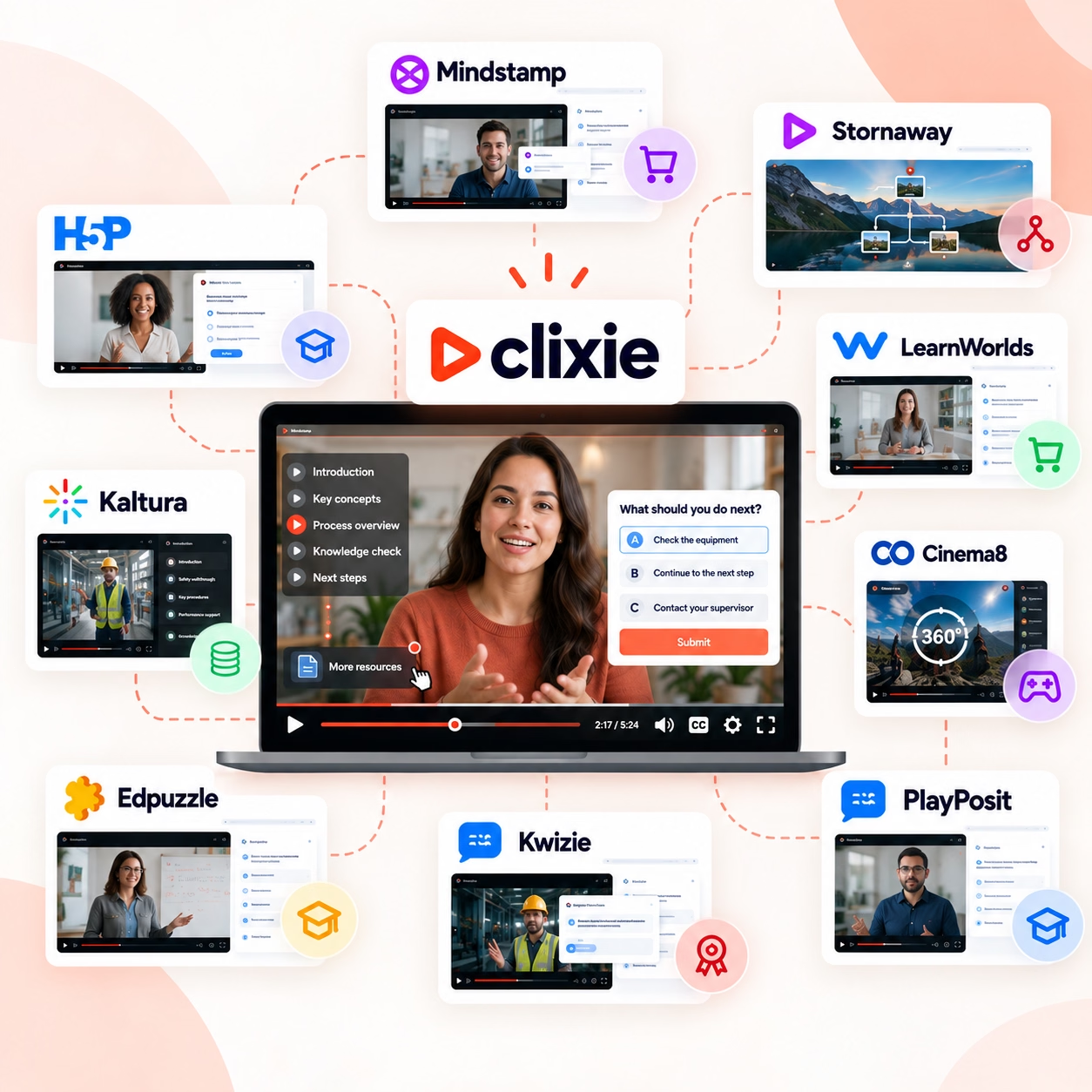
Best Cinema8 Alternatives for Interactive Training Video in 2026
Compare the 8 best Cinema8 alternatives for interactive training video. SCORM, xAPI, LMS fit, branching, and learner analytics, side by side for L&D teams.


Cinema8 is a capable interactive video platform. It exports SCORM 1.2 and SCORM 2004, supports LTI, and handles xAPI through its Widget Development Environment. L&D teams compare alternatives to Cinema8 not because of missing features, but because different platforms are built around different operating models. When the authoring, LMS packaging, branching, and learner reporting workflow needs to center on training delivery, teams evaluate Cinema8 competitors that lead with that use case.
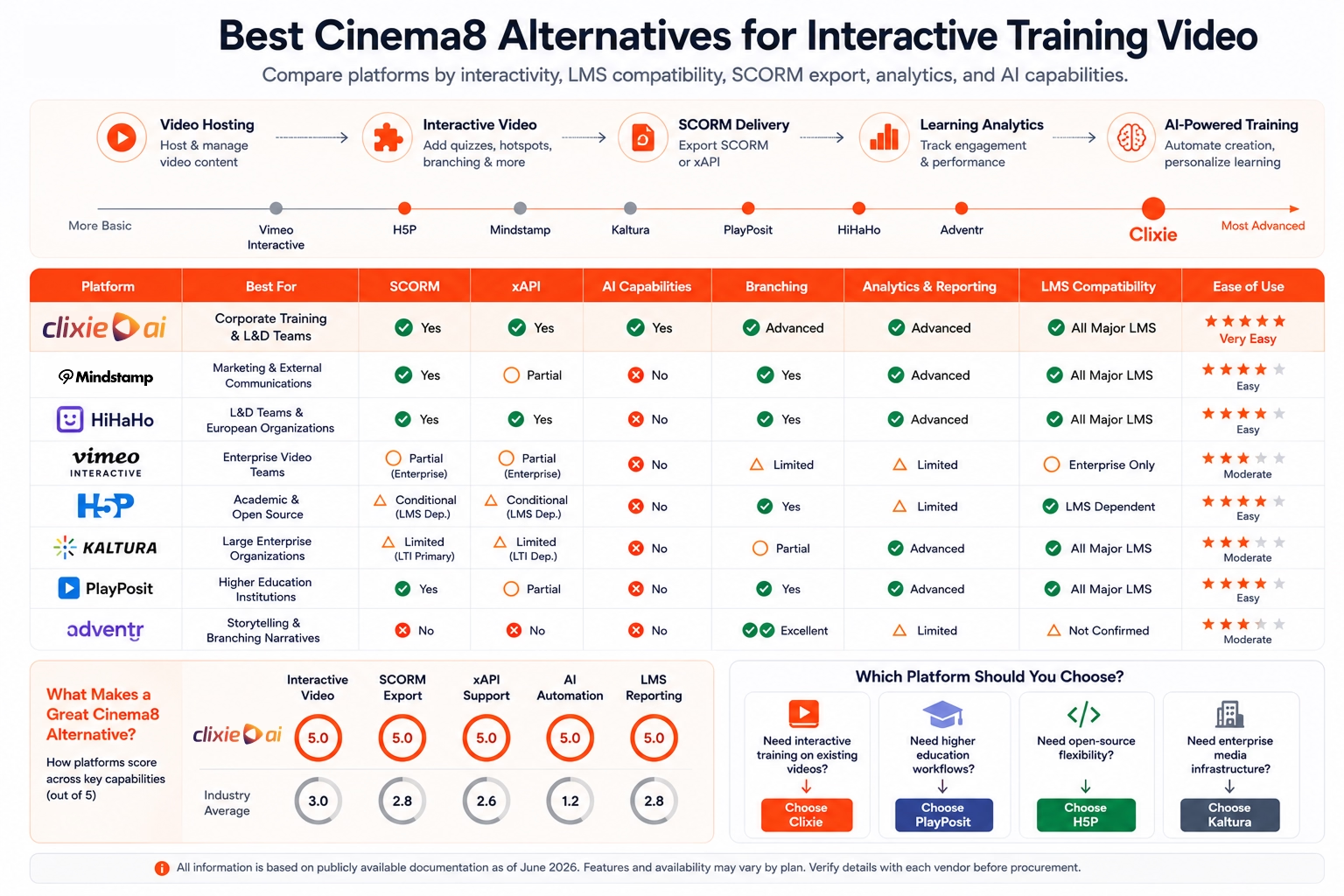
Best Cinema8 alternatives by use case:
This guide covers each platform's SCORM and xAPI status, LMS deployment model, branching capability, training analytics, and primary fit, sourced from vendor documentation as of June 2026.
Key Takeaways
- Cinema8 supports SCORM 1.2, SCORM 2004, LTI, and xAPI. Teams compare alternatives based on workflow fit, not capability gaps.
- Vimeo Interactive SCORM and xAPI LMS integration requires an Enterprise plan with Interactive and Learner add-ons.
- H5P SCORM behavior depends on LMS plugin, wrapper, or hosting setup. It is not a standalone direct-export authoring tool.
- Clixie supports SCORM 1.2, SCORM 2004, and xAPI with no-code scenario branching and training-centered learner analytics.
Quick Comparison: Cinema8 Alternatives for Training Teams
The table below maps each alternative against the criteria L&D buyers use most: SCORM export, xAPI support, LMS deployment method, branching depth, training analytics, and primary fit. Values reflect publicly documented capabilities as of June 2026. Conditional values indicate capability that depends on plan tier, LMS configuration, or integration setup. Cinema8 is included as the reference platform.
Why Do Teams Compare Cinema8 Alternatives?
Cinema8 covers multiple interactive video use cases: e-learning, marketing, onboarding, eCommerce, and LMS delivery. That breadth is useful. But it also means buyers may compare Cinema8 competitors that are more specialized around one workflow. Teams evaluating alternatives to Cinema8 aren't typically finding a missing feature. They're asking whether this platform's operating model matches how their L&D function actually works.
Three patterns show up most in that comparison process. First: teams where the LMS is the system of record, and they want content that lives inside the LMS natively rather than alongside it as a linked tool. Second: L&D teams who need a training designer (not a developer) to build and update branching scenarios without video editing overhead. Third: organizations where learner analytics means completion rates, pass/fail status, and branching path data flowing into an LRS or LMS gradebook, not general viewer engagement metrics.
Cinema8 addresses all of these. What the comparison comes down to is which platform built those capabilities as its primary assumption.
What to Look for in a Cinema8 Alternative
Five criteria matter most when L&D buyers evaluate SCORM interactive video platforms for training delivery: SCORM version support, xAPI capability, no-code branching, LMS deployment model, and learner analytics depth.
SCORM version support. SCORM 1.2 offers the widest LMS compatibility. SCORM 2004 adds sequencing and navigation rules, useful for compliance modules where learners must pass one section before advancing. The version you choose affects how completion and score data are communicated to the LMS.
xAPI support. xAPI tracks learning experiences beyond simple completion: time on task, branching path taken, response-level data, and learning that happens outside the LMS. It requires a Learning Record Store. Many LMSs include one or connect to one, but not all. Confirming your LMS has an LRS before prioritizing xAPI in a vendor selection avoids a mismatch.
No-code branching. Can a training designer build and update a scenario without developer involvement? Platforms that require timeline editing or code to create conditional paths add overhead that slows update cycles in compliance-sensitive programs.
LMS deployment model. Native SCORM package export, LTI integration, and embedded video link are three different deployment models with different implications for how content is tracked, updated, and launched. A SCORM package is a static zip imported once; updates require re-upload. LTI connects live to the LMS, so updates propagate without re-uploading.
Learner analytics depth. Marketing-oriented engagement analytics measure plays, drop-offs, and click-through rates. LMS interactive video training analytics measure completion status, quiz scores, time on task, branching path, and pass/fail against a threshold. The question is whether the outputs match what your LMS or compliance system needs to receive.
SCORM vs. xAPI: Which Does Your LMS Need?
SCORM 1.2 remains the baseline standard; nearly every LMS platform supports it. xAPI stores data in an LRS rather than sending it directly to the LMS, enabling richer tracking across learning experiences. Many LMSs support xAPI, but that support depends on whether the LMS includes or connects to a Learning Record Store. Verify your LMS's xAPI capability before building a workflow that depends on it. Clixie's SCORM integration and xAPI integration pages document both deployment paths in detail.
Best Cinema8 Alternatives in 2026
1. Clixie: Best for Corporate L&D with No-Code SCORM/xAPI and Branching
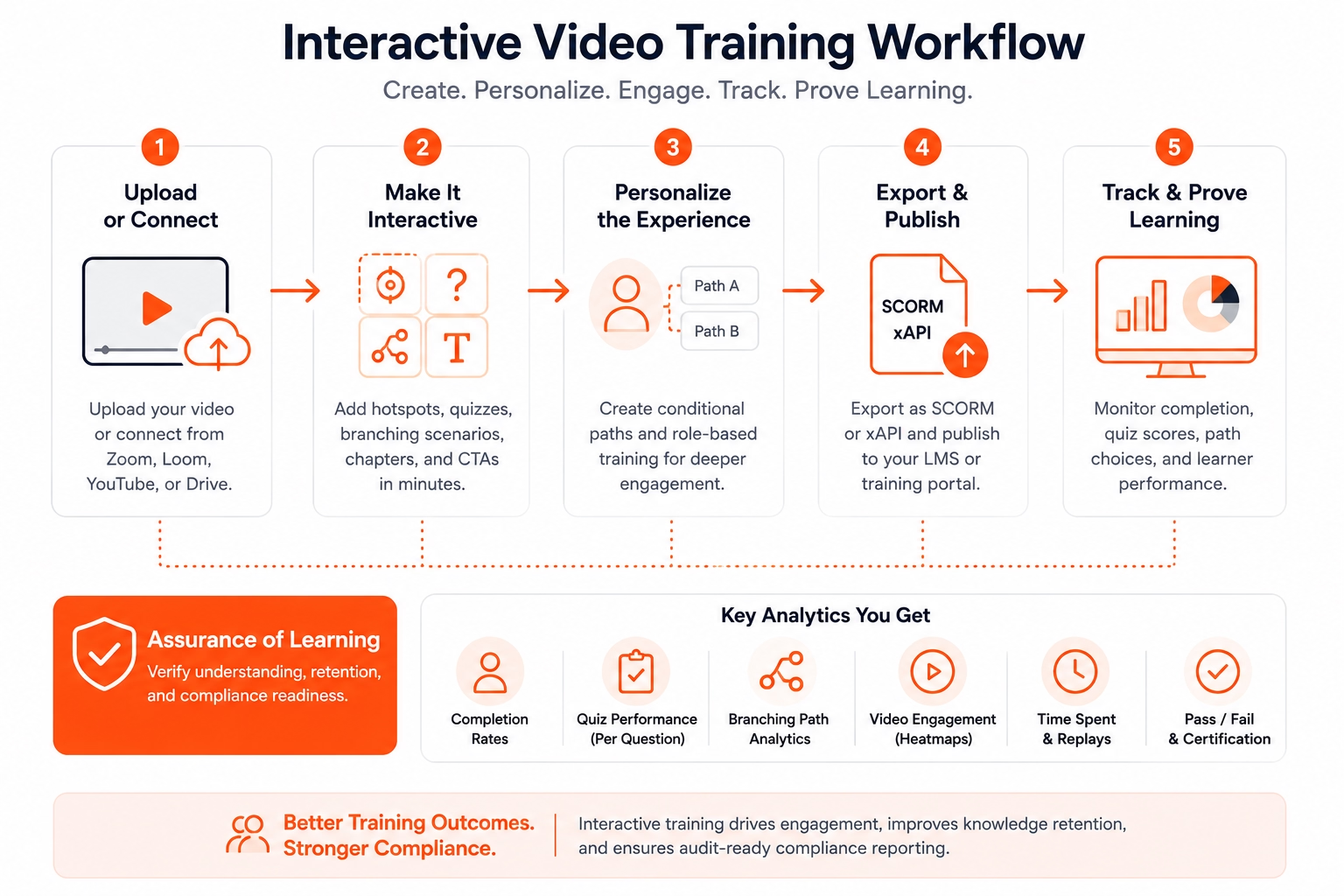
Clixie is an interactive training video platform built around L&D workflows. It supports SCORM 1.2, SCORM 2004, and xAPI, with a no-code scenario builder that lets training designers create branching paths without video editing tools or developer support. Learner analytics cover training outcomes: completion status, quiz scores, branching path data, and LMS-compatible reporting.
The platform is designed for teams that need to deploy LMS interactive video inside an existing system without rebuilding content workflows. Modules export as SCORM packages or connect via xAPI to an LRS. For L&D teams in corporate training, compliance, and employee onboarding, training delivery is the core use case the platform was built around. See Clixie's SCORM integration page for deployment detail.
2. HiHaHo: Best for European Organizations
HiHaHo is a Dutch-built interactive video platform with documented support for SCORM, xAPI, and embed code for LMS and e-learning implementation. GDPR compliance is a native design consideration, which matters for European organizations where data residency and processing agreements are part of vendor selection. The platform supports compliance training, onboarding, and skills video with strong branching capability.
HiHaHo's primary fit is European training teams in regulated industries that need documented LMS standards support alongside GDPR-aligned data handling. It does less in marketing and eCommerce workflows compared to broader platforms like Cinema8, which is a reasonable trade-off for teams that need neither.

3. Vimeo Interactive: Best for Existing Vimeo Enterprise Users
Vimeo added SCORM, xAPI, AICC, and cmi5 LMS integration in its Spring 2025 release, with viewer completion data and quiz results flowing to LMS gradebooks. This capability requires an Enterprise plan with Interactive and Learner add-ons, as documented in Vimeo's LMS help center{target="_blank" rel="nofollow"}. Standard Vimeo plans do not include LMS integration.
The SCORM implementation uses Rustici Cross Domain, which creates a proxy wrapper allowing video to stream from Vimeo while sending completion and score data to the LMS. Rustici's January 2026 case study notes L&D is now Vimeo's second-largest use case. For organizations already on Vimeo Enterprise, this is a credible path to LMS integration without a platform migration. For teams starting fresh with L&D-first priorities, the Enterprise plan requirement and add-on gating are meaningful cost and complexity factors.

4. H5P: Best for Academic and Open-Source Use Cases
H5P is an open-source interactive content framework, not a standalone authoring-and-export tool. It runs as a plugin or integration inside LMS platforms including Moodle, Canvas, Blackboard, and Brightspace. Branching scenarios, course presentations, and interactive video are among its content types, and the framework is widely supported across academic institutions.
SCORM packaging behavior in H5P depends on the LMS, plugin version, and hosting configuration. H5P content embedded through an LMS plugin typically communicates with the LMS directly without a SCORM wrapper, which works inside the LMS but limits portability to other systems. Teams that need SCORM packages for distribution outside their LMS may need an additional export layer or wrapper. H5P.com offers hosted subscription plans; self-hosting requires server setup.
5. Kaltura: Best for Large-Scale Enterprise Media Management
Kaltura is an enterprise video platform built for organizations managing large video libraries across multiple business functions. It integrates with Canvas, Moodle, and Blackboard through LTI, enabling instructors to embed Kaltura video directly into LMS course pages. The platform supports interactive video through Kaltura Interactive Video Paths and in-video quizzes, with analytics that feed into LMS gradebooks via LTI grade passback.
Kaltura's positioning is media management and delivery at scale, not SCORM interactive video authoring. Teams that need to author and export SCORM packages as the primary workflow will find Kaltura's strength is elsewhere. It fits organizations that need a centralized video repository connected to multiple LMS instances, with live streaming, VOD, and enterprise security.
.avif)
6. PlayPosit: Best for Higher Education LTI Environments
PlayPosit is an interactive video platform built primarily for higher education. It integrates natively with Canvas, Blackboard, D2L, Schoology, and Moodle via LTI, and LMS integration requires an institutional license. Instructors build "bulbs": interactive video lessons with embedded questions, discussions, and audience response interactions. Grades sync directly to the LMS gradebook through LTI grade passback.
SCORM export is available through PlayPosit, though the primary deployment model is LTI rather than SCORM packages; verify current export options directly with PlayPosit if SCORM packaging is a procurement requirement. xAPI support is not publicly documented. PlayPosit's platform orientation is higher education instruction, not corporate L&D. Organizations outside of higher ed should confirm the licensing model before evaluating it as a training platform option.
.avif)
7. Adventr: Best for Branching Narrative and Interactive Streaming
Adventr is an interactive streaming platform built for choice-driven, branching video experiences. It supports voice control, multiplayer interactions, and non-linear narrative structures beyond typical question-overlay tools. It appears on SourceForge's Cinema8 alternatives listing and is relevant for teams whose comparison intent includes narrative-first branching.
SCORM and xAPI support are not publicly documented on Adventr's platform. The primary deployment model is web-based interactive streaming and embed rather than LMS package export. For L&D teams that need SCORM-ready content for LMS delivery, verify Adventr's LMS integration directly with the vendor before including it in a procurement evaluation. Its best fit is marketing, branded interactive content, and narrative experiences where LMS integration is not the core requirement.
.avif)
8. Mindstamp: Best for YouTube-Based Interactive Video
Mindstamp makes existing video interactive without a video editor. It works with YouTube, Vimeo, Wistia, and self-hosted files and supports overlays, branching, quizzes, and hotspots. SCORM 1.2 and SCORM 2004 export are available on CORE, PRO, and ENTERPRISE plans, according to Mindstamp's LMS documentation{target="_blank" rel="nofollow"}. xAPI support is not publicly documented. Verify with the vendor before building an xAPI workflow.
Mindstamp fits teams that already have video hosted elsewhere and want to layer in interactivity and LMS packaging without migrating to a new platform. Branching is available but less extensive than dedicated scenario-authoring tools. See the Best Mindstamp Alternatives for Interactive Training Video post for a parallel comparison.
What Are the Best Cinema8 Alternatives for SCORM and LMS Training?
For L&D teams that need SCORM or xAPI as the foundation of their training delivery workflow, the most relevant comparison is not whether a platform supports those standards at all (most do, or partially do), but how the platform was built to serve that use case from the start.
Clixie supports SCORM 1.2 and SCORM 2004 export, xAPI integration, and no-code scenario branching, with learner analytics centered on training outcomes. Cinema8's SCORM and LTI documentation confirms it exports SCORM 1.2 and SCORM 2004 and supports xAPI through its Widget Development Environment. Cinema8 is the reference platform here, not a weaker option. Vimeo Interactive adds SCORM and xAPI on its Enterprise plan with specific add-ons. HiHaHo's LMS integration documentation confirms SCORM, xAPI, and embed-code LMS implementation with a European compliance orientation. H5P delivers SCORM and xAPI behavior through LMS plugins and wrappers. It works inside LMS environments but is not a direct-export authoring tool.
Teams evaluating Cinema8 alternatives for training should compare platforms based on how SCORM and xAPI fit into their LMS stack and authoring workflow, not just whether export is listed as a feature.
Cinema8 Alternatives: Frequently Asked Questions
What is the best overall Cinema8 alternative?
The best Cinema8 alternative depends on your use case. For corporate L&D teams that need SCORM/xAPI export and no-code branching, Clixie. For open-source and academic environments, H5P. For organizations already on Vimeo's Enterprise plan, Vimeo Interactive. For European GDPR-sensitive teams, HiHaHo. For higher education LTI environments, PlayPosit. For narrative branching and interactive streaming, Adventr.
Which Cinema8 alternatives export SCORM packages?
Clixie, Mindstamp (CORE plan and above), HiHaHo, and PlayPosit all support SCORM export. Vimeo Interactive exports SCORM packages on Enterprise plans only. H5P SCORM behavior depends on LMS plugin and hosting configuration. It is not a direct-export tool. Cinema8 itself exports SCORM 1.2 and SCORM 2004, as documented in Cinema8's SCORM and LTI documentation.
Is Cinema8 SCORM-compliant?
Yes. Cinema8's SCORM and LTI documentation confirms export support for SCORM 1.2 and all editions of SCORM 2004, with LTI support for live LMS delivery. xAPI integration is available through Cinema8's Widget Development Environment, which lets developers issue xAPI statements and connect to a Learning Record Store alongside SCORM tracking.
What is the best Cinema8 alternative for corporate training?
Clixie is the closest fit for L&D teams that need no-code branching, SCORM and xAPI export, and training-oriented analytics in one platform. Vimeo Interactive is a credible option for organizations already on Vimeo's Enterprise plan. PlayPosit fits higher education L&D environments built on LTI-connected LMS platforms like Canvas and Blackboard. The right answer follows the LMS and the authoring workflow, not just the feature list.
Which Cinema8 alternatives support xAPI?
Cinema8 documents xAPI integration through its Widget Development Environment. Clixie, HiHaHo, and Vimeo Interactive (Enterprise plan) all document xAPI support. H5P and Kaltura xAPI behavior depends on LMS, plugin, or integration configuration. Mindstamp, PlayPosit, and Adventr xAPI support is not publicly confirmed. Verify directly with each vendor before relying on xAPI in a procurement process.
What is the difference between Cinema8 and Clixie?
Both platforms support SCORM, interactive video, branching, and LMS integration. Cinema8 is built across multiple use cases: marketing, eCommerce, onboarding, and training. Clixie is built for L&D delivery: no-code scenario branching, SCORM and xAPI export, and learner analytics designed around training outcomes rather than general viewer engagement. The difference is platform orientation, not a capability gap on either side.
Is there a free Cinema8 alternative for interactive training video?
H5P is open-source and free, with interactive video, branching scenarios, and LMS plugin support. Cinema8 offers a free tier. HiHaHo and Mindstamp both offer free trials. Vimeo's free plan does not include LMS integration; that requires an Enterprise plan. Most platforms with SCORM export put that feature behind a paid plan.
Which Cinema8 Alternative Fits Your Training Workflow?
Cinema8 is a capable interactive video platform with SCORM, LTI, xAPI, branching, and learner analytics. Teams look at Cinema8 competitors when they want a platform whose core operating model matches their training delivery approach from the start, not a platform that handles training alongside several other use cases.
For L&D teams that need no-code branching, SCORM and xAPI export, and training-centered analytics feeding into an LMS or LRS, Clixie was built for that workflow. For European organizations with GDPR requirements, HiHaHo is the strongest fit. For teams already invested in Vimeo, the Enterprise plan adds LMS integration without a platform change. For academic environments, H5P delivers strong interactive content inside existing LMS infrastructure at no cost.
Start from your LMS and your authoring team's technical capacity. Work backward to the platform from there.
Request a Clixie demo to see SCORM export, no-code branching, and learner analytics in a live walkthrough.
.png)
.png)