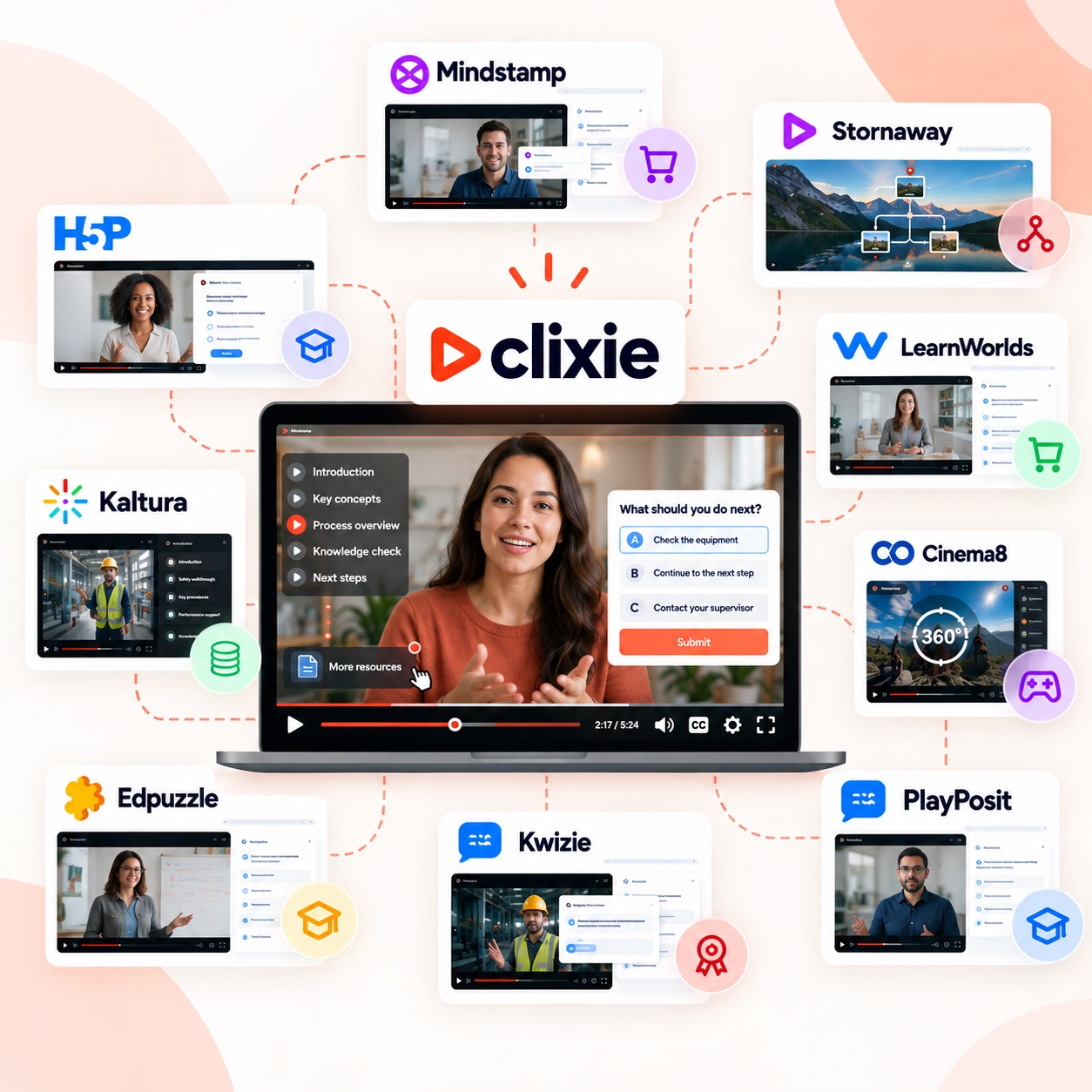
6 Best Mindstamp Alternatives for Interactive Training Video (2026)
Compare the 6 best Mindstamp alternatives for interactive training video. Covers SCORM, xAPI, LMS integration, branching scenarios, and learner analytics.


TL;DR
- Most Mindstamp alternatives lists are built for marketers. This one is for L&D and training teams.
- Top switching criteria: SCORM support, LMS compatibility, branching scenarios, and learner analytics that go beyond view counts.
- Clixie AI leads this list for teams deploying interactive training video inside a corporate LMS.
- H5P is the strongest open-source option; Edpuzzle and LearnWorlds serve narrower use cases.
- Match the platform to your delivery context before switching.
Key Takeaways
- Clixie AI is an interactive video platform that supports SCORM, xAPI workflows, branching scenarios, and LMS integration for corporate training.
- H5P is an open-source framework that enables interactive video inside Moodle, Canvas, and Drupal environments.
- Mindstamp is an interactive video platform used across training, education, and engagement-focused video programs.
- SCORM is a technical standard that allows interactive video content to track learner progress, quiz scores, and completion status inside an LMS.
- xAPI captures granular learner behavior beyond SCORM's pass/fail model, including branching path decisions.
- Branching scenario video is a training format where a learner's in-video decision determines which content plays next, generating role-specific learning paths.
- LearnWorlds is a course platform with interactive video features suited for course creators and training academies.
- Edpuzzle is a video-based assessment tool primarily used in K-12 and higher education.
Quick Comparison: Mindstamp Alternatives for Training Teams
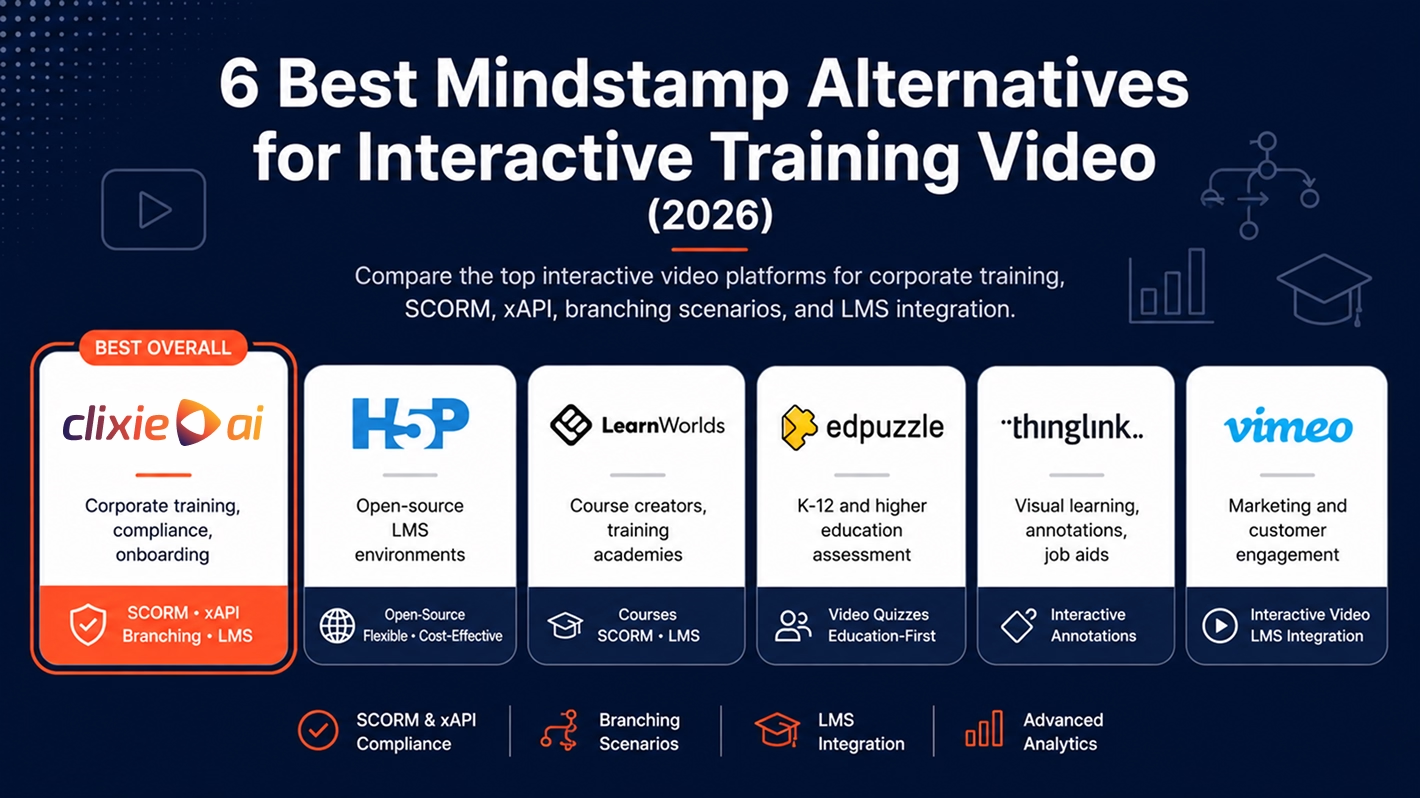
These six platforms are the strongest Mindstamp alternatives for training teams. The table below shows how each compares on the criteria that matter most for L&D deployment.
Why Teams Switch From Mindstamp
Teams typically switch from Mindstamp when their training requirements outgrow engagement-focused interactive video workflows. The trigger is almost always one of three gaps.
Deeper LMS reporting. Teams running formal training programs inside Moodle, TalentLMS, Docebo, or Cornerstone need tracked completion data, quiz scores, and audit-ready records. Mindstamp offers engagement and learner interaction reporting, but teams with heavier compliance or xAPI requirements should compare reporting depth carefully against what their program actually demands.
xAPI-level analytics. As L&D teams move beyond pass/fail tracking, xAPI becomes important for capturing branching path decisions, time-on-task data, and learner behavior patterns that inform content improvement. Not every interactive video platform supports xAPI workflows at the same depth, and that gap matters when training outcomes need to be defensible.
Branching-based compliance and onboarding. Compliance programs and onboarding simulations require decision-tree logic connected to learner roles and outcomes. That is a different design requirement from clickable overlays or in-video buttons. Teams building scenario-based compliance training often find they need a platform where branching is a core workflow, not a secondary feature. See 7 proven benefits of interactive training video for a breakdown of what those programs look like in practice.
Introduction
Only 10% of employees report that compliance training has any practical impact on their work, according to Gallup (eLearning Industry, 2025). That is not a content problem. It is a format problem.
Passive video does not produce behavior change. Clicking through slides does not produce comprehension. The organizations switching platforms right now are not looking for a different tool. They are looking for one that connects interactive video to measurable learning outcomes inside the systems they already run.
This guide evaluates six Mindstamp alternatives on the criteria that matter to training teams: SCORM support, xAPI workflows, LMS compatibility, branching depth, and learner analytics. You can also review how interactive video elements work as a foundation before evaluating any platform.
What to Look for in a Mindstamp Alternative
L&D teams need more than engagement features. The right Mindstamp alternative must support SCORM or xAPI, integrate with your LMS, and track learner outcomes, not just video views.
- SCORM and xAPI. SCORM remains the most widely supported standard for tracking completion, quiz scores, and learner progress inside LMS platforms. xAPI extends that capability to capture richer behavioral data, including branching path decisions and off-platform activity. If your training has audit or certification requirements, both standards matter.
- Branching and decision-based learning. Interactive overlays and clickable hotspots add engagement. Branching scenarios add learning. The distinction is whether learner choices affect what happens next, and whether those decisions are tracked. For compliance training, onboarding, and skills simulations, branching is not optional.
- LMS compatibility. Confirm native or SCORM-package compatibility with your existing system: Moodle, Canvas, TalentLMS, Docebo, Cornerstone, SAP SuccessFactors, Blackboard, or others. The ease of that connection directly affects your time-to-deploy and ongoing reporting reliability.
- Learner analytics. Completion rate and quiz score are the floor, not the ceiling. The platforms that give L&D teams the most actionable data track which branching paths learners took, where they dropped off, and how quiz performance correlates with content design decisions.
- Authoring speed. At scale, content creation speed becomes a budget factor. A platform that requires an instructional designer and a video editor to produce each module will cost more in practice than its license fee suggests.
Conversations with L&D teams evaluating interactive video platforms tend to focus first on LMS compatibility. Teams need to know a tool will connect to Canvas, Docebo, or Moodle without custom API work from their IT team. Once that is confirmed, the conversation typically shifts to analytics granularity. L&D buyers report being tired of basic completion metrics; they want to see where learners hesitated in a branching scenario and which incorrect path they took. SCORM and xAPI depth tend to come up last, as compliance checkboxes, but it is the granular tracking of decision-based workflows flowing directly into existing dashboards that most often drives the actual switching decision.
1. Clixie AI: Best for Corporate Training and LMS Deployment
Clixie AI is positioned primarily for corporate training, compliance, onboarding, and LMS-based learning workflows. For organizations prioritizing LMS deployment, branching scenarios, and learner analytics, it is a notable alternative to evaluate.
Core Capabilities
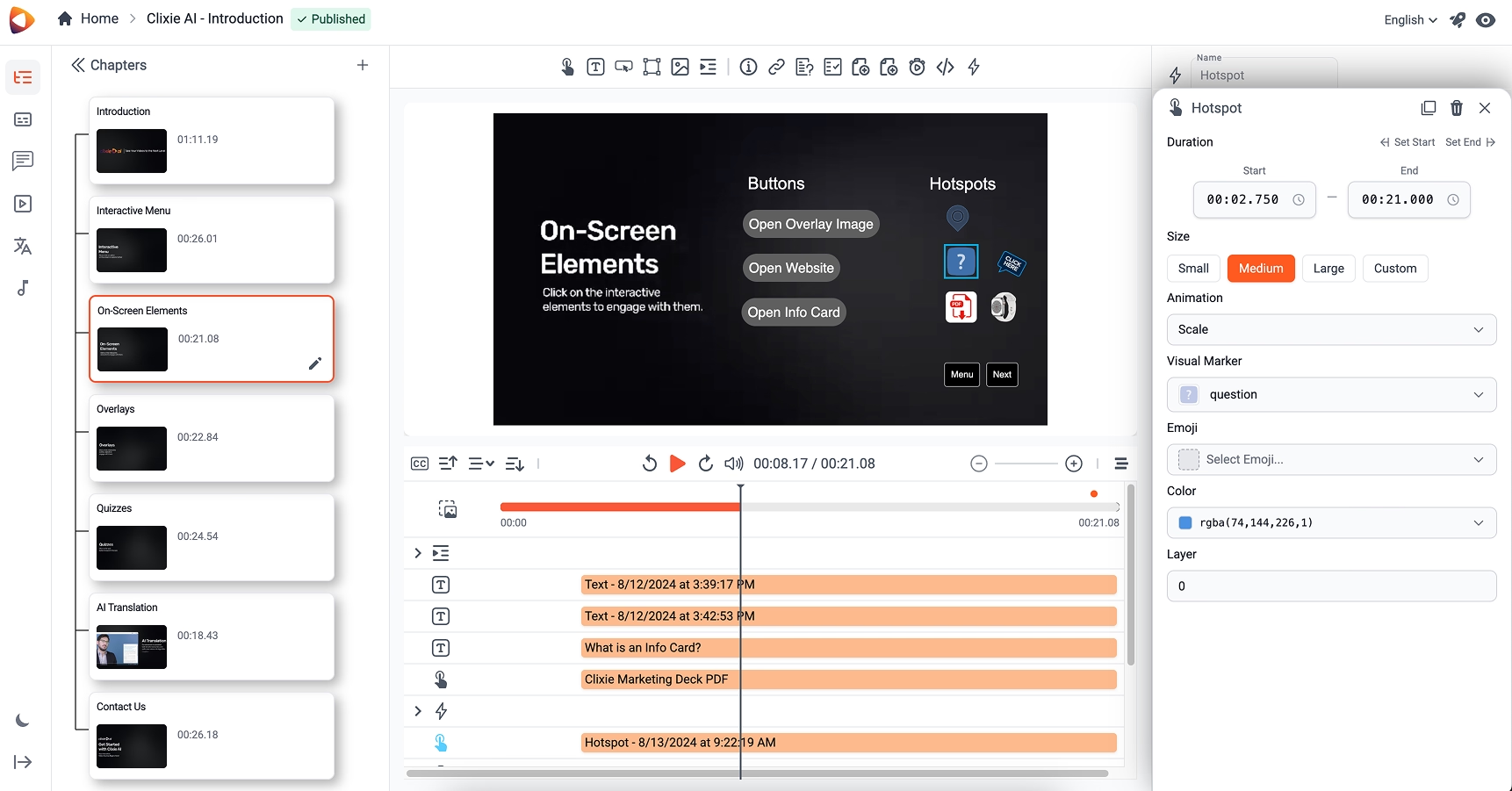
Clixie supports interactive quizzes, clickable hotspots, branching decision paths, timed CTAs, chapter navigation, and embedded knowledge checks. Content exports as SCORM 1.2 packages for LMS deployment, with xAPI tracking available for organizations running a learning record store (LRS). Every learner interaction flows into your LMS reporting: completion status, quiz scores, time spent, and branching path choices.
The AI layer accelerates production. Upload an existing video, a Zoom recording, or a Webex session, and Clixie's AI automatically generates chapters, transcripts, and quiz suggestions. An instructional designer can produce a deployable interactive module in hours rather than days.
Training Use Cases
Clixie is used for employee onboarding (role-specific branching paths that adapt to the learner's department or seniority), compliance training (decision-based scenarios with audit-ready completion records), product certification (guided walkthroughs with embedded knowledge gates), and soft skills simulation (branching scenarios where learner choices trigger distinct video outcomes).
What Clixie's Platform Data Shows
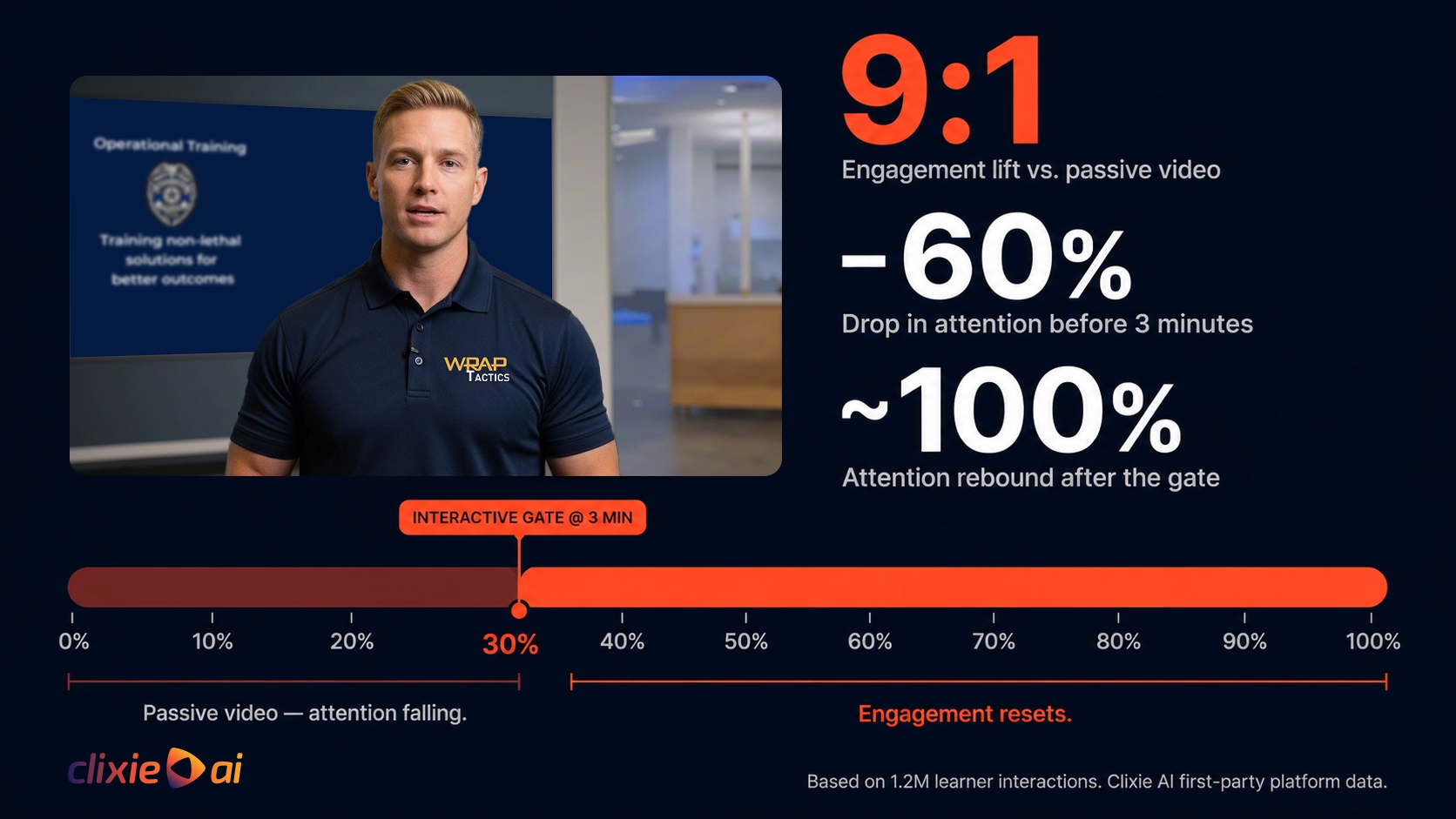
According to Clixie's own analysis of 1.2 million interactions logged across its platform, the team identified what they call the "9:1 Engagement Rule." Their data shows that for every 10 minutes of passive video, learner attention drops by 60%. When an interactive gate or branching choice is placed at the 3-minute mark, engagement resets to nearly 100%.
Clixie also reports that one client in the logistics sector replaced a 20-minute passive safety video with a 12-minute Clixie branching module and saw a 3,500% increase in total interactions per user (Clixie AI, How to Use AI in Corporate Learning, 2026). These are first-party platform figures; independent benchmarks for this metric are not yet available. Learners were not just completing the module. They were replaying it to explore different decision outcomes.
To illustrate what this looks like in practice: a healthcare organization could take a 45-minute passive HIPAA compliance video, the kind employees routinely mute in the background, and transform it into a shorter branching scenario module where nurses and administrative staff make active decisions about patient data handling in simulated clinical environments.
A wrong choice branches to a targeted corrective micro-lesson rather than a generic replay. The result is a shorter total training time alongside higher first-attempt quiz pass rates, and the L&D team gains audit-ready data showing that employees understood the practical application of the regulations, not just the theory. This pattern is common across compliance-heavy organizations that have made the switch to branching interactive video.
For a deeper look at ROI, see how interactive video training ROI compounds and scenario-based training that actually sticks.
Pros
- Full SCORM 1.2 and xAPI workflow support
- Deep LMS integration with audit-ready reporting
- AI-assisted authoring reduces production time significantly
- Branching is a core feature, not an add-on
- Handles onboarding, compliance, and certification in one platform
Cons
- Less brand recognition than longer-established incumbents
- Advanced analytics depth may require higher-tier plans
- Organizations with very simple, non-tracked video needs may not need its full feature set
Mindstamp vs Clixie AI: Head-to-Head for Training Teams
For L&D teams specifically, the most meaningful differences between Mindstamp and Clixie AI come down to xAPI depth, AI-assisted authoring workflows, and training-first platform design.
Clixie AI places greater emphasis on LMS-based learning workflows, SCORM/xAPI reporting, and training analytics than Mindstamp's engagement-first design.
Choose Clixie AI when: your training program requires defensible completion records, role-based branching paths, xAPI-level data capture, or AI-assisted content production at scale.
Mindstamp still makes sense when: your team is already embedded in its ecosystem, your training requirements do not include formal LMS tracking or compliance reporting, and the switch cost outweighs the feature gain.
For more on the compliance use case specifically, see compliance training with interactive video and using AI in corporate learning workflows.
2. H5P: Best for Open-Source LMS Environments
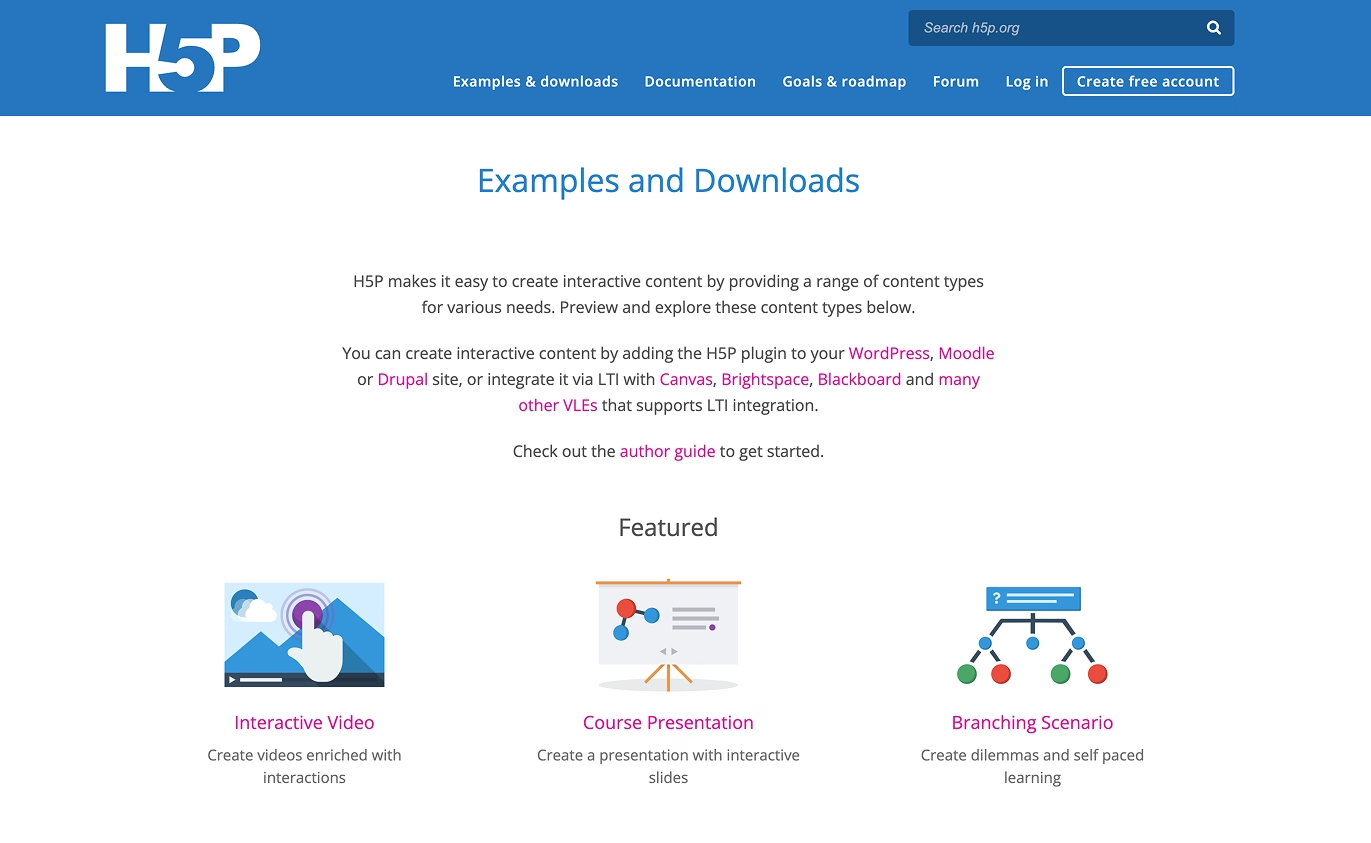
H5P is the leading open-source Mindstamp alternative for teams already running Moodle, Canvas, or Drupal who want flexible interactive video without paying for a proprietary platform.
H5P's Interactive Video content type allows creators to layer quizzes, hotspot annotations, summary cards, and navigation menus onto standard HTML5 video. The content runs directly inside your LMS. SCORM export is possible via implementation or third-party export workflows such as Lumi, but is not guaranteed out of the box and depends on your hosting setup and LMS configuration. xAPI support is available but similarly depends on your LMS and H5P plugin configuration.
Where H5P earns its reputation is standards compliance and ecosystem breadth. It works where your LMS already works, and the community maintains a large library of content types beyond video.
Where it falls short is the authoring experience. Building a polished, branching interactive video in H5P requires more manual configuration than a dedicated platform. There is no AI-assisted layer, no automatic chapter generation, and no dedicated support team for production troubleshooting. For organizations with technical resources and an LMS-first workflow, H5P is a practical, cost-effective choice. For teams that need faster turnaround, it often creates friction.
Best fit: Universities, public sector organizations, and Moodle-primary teams with instructional design resources.
3. LearnWorlds: Best for Course Creators Needing Interactive Video
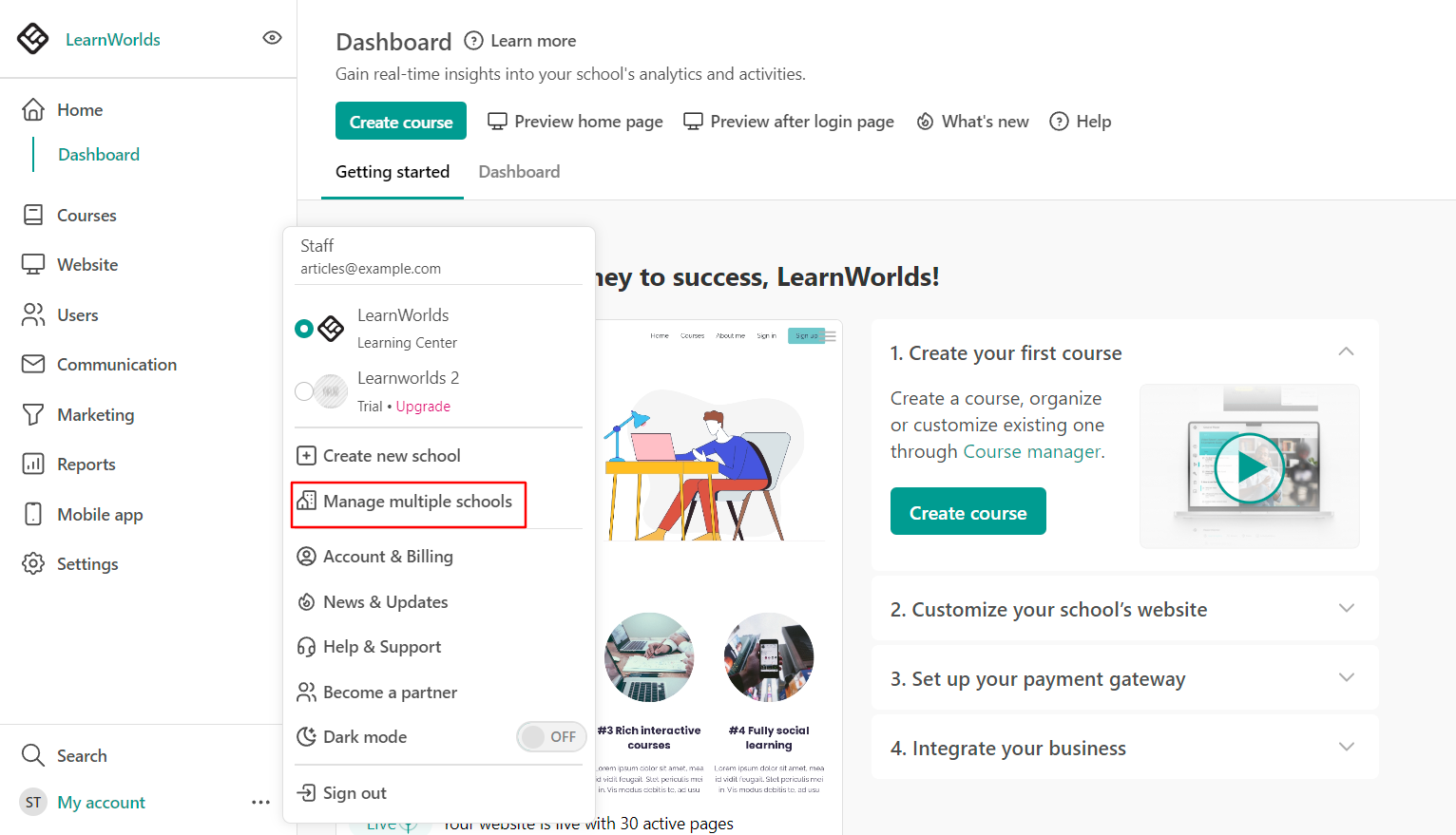
LearnWorlds combines course delivery and interactive video in one platform, suited for organizations that structure training as a course catalog rather than an LMS-embedded program.
Its interactive video tools support embedded quizzes, timed pop-ups, and clickable elements within a broader course-builder experience. SCORM export is supported. xAPI availability varies by plan; verify directly with LearnWorlds before committing if xAPI is a requirement.
LearnWorlds works well for training academies, professional certification programs, and organizations selling or delivering structured courses to external audiences. It is less well-suited for large-scale internal training programs where the LMS is the center of operations and branching scenario depth is a priority.
Best fit: Course businesses, training academies, professional certification providers.
4. Edpuzzle: Best for Education-First Video Assessment
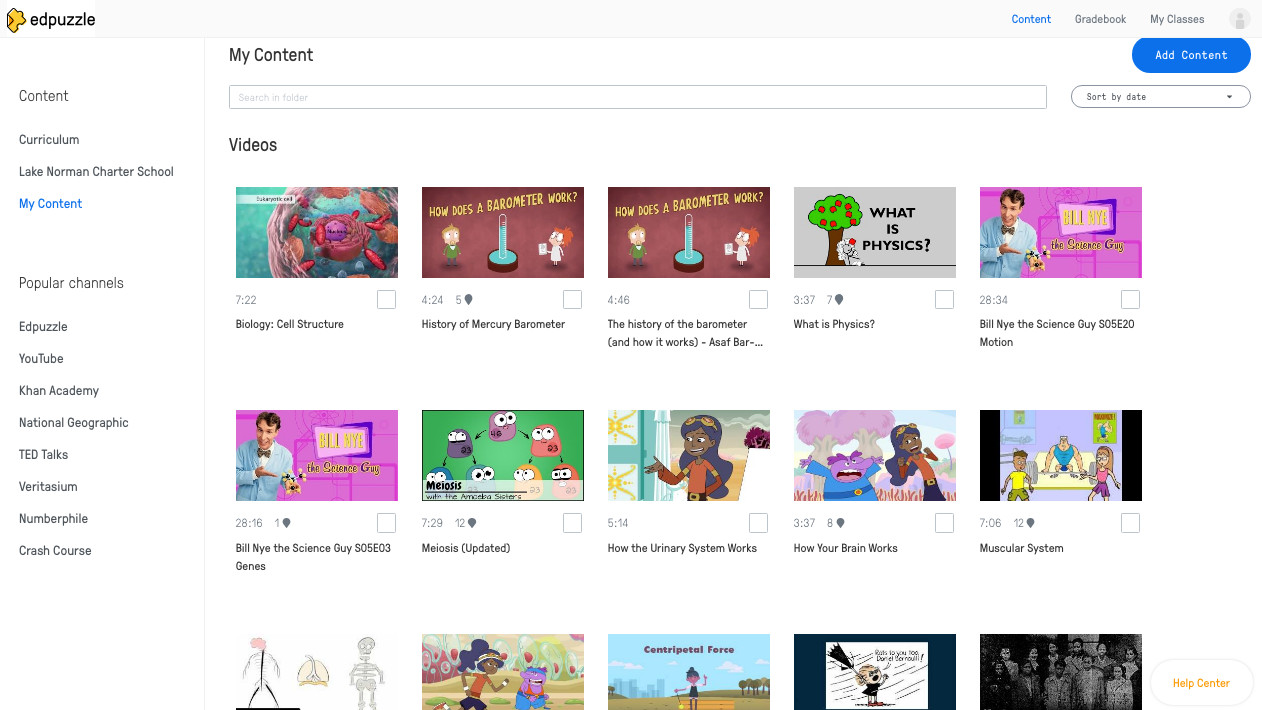
Edpuzzle is purpose-built for embedding questions into videos in K-12 and higher education settings, with strong classroom adoption and simple teacher-facing workflows.
Instructors assign videos with embedded multiple-choice, open-ended, or audio questions. LMS integrations cover Google Classroom, Canvas, and Schoology. SCORM support is limited. xAPI is not supported. Branching is not a feature. For L&D teams needing compliance records, role-based scenarios, or xAPI tracking, Edpuzzle is not the right fit.
Best fit: K-12 teachers, higher education instructors, education-sector training programs.
5. ThingLink: Best for Annotated Visual Learning
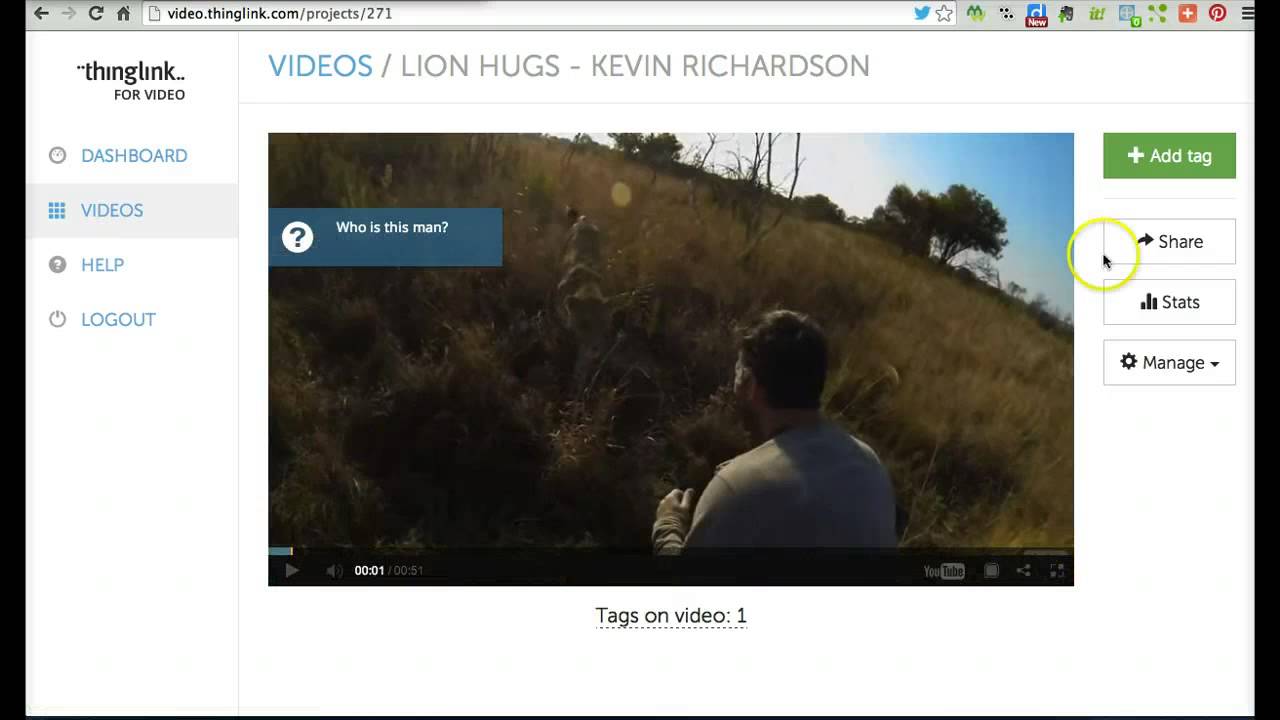
ThingLink enables interactive overlays on images and video through tagging and annotation, useful for visual job aids, product walkthroughs, and spatial learning content. Tags can contain text, links, embedded media, or additional video.
It does not support SCORM or xAPI, and LMS integration is limited. For training programs requiring tracking, assessment, or compliance reporting, ThingLink is not the right tool.
Best fit: Product training, onboarding visual aids, and equipment-based job aids. Not suited for compliance or formally assessed programs.
6. Vimeo Interactive: Best for Marketing-Led Video Engagement
Vimeo's interactive features add clickable hotspots, branching overlays, and in-video CTAs to its already strong video delivery infrastructure. Vimeo does offer LMS integration options, including SCORM and xAPI capabilities for teams that need to connect video to their learning systems.
That said, Vimeo is not a training-first platform. Its interactive layer and analytics are designed for viewer engagement and marketing conversion, not structured learning delivery, compliance reporting, or branching scenario design. Non-interactive training video completion rates dropped to 60% in 2024, according to Learning Management System Insights data compiled by Research.com. Vimeo's interactive features improve on passive viewing, but for L&D teams whose primary requirement is learner performance tracking and compliance-grade reporting, a platform built specifically for training will serve those needs more directly.
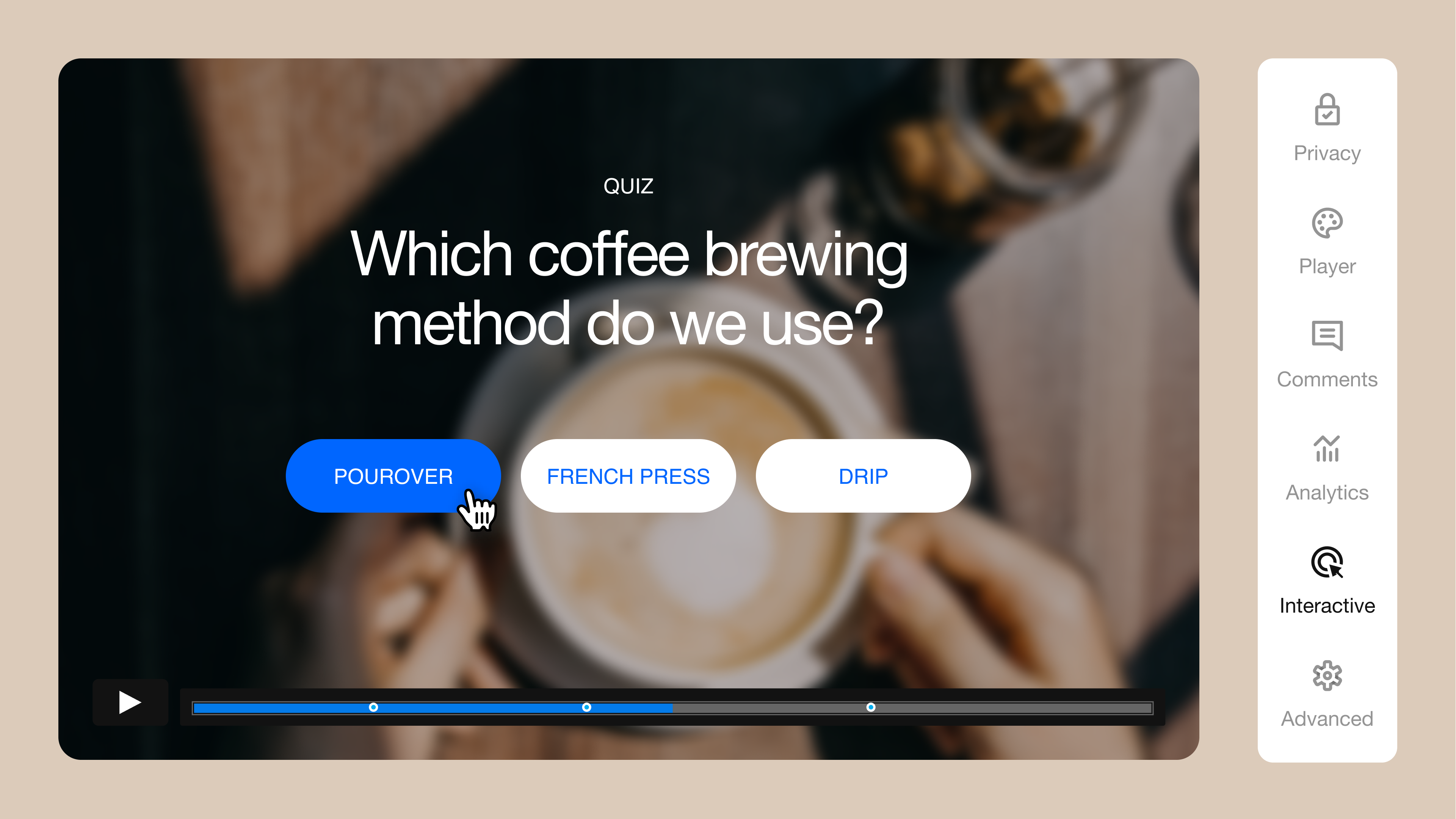
Best fit: Marketing teams, customer education programs, and organizations that want LMS-connected video without a full training-platform workflow.
How Clixie AI Fits Into Existing LMS Workflows
Clixie connects to your existing LMS without replacing it. Existing videos become SCORM-tracked interactive assets, and every learner interaction flows directly into your LMS reporting.
The deployment workflow is straightforward:
- Upload. Bring in any existing video: recorded training, Zoom or Webex session, product walkthrough, or screen recording. No re-filming required.
- Add interactivity. Use Clixie's editor to place branching decision points, knowledge checks, hotspots, and timed CTAs at specific timestamps. The AI layer suggests quiz questions and chapter breaks based on the video content automatically.
- Export as SCORM. Package the interactive video as a SCORM 1.2 file. For organizations with xAPI infrastructure, learner data flows into your LRS alongside LMS completion records.
- Track in your LMS. Deploy the SCORM package to Moodle, TalentLMS, Docebo, Cornerstone, Canvas, or any compliant LMS. Every completion, quiz score, branching choice, and time-on-task data point appears in your existing reporting dashboard.
Specifically for compliance programs, this workflow produces a legally defensible audit trail. Learner decisions within a branching compliance scenario are recorded individually, not just the final completion status. According to Mordor Intelligence (2026), early adopters of scenario branching in compliance training have seen quiz pass rates 20 to 30% higher than non-branching formats.
To illustrate what this can look like: a financial services Blue River deploying Clixie AI inside TalentLMS for anti-money laundering (AML) certification could go beyond a basic SCORM wrapper. Using Clixie's branching, the team could create role-specific pathways for front-line tellers versus back-office loan officers within a single video asset. The TalentLMS reporting dashboard would show not just a binary "Complete/Incomplete," but a granular record of which learners failed the simulated fraud detection scenario on first attempt, allowing compliance officers to trigger targeted follow-up coaching automatically. The entire workflow, from AI-assisted video tagging to the final LMS gradebook sync, can be completed without custom coding.
For more on improving employee participation in training video, the Clixie blog covers engagement design in depth.
Best Mindstamp Alternative by Use Case
- Best for corporate training and LMS deployment: Clixie AI
- Best open-source option: H5P
- Best for course creators and training academies: LearnWorlds
- Best for education-sector video assessment: Edpuzzle
- Best for visual learning and job aids: ThingLink
- Best for marketing-led video experiences: Vimeo Interactive
FAQ
What is the best Mindstamp alternative for corporate training?
Clixie AI is the strongest option for corporate training teams. It supports SCORM 1.2, xAPI workflows, branching scenarios, and deep LMS integration in one platform, with AI-assisted authoring that reduces production time. For open-source environments running Moodle or Canvas, H5P is the next strongest option.
Does Mindstamp support SCORM and LMS integration?
Yes. Mindstamp supports SCORM and integrates with LMS platforms. Teams with heavier compliance or xAPI requirements should compare reporting depth carefully against training-first alternatives before deciding, as feature depth varies by plan.
What is the difference between Mindstamp and H5P?
Mindstamp is a proprietary platform with a polished authoring experience, engagement analytics, and commercial support. H5P is open-source, runs inside existing LMS environments, and costs nothing to license. Mindstamp is faster to author in. H5P requires more technical setup but integrates directly where your LMS already runs.
Which interactive video platforms support xAPI?
Clixie AI supports xAPI with full learner record store integration. H5P and LearnWorlds support xAPI depending on implementation and plan tier. Mindstamp's xAPI support is limited. Vimeo offers LMS integration including xAPI. ThingLink and Edpuzzle do not support xAPI. Verify directly with each vendor before committing.
How do I choose an interactive video platform for compliance training?
Prioritize three things: audit-ready SCORM reporting, branching scenario capability, and xAPI data capture. Compliance programs need defensible records showing which learner completed which module, what decisions they made in scenario-based content, and what their quiz scores were.
Is Mindstamp suitable for large-scale training programs?
Mindstamp works well for mid-sized programs and engagement-led training. Teams running compliance programs with audit requirements or needing xAPI-level reporting at scale should compare it carefully against training-first platforms before committing.
Can I migrate from Mindstamp without losing my content?
Existing videos do not need to be re-filmed. Most platforms, including Clixie AI, allow you to upload existing files and rebuild interactivity in the new editor. Migration effort is primarily re-layering interactions and reconfiguring LMS deployments, not recreating source video.
Conclusion
Mindstamp is a capable interactive video platform, and for teams with straightforward engagement-led training programs already embedded in its ecosystem, switching is not always worth the effort.
For L&D teams whose requirements have grown to include compliance audit trails, deep LMS integration, xAPI-level analytics, or AI-assisted content production at scale, the gap between what Mindstamp provides and what a training-first platform provides becomes significant.
The right choice depends on your delivery context:
- Open-source LMS environments: H5P
- Course-catalog training businesses: LearnWorlds
- Education-sector video assessment: Edpuzzle
- Visual job aids and product walkthroughs: ThingLink
- Marketing and customer-facing video: Vimeo Interactive
- Corporate training, compliance, onboarding, and LMS deployment: Clixie AI
For a fuller picture of what a training-first interactive video program produces, see 7 proven benefits of interactive training video.
Book a Clixie AI demo and get a custom interactive training video strategy session for your L&D program. Schedule Demo
.png)
.png)