


Beyond the Play Button: How AI & Interactive Video Are Killing Passive Content
What is AI interactive video? It’s the shift from passive content to two-way conversations. Learn how generative AI uses hyper-personalization, branching, and shoppable streams to boost engagement.



What is AI-Powered Interactive Video?
Viewer attention spans aren’t shrinking; their tolerance for irrelevant content is just at an all-time low. We have officially reached the end of the "press play and sit back" era. For years, video has been a one-way broadcast. You publish, they watch (or, more likely, they click away after three seconds). But thanks to rapid advancements in generative AI, video is transitioning from a static monologue into a dynamic, two-way conversation.
If your content strategy still relies purely on passive viewership, you are leaving engagement and revenue on the table. Here is an expert look at how AI-powered interactive video is rewriting the rules of digital content—and how you can leverage it to turn passive viewers into active participants.
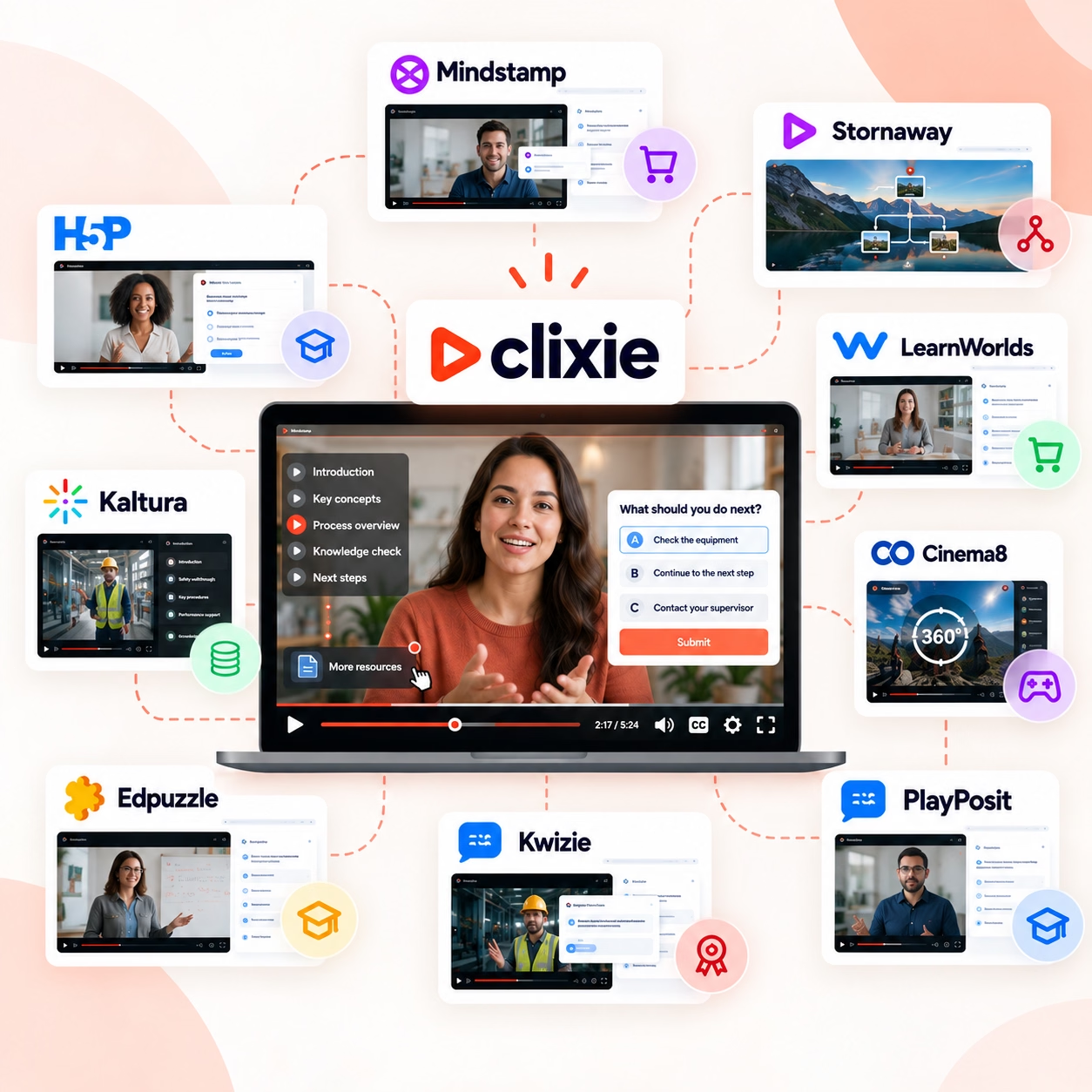
To understand the AI multiplier, we first have to establish the baseline of interactive video. Historically, interactivity meant basic branching paths, hover states, and clickable hotspots layered over pre-recorded footage. It was highly effective but notoriously expensive and rigid to produce.
The AI Multiplier changes the equation entirely. Instead of simply asking a user to choose between pre-rendered paths A, B, or C, AI allows the video to dynamically generate responses, visuals, and audio based on user input. It doesn't just ask the user what they want; it creates the exact, tailored experience they need in real-time.
Expert Insight: The true power of AI in video isn't just in making production faster; it's in making the end product infinitely scalable and hyper-relevant to every individual viewer.
The 3 Mega-Trends Reshaping the Space
To build authority in this new landscape, content creators and brands need to understand the mechanics driving user engagement. Three core technologies are leading the charge.
1. Hyper-Personalization at Scale
Through API integrations and data-driven generative AI, videos can now pull CRM data or live user inputs to alter content on the fly.
- Dynamic Audio: Voice cloning technology can insert the viewer’s specific name or company into the voiceover.
- On-Screen Avatars: AI presenters can adapt their pitch, tone, and language based on the viewer’s demographic or industry.
- Visual Swaps: Backgrounds and on-screen text update automatically to reflect the viewer's specific use case.
2. Real-Time "Choose Your Own Adventure"
Modern generative models allow viewers to make complex choices mid-video. If a viewer says, "Show me how this software works for a freelance graphic designer," the AI instantly generates or stitches together the exact narrative path required. This eliminates the massive render queues and exhaustive storyboarding that used to bottleneck interactive video production.
3. Smart Hotspots & Shoppable Streams
Computer vision models now automatically track and tag moving objects within a video. If a viewer sees a pair of shoes they like on an actor, they can click directly on the moving object. AI seamlessly generates a non-intrusive interactive pop-up, allowing for instant e-commerce checkout or lead capture without ever forcing the user to leave the video player.
Real-World Application: Who is Winning?
Trust in a new technology is built on proven results. Here is how different sectors are actively deploying AI interactive video to drive verifiable ROI.
How to Get Started Today
You do not need an enterprise-level budget to start experimenting with AI interactivity. Building a trustworthy, high-quality interactive experience starts with small, deliberate steps.
Step 1: Audit Your Current High-Performing Content
Find a passive video that already drives traffic. This is your baseline for experimentation.
Step 2: Introduce a Micro-Interaction
Use an accessible AI video platform to add a simple interactive layer at the end of the video. This could be an AI-generated poll, a personalized Call-To-Action (CTA) based on the viewer's location, or a clickable resource link that appears based on watch time.
Step 3: Test AI Avatars for Branching Intros
Create a short landing page video featuring an AI avatar. Program it to ask the viewer a single qualifying question ("Are you here for sales or support?"). Use the answer to seamlessly route them to the correct follow-up video.
Step 4: Measure Intent, Not Just Views
Shift your analytics focus. Instead of obsessing over raw view counts, track interaction rates, choice selections, and completion times. The data you gather from interactive choices is far more valuable than a passive "Like."
Frequently Asked Questions (FAQ)
Q: Isn’t interactive video incredibly expensive and time-consuming to produce?
A: It used to be! Historically, you had to film every single possible outcome and manually link them together. Today, generative AI handles the heavy lifting. AI avatars, voice cloning, and automated timeline builders drastically reduce both the cost and the hours required to create branching content.
Q: Will these AI interactive videos work on standard platforms like YouTube or Instagram?
A: Currently, major social platforms have limited support for complex, branching interactivity within their native players (though this is rapidly changing). For the full, hyper-personalized AI experience, these videos are best hosted on your own website, dedicated landing pages, or sent via specialized email outreach platforms where the interactive player can shine.
Q: Does hyper-personalization mean the video has to load slowly?
A: No. Modern AI video platforms render elements dynamically in the cloud. Text swaps, audio name-drops, and even avatar adjustments happen seamlessly with virtually zero lag for the end user.
Q: What metrics prove that interactive video is actually working?
A: Stop staring at your raw view counts! The true ROI of interactive video is found in Interaction Rate (how many people clicked a hotspot or made a choice), Completion Rate (interactive videos traditionally have much higher watch-through rates), and Direct Conversions (sales or leads captured directly within the video player).
Q: Do I need to be a developer to build these?
A: Not at all. The latest wave of AI video tools features drag-and-drop interfaces. If you can build a slide deck or map out a basic flowchart, you can build an AI-powered interactive video.
.png)
.png)



.avif)
