The Ultimate Guide to Explainer Video Production: A 6-Step Framework for Success
Master the explainer video production process. Learn how to script, storyboard, and animate high-converting videos using professional and AI-driven workflows.



Why Explainer Video Production is Your Top Marketing Lever
Summary: Master the explainer video production process from discovery to sound design. Learn how to create high-converting marketing videos that simplify complex ideas and drive ROI.
An explainer video is more than just a creative asset; it is a conversion engine. By breaking down complex software or services into digestible, 90-second narratives, you can increase landing page conversions by up to 80%.
However, the difference between a video that sits unwatched and one that generates leads lies in the production process. Whether you are using traditional animation or leveraging AI video generation, a structured workflow is non-negotiable for staying on budget and on brand.
For businesses that prefer to outsource this process, specialist video production agencies such as Unreal Media can provide end-to-end support, from strategy and scripting through filming and post-production, helping ensure projects stay aligned with business goals and brand standards.
The 6 Stages of the Explainer Video Production Pipeline
Creating a professional video typically takes 4–6 weeks. Following this modular framework ensures your project stays on track.
1. Concept Development & Creative Discovery
Before a single frame is drawn, you must define the strategic "Why."
- Define the North Star Metric: Is the goal lead generation, reduced support tickets, or brand awareness?
- Audience Mapping: Identify pain points. Are you speaking to a C-suite executive or a technical end-user?
- Style Selection: Choose between 2D motion graphics, 3D animation, live-action, or AI-generated avatars.
2. Scriptwriting: Crafting the Narrative Backbone
The script is 80% of your video's success. A proven explainer script formula follows this "Problem-Solution" arc:
- The Hook (0-10s): Address a specific pain point immediately.
- The Solution (10-30s): Introduce your product as the hero.
- The "How it Works" (30-70s): Focus on benefits, not just features.
- The CTA (70-90s): A singular, clear directive (e.g., "Start Your Free Trial").
SEO Tip: Aim for 150 words per minute. For a standard 90-second explainer, keep your word count under 225 words to allow the visuals room to breathe.
3. Storyboarding and Styleframes
This is the visual blueprint.
- Storyboards: Rough sketches mapped to the script. This prevents expensive "re-dos" during the animation phase.
- Styleframes: High-fidelity "snapshots" that establish the color palette, typography, and character design.
4. Professional Voiceover (VO) Casting
The "voice" of your brand dictates the emotional resonance.
- Tone Matching: Does your brand need an authoritative "industry leader" voice or a friendly "neighborly" vibe?
- Pacing: Ensure the VO artist provides multiple takes to give editors flexibility during the sync.
5. Animation and Production
This is where the storyboard meets motion.
- Asset Creation: Building the custom illustrations or 3D models.
- Motion Graphics: Syncing character movements and text overlays to the VO track.
- The AI Edge: In 2026, many brands are using AI video tools like Veo to accelerate background generation or character consistency, significantly cutting down production timelines.
6. Sound Design & Post-Production
The "invisible" layer of quality.
- Audio Branding: Selecting background tracks that drive energy without overpowering the narration.
- SFX: Adding subtle "pops," "whooshes," or interface clicks to make the animation feel tactile and premium.
3 Pro-Tips for Managing Video ROI
- Consolidate Feedback: Use a single point of contact to avoid "creative by committee," which bloats budgets.
- Modular Design: Ask your production team for "social cuts"—15-second snippets of the main video for LinkedIn and Instagram.
- Future-Proofing: Ensure you own the project files so you can update UI screenshots as your software evolves.
The Future: Interactive Explainer Videos
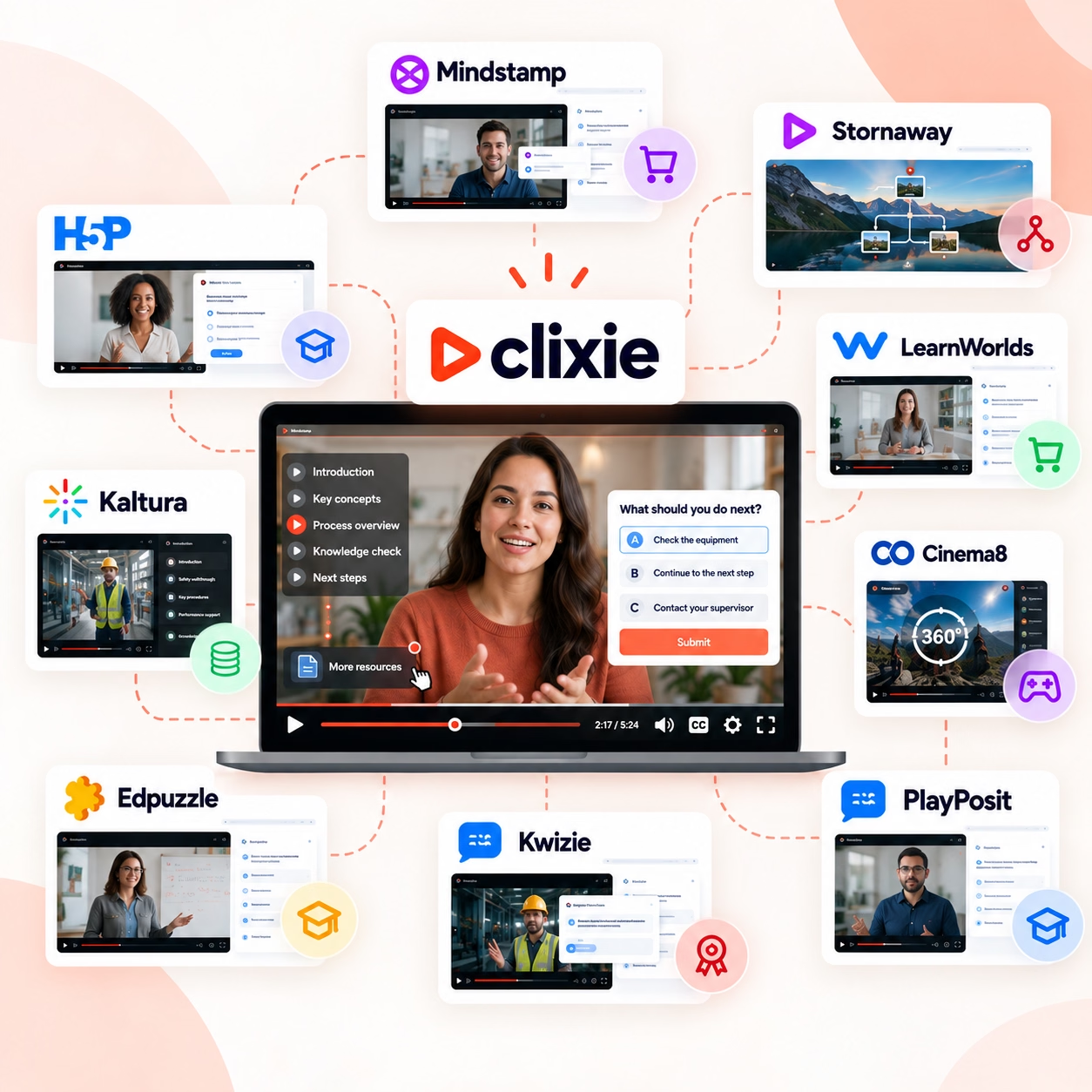
Static video is great, but interactive video is transformative. By integrating Clixie AI, you can turn a passive viewer into an active participant.
- In-Video Branching: Let users choose which features they want to learn about.
- Shoppable Hotspots: Link directly to checkout or demo sign-ups from within the frame.
- Data Capture: Use in-video forms to qualify leads before the video even ends.
See it in Action: The "Explainer" That Explains Itself
We’ve spent this article discussing why the production process and interactivity are the keys to surviving the zero-click era. But rather than just writing about it, we want to show you. Below is an interactive explainer video created by our team at Clixie AI. It’s a bit "meta"—an explainer about why professional AI-driven explainers are your best business investment.
Why You Should Watch (and Interact):
Instead of a passive "DIY" approach, we used our professional AI production pipeline to build this. As you watch, keep an eye out for the interactive elements that a standard AI tool simply cannot produce.
This video demonstrates:
- The Narrative Hook: How we bridge the "Expectation vs. Reality" gap of AI video.
- Branching Logic: You decide which part of our process you want to see—making the content relevant to your specific business needs.
- The Conversion Layer: Notice how we collect insights and offer a direct path to a quote without you ever having to leave the video player.
Challenge: Try to find a way to summarize this experience in a single search snippet. (Spoiler: You can't—and that’s exactly why it works.)
By acknowledging that the video is an "explainer about explainers," you build trust. It shows you understand the craft.
Frequently Asked Questions About Explainer Video Production
How much does an explainer video cost in 2026?
The cost of an explainer video typically ranges from $2,500 to $15,000, depending on complexity, length, and style. 2D animation is generally the most budget-friendly, while high-end 3D animation or custom live-action shoots command higher prices. Leveraging AI video tools can often reduce these costs by accelerating the asset creation and storyboarding phases.
How long does it take to produce an explainer video?
A professional explainer video usually takes 4 to 8 weeks to complete. This timeline includes two weeks for pre-production (strategy and scripting), two to four weeks for animation or filming, and one week for final sound design and revisions. Tight deadlines can sometimes be met using AI-assisted workflows to speed up the rendering and editing processes.
What is the ideal length for an explainer video?
The ideal length for a marketing explainer video is between 60 and 90 seconds. This duration is long enough to cover the problem, solution, and call-to-action without losing viewer engagement. For high-velocity social media platforms like TikTok or Instagram, shorter "micro-explainers" of 15–30 seconds are often more effective for driving immediate clicks.
Do I need a professional voiceover for my video?
Yes, a professional voiceover is critical for establishing brand authority and emotional connection. While AI voice synthesis has improved significantly, human artists offer nuanced pacing and inflection that drive higher retention. If using AI voices, ensure they are high-fidelity and match your brand’s persona to avoid a "robotic" feel that could devalue your message.
What are the most common mistakes in video production?
The most common mistakes include overcomplicating the script, ignoring the target audience's pain points, and having a weak call-to-action. Many businesses try to pack too much information into one video, which confuses the viewer. To maximize ROI, focus on one core message and ensure your visuals support—rather than distract from—the narrative.
.png)
.png)