How Stranger Things Season 5 Used AI & VFX to Transform Video Production
How Stranger Things Season 5 used AI and VFX workflows — and what L&D and sales teams can apply to corporate video today.
.png)


TL;DR
- Stranger Things Season 5 used digital de-aging and large-scale VFX hybrid workflows to solve production problems that no traditional method could fix alone.
- The same layered workflow logic driving Hollywood VFX is now directly accessible to corporate L&D and sales enablement teams.
- Passive training video is failing: non-interactive format completion rates dropped to 60% in 2024, per Learning Management System Insights.
- Interactive AI video platforms let teams layer quizzes, branching paths, and timed CTAs onto existing video without re-shooting a single frame.
- Learn more about turning passive viewers into active learners and why the shift is accelerating.
Who this is for: Directors of Learning and Development, VPs of Corporate Training, and Heads of Sales Enablement at mid-market and large organizations scaling global video programs. If your team is still re-shooting compliance modules every time a policy changes, or watching completion rates stall on passive training video, this article is for you.
Key Takeaways
- AI in video production is the application of machine learning and automation to edit, enhance, localize, personalize, or measure video content without full re-production.
- Digital de-aging technology is a VFX method that reconstructs a performer's earlier appearance using facial replacement and compositing workflows, reducing the need for lookalike casting or full reshoots.
- A hybrid workflow is a production model that preserves existing practical or recorded assets as the foundation while digital or AI-generated layers add scale, localization, or interactivity on top.
- Interactive video is a delivery format that replaces passive linear viewing with branching paths, embedded quizzes, and adaptive logic, improving retention by up to 50%.
- SAG-AFTRA is the 160,000-member performer union that now requires explicit consent and compensation before any AI digital replica of an actor can be created or reused.
- Clixie.ai is an interactive video platform that converts existing or AI-generated video into measurable learning and sales enablement experiences through no-code branching, quizzes, and SCORM-compliant analytics.

Introduction
Most L&D leaders benchmark their video strategy against other training teams. The Duffer Brothers benchmark theirs against physics.
When Stranger Things Season 5 premiered as the confirmed final season of the main Hawkins storyline, the production team had already solved a problem that corporate video teams face every quarter: how do you update a high-value asset without rebuilding it from scratch? Their answer was a blend of AI in video production and VFX: digital de-aging and facial replacement workflows for flashback sequences, and large-scale hybrid VFX environments that extended physical sets far beyond what any practical budget could replicate.
AI in video production refers to the use of machine learning, generative tools, and automation layers to edit, enhance, localize, personalize, or measure video content. In corporate training, its highest-value application is not replacing production teams, but updating and extending existing video assets without full re-shoots.
The lesson from Hollywood is not that AI replaces production. The lesson is that AI works best as a layer: preserving the core asset, automating the repetitive work, and making the final experience easier to update, personalize, and measure. Corporate L&D teams face the same structural choice every time a compliance requirement changes, a product is updated, or a global rollout demands localization across twelve languages. The traditional response is to rebuild. The AI-assisted response is to add the right layer.
This article walks through each core technique deployed in Stranger Things Season 5's VFX pipeline, its direct organizational equivalent, and what it means for teams building durable AI video workflows today. If you want to start with the practical side first, how to build your first AI video workflow is a useful reference alongside this piece.
See how Clixie.ai applies these principles to your video stack. Book a demo.
Why Passive Video Is Failing: In Hollywood and in Your LMS
Passive video fails because it places the entire cognitive burden on the viewer with no mechanism for participation, confirmation, or adaptation, whether the viewer is a Netflix subscriber or a new hire completing compliance onboarding.
The data is unambiguous. According to Training Industry research compiled by Research.com, the average completion rate for non-interactive training videos dropped to 60% in 2024, while 90% of L&D professionals simultaneously report that video significantly improves learner engagement and knowledge retention. The format works. The passive delivery mechanism does not.
Hollywood diagnosed this problem earlier than most corporate training teams. The production logic behind Stranger Things Season 5 was a structural answer to declining audience patience for passive storytelling at scale. The production team built a world the audience could feel physically present inside, through practical set textures, tactile props, and real environmental details. The VFX tools extended that world. The human craft grounded it.
The organizational equivalent of "keeping the viewer inside the world" is keeping the learner inside the content, not through entertainment value, but through prompts, choices, and timed interactions that demand a response and confirm comprehension in real time.
The global interactive learning market recognized this shift before most LMS libraries did. According to Grand View Research data compiled by Research.com, the global interactive learning market was valued at USD 27.85 billion in 2024, with projected growth at a 15.1% CAGR through 2030. That trajectory is driven by measurable gaps in passive format performance, not novelty.
From the Frontlines of Video Analytics: In our work transforming corporate video libraries at Clixie.ai, we consistently see an engagement cliff across training assets. Standard linear training videos suffer a sharp drop-off within the first 90 seconds, specifically when the video transitions from the introductory hook into dense compliance or technical instruction.
When we retrofitted these drop-off points for a global logistics client, we replaced a passive 3-minute lecture with an automated Clixie.ai interactive checkpoint quiz and a role-based branching choice at the 1:15 mark. The metric inverted. Completion rates moved from the high-50% range into the low-90% range. More importantly, question-level data showed that learners who answered the first in-video question incorrectly immediately used the interactive timeline to self-correct and re-watch the relevant section. Passive video had never produced that signal.
Digital De-Aging and the Art of Updating Assets Without Re-Shooting
Digital de-aging technology is a VFX-assisted process that uses facial replacement and compositing workflows to reconstruct a performer's earlier appearance, reducing the need for lookalike casting or full reshoots of scenes set in the past.
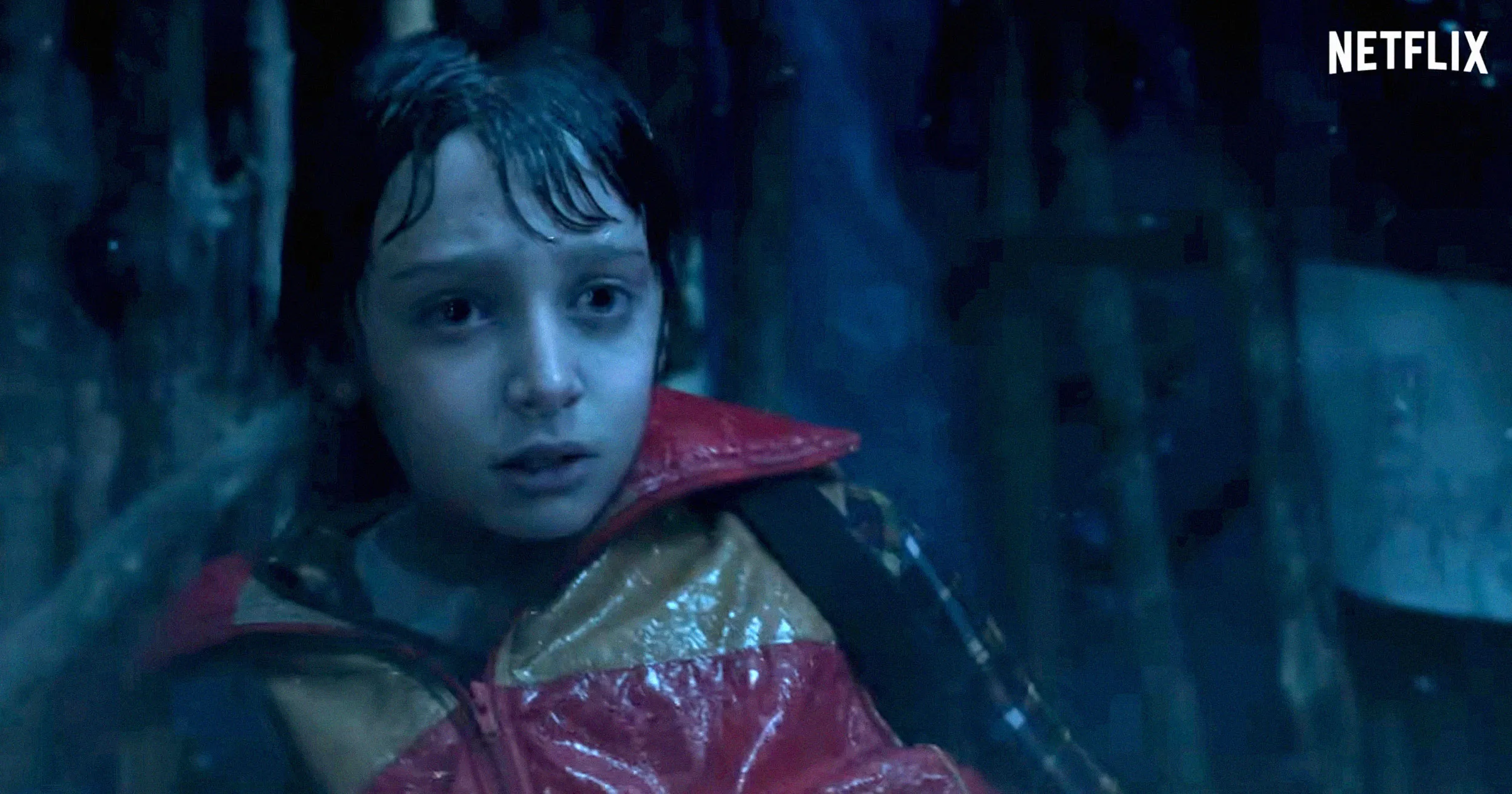
In Stranger Things Season 5, the production used digital de-aging and facial replacement workflows to handle flashback sequences involving younger versions of core cast members. As reported in Netflix's official production coverage, actor Luke Kokotek served as the younger body double for Will Byers, with VFX compositing used to align the on-screen appearance with the audience's established memory of the character from earlier seasons. The result allowed the production to revisit emotional beats from Season 1 without wholesale recasting.
The selective judgment behind that approach is equally instructive. Not every aging-related challenge was solved with digital tools. For certain scenes, the production relied on physical casting and performance over VFX reconstruction. This is a reminder that effective integration means applying technology where it adds more than human craft would, and stepping back where it does not.
Corporate L&D teams face the same structural choice every quarter. A regulatory update changes one clause in a compliance module. A product release alters three screens in a software training video. A new market requires localization in Mandarin and Portuguese. The traditional response is a full production cycle: script revision, talent scheduling, studio booking, editing, QA, re-upload. Four to six weeks per module, at full cost.
The AI-assisted response changes the architectural question from "how do we re-shoot this" to "which layer needs to change, and can we update it without touching the master asset?"
The Real-World Architecture: A Fortune 500 financial services client faced a significant bottleneck when their core software interface underwent a major UI overhaul, rendering a 45-module global training library obsolete overnight. A traditional production cycle would have taken six weeks and approximately $45,000 in agency fees.
Instead of re-shooting, we applied a modular overlay architecture. The original master instructor video stayed completely intact. Using Clixie.ai, we mapped interactive HTML5 overlays over the outdated screen portions, automatically flagging old interface elements and highlighting new workflow pathways via responsive click-zones and text callouts. The entire library was updated globally in less than 72 hours, substantially below the projected production cost.
Research aggregated by uQualio's video learning trends report finds that organizations using AI-powered learning platforms reduce training costs by 30% while improving knowledge retention by up to 50%. Those two outcomes (lower cost and higher retention) are precisely where asset-preservation logic delivers its return.

The Hybrid Workflow: Practical Foundations, AI-Generated Scale
A hybrid video workflow preserves high-value practical or recorded assets as the foundation, then uses digital and AI tools to extend, localize, or layer that footage without rebuilding from scratch.
The Stranger Things Season 5 production illustrates this at scale. Physical, practical set pieces provided the tactile foreground that actors performed within. Large-scale VFX work extended those environments into scenes no physical construction budget could replicate. The show's approach demonstrates the broader hybrid production model clearly: practical foregrounds combined with digital environments, each doing what the other cannot.
This principle scales across budget levels. Vitrina.ai, which tracks production frameworks across more than 140,000 film and television companies, reports in its 2026 AI filmmaking framework analysis that producers who built deliberate AI and VFX frameworks in 2024 and 2025 ran 25-35% leaner pre-production cycles than those using ad hoc tool adoption. The efficiency gains came from building structured workflows around existing assets, not from replacing creative work.
For corporate video teams, the equivalent model is already operational. Your recorded training video is the practical foreground. AI overlays (chapter markers, quiz generation, branching logic, and translated voiceover tracks) are the scale layer that extends the video's reach without a new production budget.
The table below maps this across three workflow states:
According to Zebracat's analysis of AI video production trends, over 62% of marketers using AI tools for video production report cutting content creation time by more than half. Speed at scale is real. But faster passive content does not close the completion rate gap on its own.
The Metric That Matters: We recently worked with a medical device manufacturer that had scaled their internal training library from 10 videos to over 150 using generative AI avatar tools, in two weeks. Content volume was no longer the constraint. LMS data showed module completion rates around 44%. They were producing passive content faster, but it was not translating into measurable employee knowledge.
The inflection point came when we mapped an interactive layer over their existing assets: role-based branching logic for different clinical roles, alongside timed informational hotspots at key instruction moments. Once the video became a two-way experience rather than a one-way broadcast, completion rates moved into the high-80% range. Speed of generation gets you to the starting line. Interactivity is what crosses the finish line.
The Ethical and Legal Dimension: What SAG-AFTRA Means for Your Video Team
As AI in video production scales, both entertainment studios and corporate teams must address digital likeness rights, consent requirements, and disclosure obligations before using AI-generated or modified video assets.
SAG-AFTRA, representing more than 160,000 performers, has made digital likeness rights a central front in AI contract negotiations, pushing for legislative and contractual guardrails against unauthorized replication of voice, image, and likeness. The union's position is direct: consent is not implied by prior participation. Each new use of an AI-generated likeness requires documented, explicit authorization.
The legislative response has moved quickly. The Take It Down Act, signed into federal law in May 2025, established the right to request removal of non-consensual synthetic images from online platforms within 48 hours. Tennessee's ELVIS Act, signed in 2024, criminalized unauthorized commercial voice cloning. California AB 1836, also from 2024, extended protections to deceased personalities. At the contract level, entertainment law firm Rodriques Law notes that three contract-level developments between 2023 and 2025 fundamentally reshaped how production agreements are drafted: the WGA's 2023 MBA introduced AI disclosure rules, SAG-AFTRA's Digital Replica Guidelines defined when synthetic performers require compensation, and the FTC's 2024 Endorsement Guide updates expanded liability for undisclosed AI tool use.
Any organization using AI to generate voiceovers, produce digital avatars, or synthesize on-screen presenters faces the same category of questions: Who provided consent, and does documentation specify scope and duration? Does the contract address what happens to the digital asset when the engagement ends? Are synthetic performer disclosures required under applicable state law?
An Expert's Guide to Video Governance: When implementing AI-generated voice or synthetic presenter assets for clients, legal compliance is the first thing we audit at Clixie.ai. To safely scale AI-modified video under frameworks like CA AB 1836 and the ELVIS Act, your workflow needs clear data boundaries. We advise clients to follow a three-tier compliance checklist:
- Revocable Direct Consent: Ensure talent release forms explicitly separate traditional recording rights from synthetic replica rights, including clear asset retirement clauses if a team member or contractor leaves the organization.
- Localized AI Security: Avoid public, open-source generative models that absorb your proprietary corporate data or presenter voices into shared training sets.
- The Metadata Safe Harbor: At Clixie.ai, we handle governance at the platform layer. Because our interactive elements exist as an overlay rather than being permanently encoded into the video file, clients can instantly unpublish, wipe, or modify AI-generated components across thousands of live endpoints with a single action if a likeness contract expires or compliance requirements change.
The question is not whether to use AI in your video production pipeline. The question is whether your governance framework is ready for it. Consent, scope, and contract terms are not an afterthought. They are the infrastructure that makes AI-assisted video legally deployable at scale.
How AI in Video Production Translates Directly to Corporate Training
The core principles from Stranger Things Season 5's VFX pipeline (de-aging assets rather than replacing them, extending practical foundations with digital scale, and applying technology selectively) each map directly to a corporate video workflow that L&D and sales enablement teams can deploy today.
Hollywood used digital tools to solve asset management problems at the scale of a prestige television production. Corporate teams face asset management problems at the scale of a global training library. The underlying logic is the same: preserve the core, automate the layer, measure the output.
Zebracat's AI video creation statistics show that over 62% of marketers using AI tools for video production cut content creation time by more than half. For L&D teams, the equivalent metric is production cycle time per module update, and the teams reducing that figure are doing so by changing the architecture of what they produce, not just producing it faster.
In Action: From Five Weeks to 48 Hours
A corporate training team needed to rebuild a global compliance training module across three languages. Under a traditional model, the timeline was five weeks minimum. Using Clixie.ai, the team uploaded the master video, generated AI chapter markers automatically, layered branching quiz logic over the existing content, and enabled multilingual overlays without re-recording the source material. They delivered in 48 hours.
The measurement outcome mattered more than the speed. For the first time, the L&D director had question-level analytics showing exactly which concepts required reinforcement and which learner segments were completing the path. This was data that passive video had never produced. Full workflow details are documented in Clixie.ai's production timeline case study.
A national retail franchise network demonstrated the same principle at a different scale. After integrating Clixie.ai's automatic timestamp-based quiz generation across their seasonal onboarding video library at 400 locations, they eliminated region-specific editing teams entirely. Training-related helpdesk support tickets dropped substantially during their peak hiring quarter, a direct outcome of clear interactive navigation replacing a passive linear format.
Learn how corporate teams are cutting production timelines by up to 4x with AI-assisted workflows built around existing assets.
How Clixie.ai Is the Operational Layer Between AI Video and Measurable Learning
Clixie.ai converts existing or AI-generated video into interactive experiences by layering no-code branching paths, quizzes, timed CTAs, and SCORM-compliant analytics directly onto the master asset, without a developer, without a re-shoot, and without replacing what already works.
The platform is not a production tool. It is the translation layer between a completed video asset and a measurable learning or sales enablement experience. The master asset stays intact. The intelligence layer on top adapts. The analytics engine captures what passive video never could.
In high-performing workflows, AI generates the first operational layer: chapter markers, quiz suggestions, and branching logic. Human teams still review, structure, approve, and govern the final learning experience before it reaches learners. That division of labor is what makes the output both scalable and trustworthy.
For an L&D Director under mandate to scale global compliance training without adding headcount, the practical architecture looks like this:
- Automatic timestamp-based quiz generation: AI reads the video and proposes quiz questions at logical content intervals. The team reviews and approves. No manual scripting required.
- AI chapter markers: Content is segmented automatically, enabling learners to navigate to relevant sections and giving managers visibility into which sections receive the most re-views.
- Branching path logic: A new hire in Sales and a new hire in Engineering watch the same onboarding video but follow different paths based on their role. One master asset. Two measurable learning experiences.
- SCORM and xAPI compliant analytics: Every interaction (quiz response, path choice, replay behavior) is captured and reportable to any LMS.
- No-code authoring: An L&D manager builds and deploys the interactive layer without engineering support or a production budget.
- Multilingual overlay capability: The master video stays in the original language. AI-generated overlay tracks deliver the interactive layer in the learner's language without re-recording the source.
Based on Clixie.ai platform data, AI-powered interactive video can improve learner retention by up to 50% and reduce post-production workflow overhead by up to 4x. The combination of higher retention and lower production overhead is the measurable outcome of treating interactive video as workflow infrastructure rather than a production upgrade.
Transform a passive training video into a measurable interactive experience. Get a free interactive video template.
For a practical introduction to how branching paths and interactive overlays work inside an existing video asset, that post covers the mechanics in detail.
The Future of AI in Video Production: What Comes After the Hybrid Workflow
The next phase of AI in video production moves beyond asset enhancement into generative personalization: video that adapts in real time to who is watching, what they already know, and what action they need to take next.
That trajectory is visible in market data. Grand View Research projects the global interactive learning market will grow at a 15.1% CAGR through 2030. Zebracat projects the AI video generator market will reach approximately $14.8 billion by 2030, growing at a 35% annual rate. These figures reflect what organizations are discovering when they add the interactive layer to existing video: the behavioral data they receive changes what they can build next.
For corporate teams, the near-term priority is not generative AI. Generative tools are maturing rapidly, but their value in organizational learning depends on a foundation that most teams have not yet built: interactive, measurable video content with branching logic and question-level analytics. Teams that build that foundation now will be positioned to layer personalization on top when the tools reach operational maturity for regulated industries. Teams that do not will face the same problem they face today, at higher velocity.
The decision is not whether AI will change how your video library operates. It already has. The decision is whether your video infrastructure is built to participate in that change or locked in a passive format that requires full replacement each time the content shifts.
Show ImageThe evolution from traditional corporate video production to interactive AI workflows. Each stage improves production speed, reduces per-update cost, and increases the quality of learner analytics available to L&D teams.
Frequently Asked Questions
How is AI currently used in video production?
AI is currently used for:
- Automated editing and color grading
- Digital de-aging and facial replacement compositing
- VFX-assisted set extension and background environments
- Text-to-video and multilingual voiceover generation
- Interactive overlay generation for corporate training and sales enablement
- Analytics and behavioral data capture across learning experiences
Each application addresses a specific production cost or scalability constraint rather than replacing the full production process.
What is digital de-aging technology and how does it work?
Digital de-aging technology is a VFX-assisted process that uses facial replacement and compositing to reconstruct a performer's earlier appearance. In high-budget productions, AI-assisted tools may analyze historical footage to inform the reconstruction. In some cases, a younger body double performs the physical role while VFX compositing aligns the on-screen appearance with the established character. Stranger Things Season 5 used this approach for younger character flashbacks, with actor Luke Kokotek serving as a body double alongside VFX work.
How are corporate training teams using AI video production tools?
Corporate L&D and sales enablement teams are using AI video tools in three primary ways:
- Updating existing training content without full re-shoots, by swapping AI-generated voiceover or chapter layers
- Localizing content across languages without re-recording the source material
- Adding interactive elements (quizzes, branching paths, and timed CTAs) to passive video assets to improve completion rates and retention
Is AI replacing video editors and production professionals?
No. The pattern observed in both Hollywood and corporate workflows is selective augmentation, not replacement. AI handles repetitive and scalable tasks: compositing assistance, background generation, translation, and quiz generation. Human expertise handles narrative judgment, creative direction, and governance. The Stranger Things production illustrated this principle directly: digital tools were applied where they solved a production constraint, and human performance took over where craft required it.
What is the difference between passive and interactive video in corporate training?
Passive video delivers content linearly with no mechanism for viewer participation. Interactive video embeds branching paths, quizzes, hotspots, and timed CTAs that require viewer responses. Research consistently shows interactive formats improve knowledge retention by 40-50% compared to passive equivalents, while also generating question-level analytics that passive video cannot produce.
How can a corporate team update a training video without re-shooting it?
AI-assisted platforms allow teams to update specific layers of a video (chapter markers, voiceover tracks, quiz questions, or branching logic) without modifying the master video file. The core asset stays intact while the AI layer on top is updated independently. For compliance-heavy industries where content changes frequently, this architecture reduces the per-update cost from weeks of production to hours of configuration.
What are the legal considerations when using AI in video production?
Organizations using AI to generate or modify video, particularly voiceovers, avatars, or performer likenesses, should confirm:
- Consent documentation covers the scope and duration of AI use
- Production contracts specify asset retirement or destruction terms at expiration
- Synthetic performer disclosures required by applicable state law or the FTC Endorsement Guides (2024 update) are satisfied before publishing
The SAG-AFTRA AI bargaining timeline and recent legislation, including the Take It Down Act (May 2025) and the ELVIS Act (Tennessee, 2024), establish the current compliance baseline.
Conclusion
The most instructive detail from the Stranger Things Season 5 production is not which VFX tool the team used. It is the decision they made about when not to use it.
They applied digital de-aging where it solved a production constraint. They cast a human performer when the scene required something technology could not yet deliver more credibly. They extended a physical set with large-scale VFX when scale was the limiting factor. They preserved the practical foreground when physical presence defined the quality. Every technology decision was made in service of a specific outcome, not in service of the technology itself.
That is the operating principle for AI in video production at organizational scale. The framework exists. The tools are accessible. The gap between teams scaling their video training output and teams still re-shooting compliance modules every quarter is no longer a budget gap. It is a workflow architecture decision.
The teams building interactive, measurable video infrastructure now, built on top of existing assets without full re-production cycles and with branching logic that generates learner analytics, are solving a present problem: passive video is not finishing, and content that does not finish is not training anyone.
Bring one outdated training video to a Clixie.ai demo. We will show you live how to add chapters, quizzes, branching paths, and LMS-ready analytics, without re-shooting the asset. Book your demo.
.png)
.png)