


The new era of audience attention: why engaging video experiences are becoming essential
Discover why video engagement is critical today. Learn how interactive features, AI, and personalization transform passive viewers into active participants.


Introduction
The digital landscape has transformed the way people consume content. Social media feeds refresh every few seconds, streaming platforms release endless new videos, and news and educational websites update constantly. In this environment, capturing attention has become one of the most valuable—and fleeting—resources. For businesses, educators, and creators, producing content is no longer enough. The true challenge is keeping viewers engaged long enough for the message to resonate. This is why video engagement has become a critical metric for modern communication strategies.
Video has long been one of the most powerful formats for conveying ideas. It combines visuals, motion, sound, and storytelling into a single medium that is easier for viewers to process compared with dense text. But in today’s fast-paced digital world, simply publishing video is no longer sufficient. Audiences have higher expectations—they want content that captivates them, adapts to their interests, and offers interactive experiences that feel personalized.
Understanding the importance of video engagement
Engagement is the measure of how viewers interact with content. Metrics like watch time, click-through rates, interactions with on-screen elements, and viewer retention all provide insights into how effectively a video holds attention. While view counts still matter, they no longer tell the whole story. A video can rack up thousands of views, yet if viewers stop watching after just a few seconds, the content fails to deliver meaningful impact.
High engagement signals that the audience is actively connecting with the video. This is especially important in areas like marketing, education, and corporate communication, where the ultimate goal is not just exposure but understanding, retention, and action. Videos that successfully engage viewers lead to better knowledge transfer, higher brand recall, and stronger audience loyalty.
The shift from passive viewing to interactive experiences
Traditionally, video content was a passive experience: press play, watch, and hope the audience remained interested until the end. While this model worked for entertainment and some educational content, it is less effective for communication that requires sustained attention or active learning.
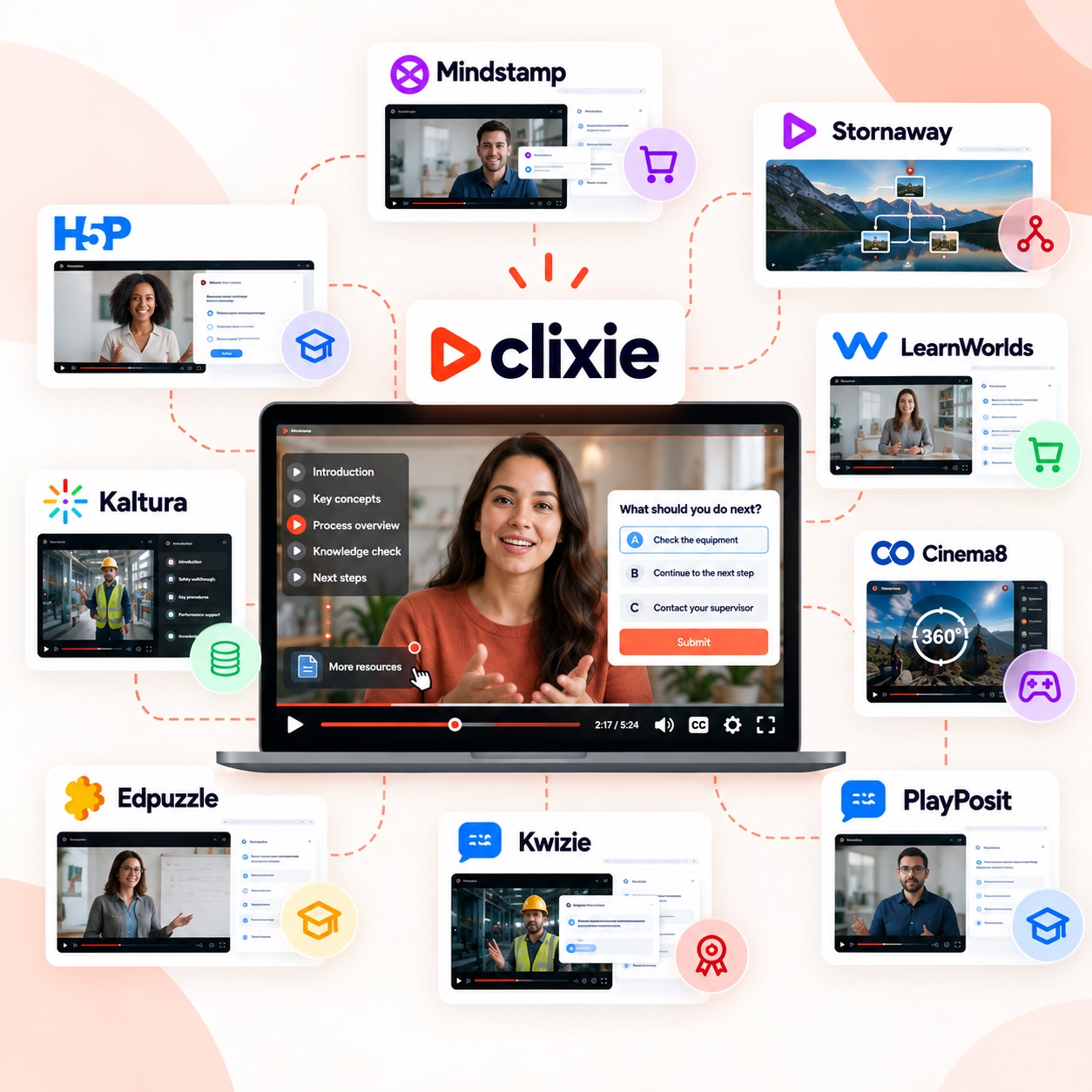
Interactive video changes this dynamic. Modern platforms allow creators to embed clickable hotspots, chapters, quizzes, calls-to-action, and branching storylines directly within the video. These features transform a linear viewing experience into a participatory journey. Instead of passively watching, viewers can explore topics at their own pace, respond to prompts, or navigate content based on their interests.
Interactive video platforms enable organizations to implement these features without requiring extensive technical expertise. By turning standard videos into interactive experiences, teams can increase viewer retention, improve comprehension, and collect valuable insights about audience behavior. This approach helps creators move beyond mere impressions and focus on meaningful engagement.
The measurable benefits of engagement
Engaged viewers are more likely to absorb information, remember key points, and take desired actions. In educational contexts, research shows that students interacting with video content perform better on assessments than those consuming passive video. Quizzes, prompts, and navigation features encourage learners to reflect on the material and reinforce understanding.
In marketing, engagement directly correlates with conversions. A product demo video that encourages viewers to explore features interactively is far more likely to convert than a traditional passive video. Interactive elements allow marketers to guide users through a narrative, highlight unique selling points, and provide immediate opportunities for action, all within a single viewing experience.
Video engagement in a world of information overload
One of the biggest challenges for digital communicators is the sheer volume of content available online. Users face endless options for videos, articles, podcasts, and social media posts competing for their attention. In this environment, even high-quality content can be ignored if it does not capture interest quickly.
Video has an inherent advantage. The combination of sight, sound, and motion allows complex ideas to be communicated efficiently. For example, an explainer video can demonstrate a product feature in seconds that would take multiple paragraphs to describe in text. However, the abundance of video content also means creators must do more than deliver information—they must make it compelling and easy to engage with.
AI and automation in video creation
Artificial intelligence has become a key enabler of modern video engagement strategies. From automated editing and captioning to content suggestions and performance analysis, AI helps creators produce high-quality videos faster and more efficiently. These tools allow teams to focus on storytelling and interaction rather than repetitive tasks.
In some workflows, teams rely on video generators to quickly produce base footage that can then be enhanced with interactive features, branding, or personalization. Video generators streamline production while ensuring that content remains fresh and adaptable across platforms. When combined with AI analytics and personalization features, these tools make it possible to scale video creation without sacrificing quality or engagement.
Personalization and adaptive experiences
Audiences increasingly expect content that is tailored to their preferences. Generic videos that do not adapt to the viewer’s interests or context often fail to maintain attention. Generative AI and interactive features make it possible to deliver more personalized experiences.
For example, a training video could offer different pathways depending on the user’s knowledge level, while a marketing video could dynamically display content relevant to a viewer’s location or previous interactions. By allowing content to adapt to individual viewers, engagement rates can increase significantly.
Engagement and learning outcomes
Interactive video has shown particularly strong results in education and corporate training. Standard video content can be monotonous, leading to fatigue or distraction. Embedding interactive elements encourages active participation, helping learners absorb and retain information.
For instance, scenario-based training videos with branching paths allow learners to make decisions and see the consequences, fostering critical thinking. Polls and quizzes help reinforce key concepts while providing instructors with valuable feedback on learner comprehension. Interactive video thus transforms passive learning into an immersive, participatory experience.
Marketing and customer engagement
For businesses, video engagement is crucial for building trust and driving conversions. A short, visually appealing video can effectively demonstrate a product, explain complex services, or convey brand values. Adding interactive elements like clickable product links, embedded surveys, or prompts to schedule a demo makes it easier for viewers to act immediately, reducing friction and increasing conversion opportunities.
Brands that prioritize engagement can turn viewers into active participants rather than passive observers. This creates stronger connections with the audience and allows marketers to measure effectiveness more accurately. Engagement data also informs future content strategy, revealing which formats and messages resonate most.
Analytics and continuous improvement
One of the advantages of digital video is the wealth of analytics it provides. Platforms track how viewers interact with content, which sections they watch repeatedly, and where they drop off. This information allows creators to refine pacing, messaging, and interactive features over time.
Analytics also help identify trends across different audience segments. For example, younger viewers might respond more positively to gamified elements, while professional audiences may prefer structured, informative navigation. Understanding these patterns enables creators to optimize content for maximum engagement.
The scalability challenge
As demand for video content grows, organizations need efficient production workflows. AI-assisted tools, including video generators, captioning software, and editing automation, help scale production while maintaining quality. These tools reduce resource constraints and enable teams to create content that can be distributed across multiple platforms without delays.
Scalable production is particularly important for social media marketing, e-learning programs, and corporate communications, where frequent updates and high-volume output are expected. With the right tools, organizations can maintain consistent engagement without overwhelming production teams.
The future of video engagement
The future of video engagement is likely to be shaped by AI, interactivity, and personalization. Videos will become more responsive to viewer behavior, adapting dynamically to maintain attention and provide tailored experiences. Advanced analytics will allow creators to measure engagement at a granular level, incorporating emotional response, interaction patterns, and retention data.
Emerging formats such as immersive 360-degree video, augmented reality experiences, and adaptive branching narratives will further enhance engagement. By combining these technologies, creators can build experiences that are not only watched but actively explored, providing lasting value to viewers.
Why engagement is essential
In a crowded digital environment, engagement has become the true measure of success. Videos that fail to captivate viewers are easily ignored, no matter how high-quality the production. Those that encourage participation, provide interactive features, and adapt to individual preferences deliver more meaningful experiences and achieve better results.
For educators, engagement leads to improved learning outcomes. For marketers, it drives conversions and loyalty. For content creators, it strengthens connections with audiences. Video engagement has become more than a metric; it is a strategy that influences design, production, and distribution decisions across industries.
Conclusion
Digital communication is evolving rapidly, and video sits at the center of this transformation. The combination of visuals, audio, storytelling, and interactivity makes video uniquely suited for capturing and maintaining attention. AI tools, interactive features, and video generators help creators produce content that is both scalable and engaging.
The future of video is not simply about being viewed—it is about being experienced. By focusing on engagement, organizations can turn passive audiences into active participants, delivering messages that are memorable, impactful, and relevant. In this new era, the ability to create interactive, personalized, and immersive video experiences will determine which messages rise above the noise and which fade into the background.
.png)
.png)



.avif)
