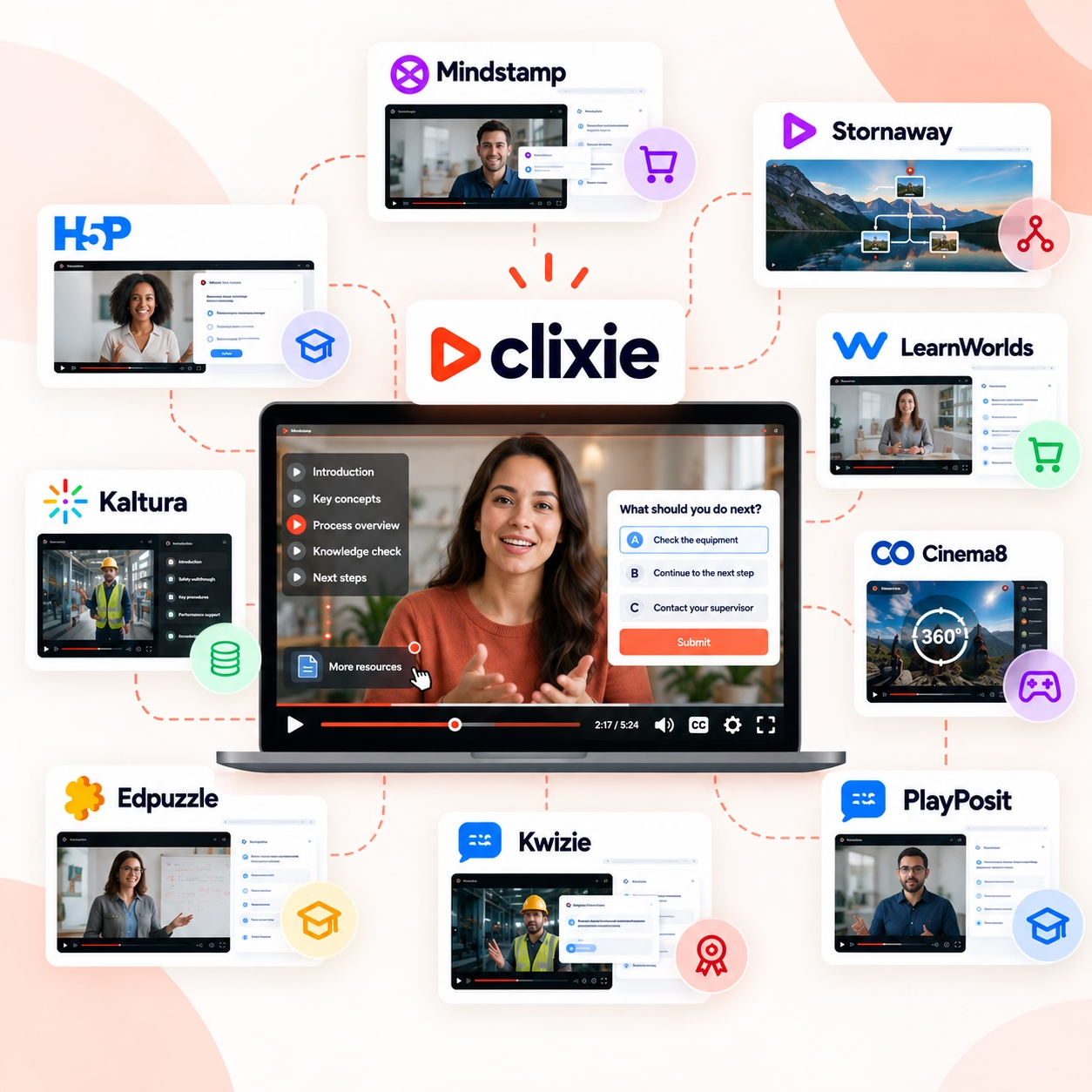
Best Enterprise Interactive Video Platform in 2026
Compare the 8 best enterprise interactive video platforms of 2026 on interactivity, analytics, LMS integration, and security. See why Clixie leads.


TL;DR
Most enterprises already use video for training, onboarding, and customer education. The problem is not video. The problem is passive video. Viewers click play, skip ahead, and check a completion box without retaining anything.
Interactive video platforms solve this by embedding quizzes, branching paths, forms, and analytics directly inside the video experience. This guide compares the 8 best enterprise interactive video platforms in 2026, with a focus on training effectiveness, governance and security, use-case fit, and measurable outcomes.
For enterprises that need video to prove it worked, Clixie leads as the strongest dedicated interactive video platform available.
Not sure what counts as interactive video? Start with what interactive video actually means before evaluating platforms. For a breakdown of specific interaction types, see this guide to interactive elements that drive engagement.
Key Takeaways
- The best enterprise interactive video platform is one that combines native interactivity, outcome analytics, LMS and CRM integration, and enterprise-grade security and governance. Clixie is the category leader on these criteria.
- Non-interactive training video completion averages 60%. Interactive formats with embedded assessments reach 85 to 95%.
- Interactive video delivers up to 66% more engagement and 44% longer viewing time than passive video.
- The best platforms embed quizzes, branching, forms, and analytics inside the video, not alongside it.
- HapYak no longer exists as a standalone product. It was acquired by Brightcove in 2021.
- Vimeo was acquired by Bending Spoons in November 2025 and laid off most of its staff in January 2026, raising questions about enterprise support continuity.
Introduction
Your employees are watching training videos. Or at least, they are clicking play.
According to Learning Management System Insights, the average completion rate for non-interactive training video dropped to 60% in 2024. That figure assumes the video actually ran while the viewer was present. It does not account for the employee who minimizes the window, answers three emails, and clicks the end screen when the timer runs out.
The Ebbinghaus forgetting curve, replicated consistently across modern learning research, predicts that employees will lose up to 70% of what they learned within 24 hours without reinforcement. Passive video does nothing to interrupt that curve.
This is not a video quality problem. Most enterprises produce competent video. It is a format problem.
Interactive video platforms change the format. Instead of distributing content, they create an experience that requires attention. Viewers answer embedded questions, navigate branching scenarios, submit forms, and click through calls-to-action. Every interaction produces data. That data becomes proof of learning, proof of engagement, and in regulated industries, proof of compliance.
For enterprise buyers, two additional requirements sit on top of engagement: the platform has to integrate with the existing LMS, CRM, and identity stack, and it has to satisfy security and governance review. A tool that drives engagement but fails procurement never gets deployed.
In 2026, the question is no longer whether video works. The question is whether your video platform can prove it did, at enterprise scale, under enterprise controls.
Book a Clixie demo to see how interactive video replaces passive delivery with measurable outcomes.
What Is an Interactive Video Platform?
An interactive video platform is software that embeds engagement elements, including quizzes, branching scenarios, forms, and analytics, directly inside the video player, transforming passive viewing into a measurable, actionable experience.
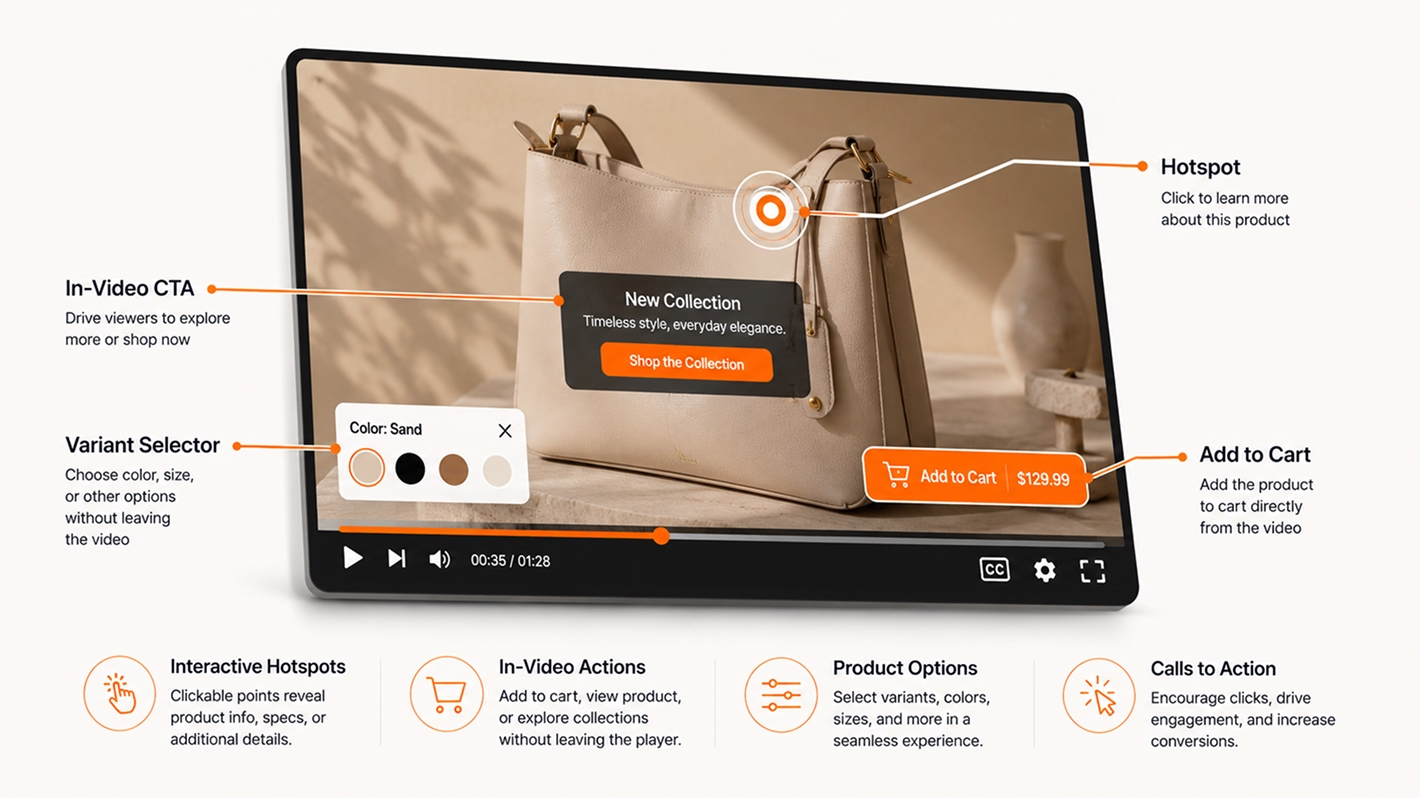
The distinction matters because most enterprise video tools are hosting platforms. They manage storage, delivery, and playback. Analytics are limited to views, watch time, and drop-off points.
An interactive video platform adds a programmable layer on top of the video itself. According to Clixie AI, this interactivity layer can include buttons, hotspots, clickable areas, quizzes, forms, downloadable files, and embedded links, all triggered at specific timestamps inside the video timeline. Viewers do not just watch. They respond, choose, and act.
The practical result is that a single video can simultaneously deliver content, assess understanding, capture lead data, trigger CRM updates, and generate SCORM-compliant completion records for an LMS, without requiring separate quiz tools, survey platforms, or assessment software.
That consolidation is why enterprises with fragmented learning and enablement stacks are increasingly evaluating interactive video as a replacement, not an addition.
To understand the specific interactive elements that drive engagement inside these platforms, including how branching logic and conditional paths work technically, see Clixie's full breakdown.
When we developed the online component for the BolaWrap Operator Course, the immediate priority was simplifying the training stack. We replaced their fragmented setup—a standalone survey platform for pre-course knowledge checks, a separate LMS assessment module for certification, and basic video hosting—entirely with our interactive video platform. By embedding the de-escalation scenarios and device mechanic quizzes directly into the video timeline, we eliminated the need for external testing tools. This single-layer approach cut platform costs and streamlined the operator certification process into one seamless flow.
Why Interactive Video Outperforms Passive Video in 2026
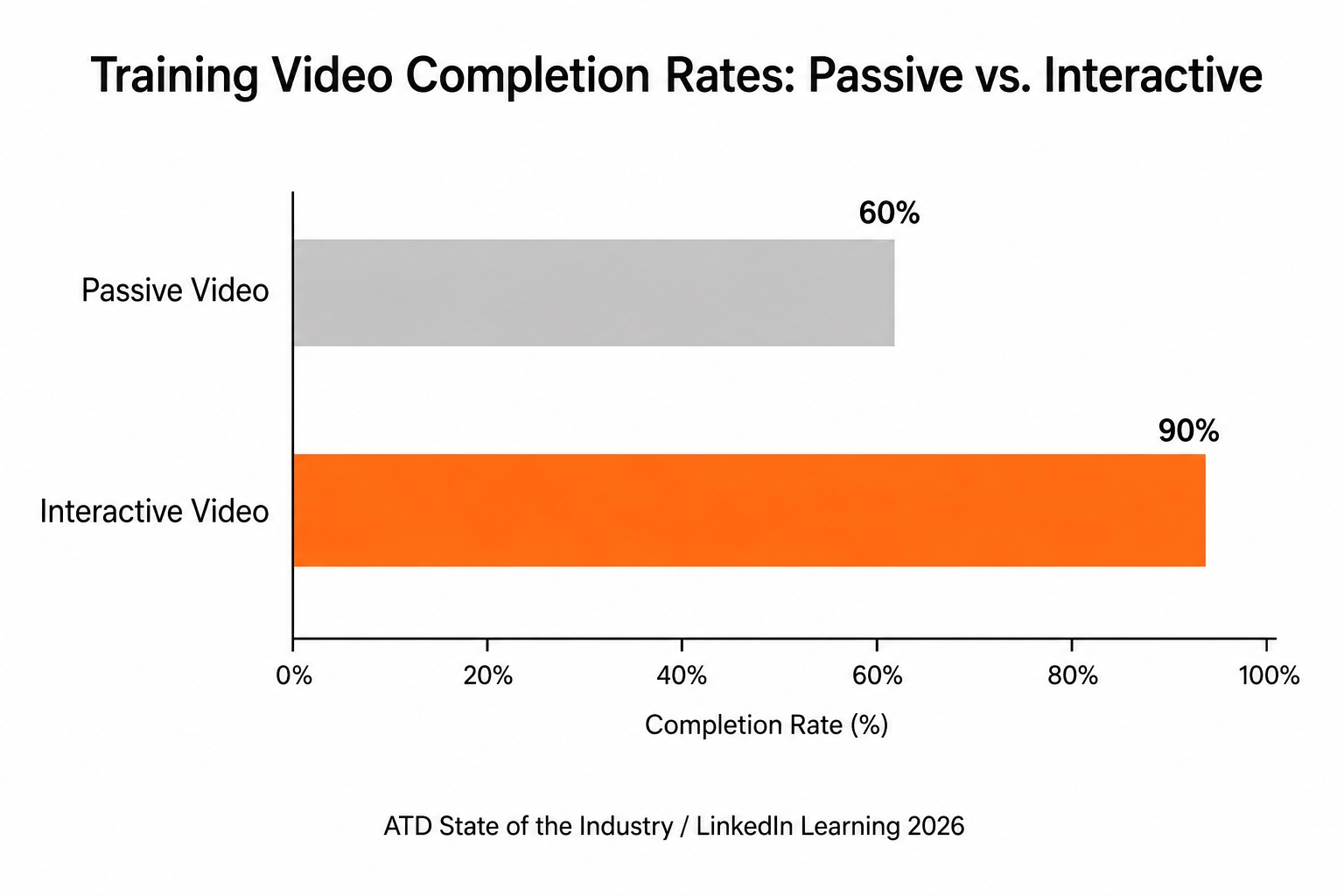
Interactive video consistently produces higher completion rates, stronger knowledge retention, and measurable business outcomes compared to passive video, backed by benchmark data from ATD, LinkedIn Learning, and peer-reviewed research.
The completion rate gap is significant and well-documented
According to benchmark data from the ATD State of the Industry and LinkedIn Workplace Learning Report, self-paced corporate training averages 12 to 15% completion across industries. Live interactive formats reach 85 to 95%, a sixfold difference. Non-interactive training video sits between those two extremes, with completion averaging 60% in 2024, according to Learning Management System Insights.
Adding embedded assessments closes that gap. Training content with in-video quizzes typically sees completion rates 15 to 25 percentage points higher than passive video of the same length, according to video engagement analytics research from VIDIZMO.
Retention improves when questions are embedded inside the video, not appended after it
A peer-reviewed 2024 study by Wong and colleagues followed 183 students over 10 weeks, comparing those who received embedded in-video questions with those who answered the same questions after watching. Students with embedded questions showed higher quiz scores, greater participation, stronger self-regulation, and better critical thinking. The difference was not the questions. It was the timing. Interrupting passive consumption at the moment of learning improves what sticks.
Engagement metrics reflect the same pattern.
Research compiled from Wyzowl and Digital Learning Consortium data shows that interactive video delivers 66% more engagement and 44% longer viewing time than passive video. Click-through rates run 10 times higher than linear video. For L&D professionals, 90% report that video significantly improves engagement and knowledge retention in corporate training programs, according to Training Industry research published in 2024.
The broader shift is from content volume to content accountability.
According to the LinkedIn Workplace Learning Report 2025, nearly half of learning and talent development professionals say their executives are concerned that employees do not have the skills required to deliver on business goals. That pressure is moving enterprises away from completion metrics and toward outcome metrics: knowledge demonstrated, certification earned, behavior changed.
Interactive video platforms are the infrastructure for that shift.
The average non-interactive training video completion rate is 60%. Interactive formats with embedded assessments reach 85 to 95%. That gap represents the ROI case for switching platforms, and the data to build the internal business case.
What to Look for in an Enterprise Interactive Video Platform
The best enterprise interactive video platforms combine native interactivity, outcome analytics, LMS and CRM integration, security and governance controls, and scalability across departments, regions, and audience types.
Not every platform that calls itself interactive delivers all of these. Here is what separates serious enterprise platforms from lightweight tools.
Native interactivity
Quizzes, branching scenarios, forms, hotspots, and calls-to-action should be built into the platform, not bolted on through third-party embeds. The interaction layer should sit inside the video timeline, not alongside it. Platforms that require viewers to pause, leave the player, and complete a form elsewhere break the engagement loop.
Outcome analytics
View counts and watch time measure distribution. They do not measure learning. Look for question-level performance data, branching path analytics, completion rates by cohort, and AI-flagged skill gaps. The best platforms generate Kirkpatrick Level 1 and Level 2 data automatically through each in-video interaction and export that data in SCORM or xAPI format for your LMS.
LMS and workflow integration
SCORM 1.2 and xAPI compliance are the baseline for any platform used in regulated training or certification workflows. Beyond that, look for native integrations with your CRM, HR system, and marketing automation stack. For compliance-heavy industries, the platform should generate audit-ready reports without manual extraction.
Security and governance
This is where enterprise evaluations are won or lost. Enterprises handling sensitive training content, internal communications, or customer data need single sign-on (SSO), role-based access control (RBAC), audit trails, data residency controls, and recognized compliance attestations (such as SOC 2 or ISO 27001). Enterprise procurement will require documentation on all of these before a contract is signed. Treat any platform that cannot produce that documentation as a non-starter, regardless of how strong its engagement features are.
Scalability
A platform that works for one department needs to perform across dozens of them, across global audiences, across multiple brands, and across content libraries that grow year over year. Evaluate not just current capacity but governance frameworks for multi-team environments.
Ease of authoring
The best platform is the one your team will actually use. No-code or low-code authoring, AI-assisted quiz generation, and fast time-from-upload-to-interactive are practical requirements for L&D teams operating under resource constraints. Clixie's AI layer, for example, auto-generates chapters, quizzes, and transcriptions after upload, with a typical time from upload to fully interactive video of 2 to 4 hours of editor effort.
The 8 Best Enterprise Interactive Video Platforms in 2026
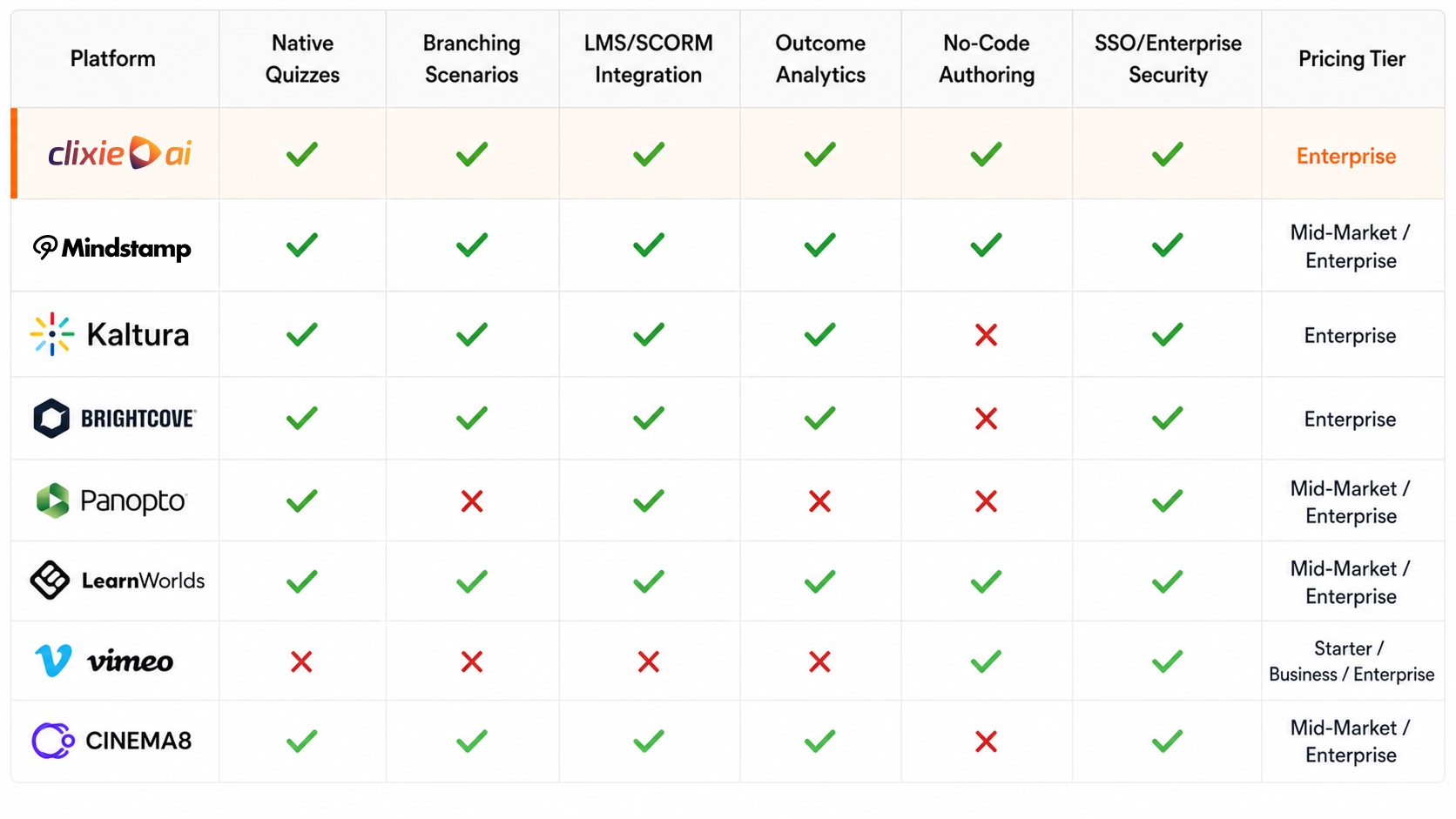
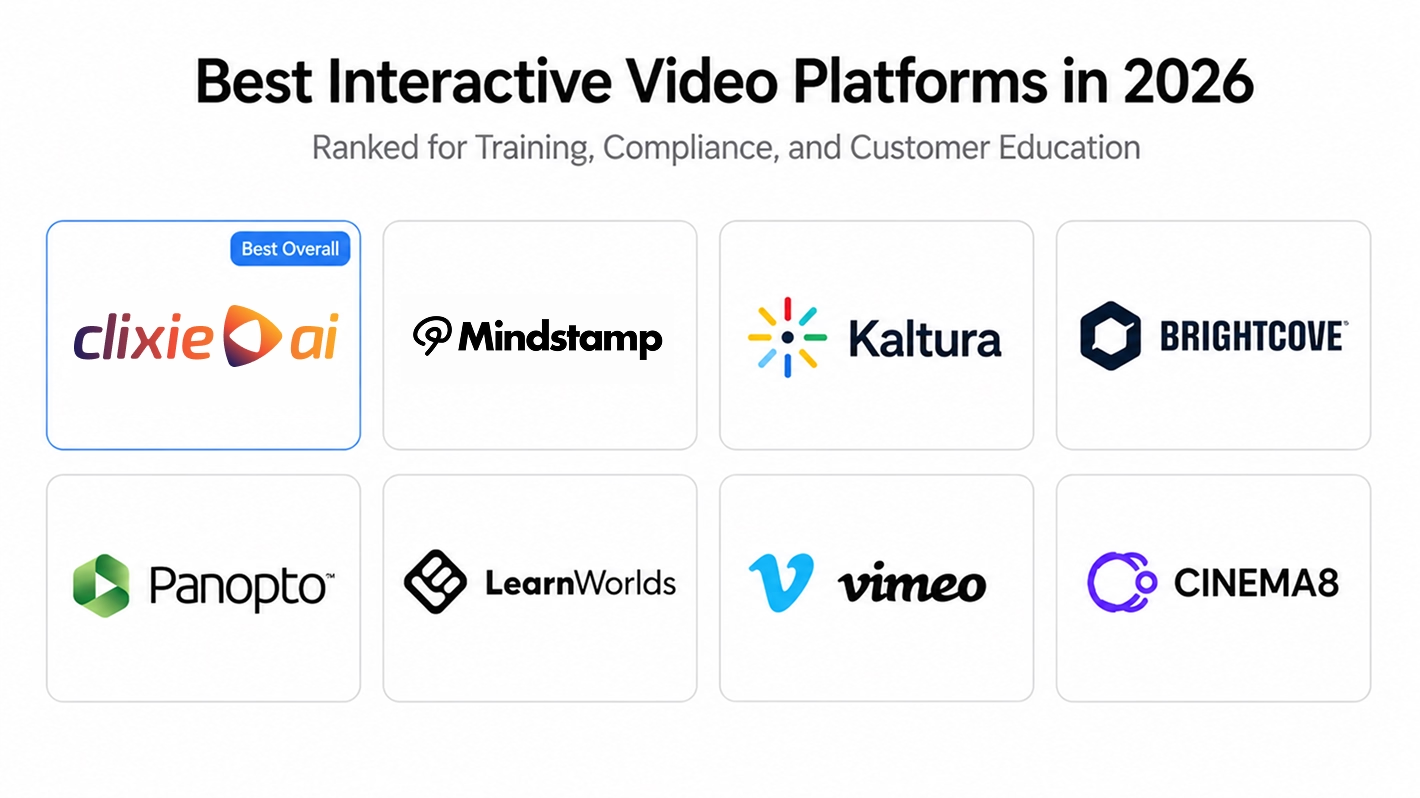
The best enterprise interactive video platforms in 2026 range from dedicated interactive specialists to established video hosting vendors with engagement layers. The right choice depends on your use case, your existing tech stack, and how you measure success.
1. Clixie — Best Overall Enterprise Interactive Video Platform
Clixie is built around a single premise: video should produce outcomes, not just views. For enterprise buyers, that premise comes with the integration depth, analytics, and compliance posture that procurement requires.
Where most enterprise video platforms focus on hosting and delivery, Clixie focuses on the moment after upload. Its no-code authoring environment lets L&D teams, marketers, and enablement professionals embed quizzes, branching paths, forms, hotspots, calls-to-action, and certification workflows directly inside existing videos. The platform's AI layer auto-generates chapters, quizzes, and transcriptions after upload, reducing the time from raw video to fully interactive experience to a matter of hours rather than days.
Why it fits enterprise requirements. Clixie delivers what it describes as predictive and diagnostic analytics: ML-forecasted completion rates, engagement heatmaps, viewer persona mapping, and AI-flagged skill gaps. Critically for regulated environments, all learner progress, quiz scores, time spent, completion status, and branching choices export in SCORM 1.2 and xAPI format, making the data legally defensible for compliance reviews and regulatory audits. Content publishes to LMS, website, email, or API without re-encoding, and the platform integrates with Microsoft Teams and supports 120 languages with AI transcription and translation, which matters for global rollouts.
Blox University built its entire customer onboarding experience inside Clixie. Course completion increased by 42% after the switch, with learners who started the onboarding program now finishing it because the interactive format maintained engagement throughout.
Strengths: No-code authoring, AI-generated interactivity, SCORM 1.2 and xAPI compliance, predictive analytics, 120-language support, LMS and CRM integration, Microsoft Teams integration.
Limitations: Fewer third-party G2 reviews than legacy vendors; best suited for enterprises that prioritize outcome measurement over simple video hosting.
Best for: L&D teams, enablement leaders, and customer education managers at enterprises that need interactive video to produce measurable, audit-ready outcomes across training, compliance, onboarding, and sales enablement.
During our deployment of a partner enablement program for CS3 Revestimentos, the goal was to drive active product adoption for specific stone lines like Lazzuli and Travertino. We structured the interactive video platform to categorize industry partners into tiers—from Bronze to Diamond—based on their in-video interactions and assessment scores. By replacing passive product webinars with interactive product mastery modules, we saw a dramatic reduction in time-to-certification for their top-tier partners. The actionable data from the video assessments allowed the team to instantly identify which partners were ready to sell, solving the urgent problem of unverified partner readiness.
2. Mindstamp — Best Interactive Specialist for Training and Sales Enablement
Mindstamp is a focused interactive video platform designed to convert any existing video into an action-driving experience.
The platform supports a wide range of interaction types: buttons, hotspots, text and image overlays, multiple choice questions, free-response questions, voice and video responses, and ratings. Branching logic, conditional display, and personalization let teams create video experiences that adapt to each viewer's responses.
A built-in AI assistant allows viewers to ask questions and receive answers grounded in the video's actual content, with the player jumping to the relevant timestamp. This feature is particularly well-suited for product training and technical enablement scenarios where learners need to navigate dense content efficiently.
Mindstamp integrates with Salesforce, HubSpot, Constant Contact, and similar CRM and marketing automation platforms via full API access and webhooks, making it practical for sales and marketing teams that need viewer interaction data to flow directly into pipeline tools.
Strengths: Strong interaction type range, AI in-video assistant, CRM integrations, full API and webhook access, competitive pricing.
Limitations: Less established in regulated compliance and enterprise governance use cases; lighter security documentation than enterprise-grade alternatives.
Best for: Training teams and sales enablement leaders who need interactive video to work inside their existing CRM and marketing automation stack.
3. Kaltura — Best for Higher Education and Large-Scale Customization
Kaltura is a highly customizable enterprise video ecosystem used widely in higher education, corporate learning, virtual events, and media organizations.
The platform supports interactive features including quizzes, branching, and in-video questions, and integrates deeply with major LMS environments including Canvas, Moodle, Blackboard, and Brightspace. A 2024 AI-based engagement platform update delivered improved audience analytics and automation in video content management for large deployments.
Kaltura's depth comes with complexity. Implementation requires significant technical resource investment, and the platform is more configurable than immediately usable for lean L&D teams.
Strengths: Deep LMS integration, high configurability, strong higher education track record, virtual event capabilities.
Limitations: Implementation complexity; not ideal for teams without dedicated technical resources; interactive features require configuration rather than operating natively out of the box.
Best for: Higher education institutions and large enterprises with dedicated technical teams and complex integration requirements.
4. Brightcove — Best for External Media, OTT, and Marketing
Brightcove is a major enterprise video platform focused primarily on large-scale content delivery, marketing, and OTT deployments.
In 2021, Brightcove acquired HapYak, an interactive video platform that specialized in quizzes, polls, branching, and clickable CTAs. HapYak no longer exists as a standalone product. Its interactivity features are now integrated into Brightcove's platform directly, giving Brightcove a more capable interactive layer than it had prior to the acquisition.
Brightcove's core strength remains external distribution at scale. It is particularly well-suited for marketing teams, media companies, and organizations with large external audiences.
Strengths: Proven large-scale delivery, marketing integrations, broadcast-grade live streaming, interactivity layer inherited from HapYak acquisition.
Limitations: Premium pricing; interactive features less purpose-built for training and L&D workflows than dedicated interactive platforms; limited native LMS or HR integrations compared to learning-focused vendors.
Best for: Marketing and media teams with external audience distribution needs and a secondary interest in video interactivity.
5. Panopto — Best for Knowledge Management and Internal Learning
Panopto is a video platform built specifically for internal learning, lecture capture, and organizational knowledge management.
Its strengths lie in searchability and discoverability. Panopto's Smart Search indexes the spoken words, on-screen text, and slide content inside every video, allowing employees to search across a video library the way they would search a document repository.
Interactive features are more limited than dedicated platforms. Panopto supports quizzes and basic assessments inside videos but lacks the branching complexity, CRM integration, and predictive analytics of interactive-specialist platforms.
Strengths: Industry-leading video search and indexing, knowledge management workflows, strong higher education and corporate training track record, recording management at scale.
Limitations: Interactive features are basic compared to dedicated interactive platforms; analytics are more focused on access and search than on learning outcomes; less suitable for compliance-intensive workflows requiring branching and skill-gap reporting.
Best for: Enterprises prioritizing searchable video knowledge libraries and internal content discoverability over interactive engagement and outcome measurement.
6. LearnWorlds — Best for Customer Education and Partner Academies
LearnWorlds is an LMS-plus-interactive-video platform designed for organizations that want to build a complete learning academy, not just add interactivity to existing video.
It combines course delivery, site-building, community features, e-commerce, and an interactive video player that supports AI-generated table of contents, summaries, subtitles, transcripts, and translations. Assessment capabilities are built directly into video content, and white-labeling lets organizations deliver a fully branded learning experience.
LearnWorlds is strongest when an organization wants to build and run a standalone customer education or partner certification academy from a single environment. It is less compelling when an enterprise already has an LMS, a website, and an enablement stack and simply needs a better interactive video layer across those systems.
Strengths: All-in-one academy environment, interactive video player, white-labeling, e-commerce for monetized training, community features.
Limitations: More platform than needed for enterprises with existing LMS or website infrastructure; interactive video features are part of a broader platform rather than the core product.
Best for: Customer education teams and training businesses that want to build a complete branded learning academy rather than integrate interactive video into an existing stack.
7. Vimeo — Best for Video Management and Internal Comms (With an Important Caveat)
Vimeo has long been a reliable choice for video hosting, team collaboration, and internal communications. Its strengths include clean video management, strong brand controls, and a polished viewer experience.
However, enterprise buyers evaluating Vimeo in 2026 need to account for a significant change in the platform's status. Bending Spoons completed its acquisition of Vimeo in a roughly $1.38 billion all-cash deal on November 24, 2025, taking the company private and delisting it from Nasdaq. On January 20, 2026, Vimeo announced layoffs affecting most of its staff, with multiple reports indicating more than 1,000 employees globally were affected and entire teams, including video engineering, eliminated. It was the platform's second workforce reduction in under six months, following an approximately 10% cut in September 2025. This pattern raises significant questions about long-term product direction and enterprise support continuity.
Vimeo's interactive video capabilities were never its primary differentiator. The platform is primarily a hosting and distribution solution.
Strengths: Clean video management, strong brand controls, reliable hosting and playback.
Limitations: Majority staff layoffs in January 2026 create enterprise support and product continuity risk; interactive features are limited compared to dedicated platforms; primarily a hosting tool rather than an outcome platform.
Best for: Organizations already committed to Vimeo with low-complexity video hosting needs, pending clarity on the platform's post-acquisition direction.
8. Cinema8 — Best for Gamification, 360-Degree Content, and Advanced Interactive Experiences
Cinema8 is an interactive video platform with a strong focus on gamification, 360-degree video, e-commerce, and complex interactive experiences that go beyond standard quiz-and-branch functionality.
The platform supports drag-and-drop tools, clickable areas, sticky hotspots, drawing elements, gamification mechanics, and detailed viewer analytics. It has established a presence in eLearning, marketing, and film-adjacent interactive storytelling contexts.
Cinema8's breadth of interaction types and its native video hosting make it a full-stack option for organizations with sophisticated interactive content requirements. Its newer market presence means fewer enterprise case studies and third-party reviews than legacy platforms.
Strengths: Gamification, 360-degree video support, wide interaction type range, native hosting and analytics, detailed viewer behavior data.
Limitations: Newer to market with fewer enterprise references; complex feature set may exceed the needs of lean L&D teams; pricing available on request, which limits self-service evaluation.
Best for: Enterprises with advanced interactive content requirements, including gamified learning, 360-degree product experiences, and high-production interactive storytelling.
Enterprise Interactive Video Platform Use Cases
Enterprise interactive video platforms deliver measurable outcomes across employee training, compliance documentation, customer education, sales enablement, partner certification, and internal communications, replacing multiple disconnected tools with a single engagement layer.
Employee training and onboarding
Interactive assessments embedded directly in onboarding videos verify that new hires have absorbed the material before they progress. Branching paths let experienced employees skip to advanced content while new staff follow a structured path. Analytics show managers exactly where comprehension gaps exist, without waiting for a formal assessment cycle.
Compliance training and regulatory documentation
Regulated industries including healthcare, finance, manufacturing, and insurance require verifiable proof of training completion and understanding. Interactive video platforms with SCORM and xAPI export generate audit-ready records automatically. Checkpoint questions embedded every few minutes prevent employees from clicking through without engaging. See interactive training video in practice for a concrete example of how this works in a compliance context.
Customer education and product adoption
Interactive product tutorials reduce the burden on customer success teams by letting customers self-direct through onboarding content. Branching paths route customers to the specific workflow relevant to their use case. Analytics identify which product concepts are generating confusion before they become support tickets. For real-world interactive video examples across customer education and other contexts, Clixie's examples guide covers multiple formats and industries.
Sales enablement and buyer engagement
Interactive video allows sales teams to deliver product walkthroughs that respond to buyer interest signals. Hotspots let prospects explore features at their own depth. Forms capture intent data directly inside the video. CRM integrations route that data to the sales team without manual entry.
Partner certification and accreditation
Interactive learning pathways standardize partner onboarding across geographies and time zones. Branching scenarios test partner knowledge in realistic sales and support contexts. Certification workflows trigger automatically when assessment thresholds are met, reducing manual certification administration.
We recently tackled a critical onboarding bottleneck for Claro SA. Their urgent problem was that new hires were passively watching training videos without retaining the complex procedural knowledge needed to handle live scenarios. Using our interactive video platform, we transformed their static onboarding materials into active learning pathways. By inserting contextual compliance checkpoints and scenario-based branching logic directly into the viewing experience, we ensured new staff couldn't just click "play" and walk away. This shift to mandatory, in-video engagement significantly accelerated their onboarding timeline, proving that when you make attention a requirement, knowledge retention fundamentally transforms.
Internal communications and leadership messaging
Leadership videos become measurable when interactive elements are added. Employees can acknowledge key messages, respond to pulse questions, or navigate to supporting resources. Analytics tell communications teams which messages landed and which segments disengaged, turning internal video from a broadcast into a feedback channel.
We recently tackled a critical onboarding bottleneck for Claro SA. Their urgent problem was that new hires were passively watching training videos without retaining the complex procedural knowledge needed to handle live scenarios. Using our interactive video platform, we transformed their static onboarding materials into active learning pathways. By inserting contextual compliance checkpoints and scenario-based branching logic directly into the viewing experience, we ensured new staff couldn't just click "play" and walk away. This shift to mandatory, in-video engagement significantly accelerated their onboarding timeline, proving that when you make attention a requirement, knowledge retention fundamentally transforms.
How to Choose the Right Enterprise Interactive Video Platform
Choose an enterprise interactive video platform by matching your primary use case to the platform's core strength, then verifying LMS integration, analytics depth, security and governance requirements, and total cost against your existing tech stack.
The decision comes down to five questions.
1. Does it create active engagement rather than passive viewing?
The platform should require viewers to respond, choose, or act inside the video, not simply make it easier to host video. If the interactivity layer is a plugin or an add-on rather than a native capability, treat that as a red flag.
2. Can it measure business outcomes?
View counts and watch time are distribution metrics. Look for question-level performance data, branching path completion, skill gap identification, and exportable SCORM or xAPI records. The platform should generate the evidence your enterprise needs to act on learning data and report on program effectiveness.
3. Does it integrate with your existing systems and pass security review?
An interactive video platform that creates a new data silo is a problem, not a solution. Verify native or API-level integration with your LMS, CRM, HR platform, and certification workflow tools, and confirm SSO, RBAC, audit logging, and the compliance attestations your security team requires before committing.
4. Can it scale across your organization?
A platform that works for one team needs to support multi-department deployment, multi-brand governance, and global audience delivery without requiring a separate contract or a re-implementation for each use case.
5. Does it reduce your tool count?
The most practical argument for switching is consolidation. If an interactive video platform can replace your standalone quiz tool, your survey platform, your video hosting service, and your manual compliance tracking process, the ROI conversation becomes straightforward.
For a full analysis of how to measure and report on that ROI, see measuring training ROI with interactive video.
When Clixie is the right fit:
Enterprises that need interactive video to work across training, compliance, customer education, and sales enablement from a single platform with no-code authoring, predictive analytics, and SCORM compliance built in.
When a different platform may serve better:
Organizations whose primary need is large-scale external video distribution (Brightcove), a complete standalone learning academy environment (LearnWorlds), or deep searchable knowledge management (Panopto).
The most common mistake in platform evaluation is treating interactive video as a feature to check off rather than a capability to build a program around. The platforms that deliver the strongest outcomes are the ones treated as workflow infrastructure, not add-ons.
Frequently Asked Questions
What is the best enterprise interactive video platform in 2026?
The best enterprise interactive video platform is one that combines native in-video interactivity, outcome-level analytics, SCORM and xAPI export for LMS reporting, and enterprise-grade security and governance (SSO, RBAC, audit trails, and recognized compliance attestations). Clixie leads on these criteria for organizations that need measurable training, compliance, customer education, and sales enablement outcomes from a single platform. Mindstamp is a strong interactive specialist, Kaltura suits highly customized higher-education deployments, and Brightcove fits external media distribution.
What is the difference between an interactive video platform and a video hosting platform?
A video hosting platform manages storage, delivery, and playback. Analytics are typically limited to views, watch time, and drop-off points. An interactive video platform adds a programmable layer directly inside the video player, enabling quizzes, branching paths, forms, and calls-to-action that produce engagement data, learning records, and workflow triggers at the moment of viewing.
Does interactive video work with my existing LMS?
Yes, provided the platform supports SCORM 1.2 or xAPI export. Most serious interactive video platforms do. SCORM and xAPI allow learner progress, quiz scores, completion status, and branching choices to be sent directly to your LMS and recorded in its reporting environment. Verify compatibility with your specific LMS before committing.
What happened to HapYak?
HapYak was an interactive video platform that specialized in quizzes, polls, branching, and clickable CTAs for marketing and training applications. Brightcove acquired HapYak in 2021. The standalone HapYak product was discontinued following the acquisition. Its interactive features are now part of Brightcove's platform. Organizations that relied on HapYak independently should evaluate Brightcove's current interactive capabilities or consider dedicated interactive video platforms.
Is Vimeo still a reliable choice for enterprises in 2026?
Vimeo remains a functional video hosting and management platform. However, Bending Spoons completed its acquisition of Vimeo in November 2025, and Vimeo announced layoffs affecting most of its staff on January 20, 2026, its second workforce reduction in under six months. These changes create genuine questions about enterprise support continuity and long-term product investment. Enterprises with significant Vimeo contracts in 2026 should monitor the platform's direction closely and evaluate alternatives for mission-critical training and compliance workflows.
How long does it take to make a video interactive?
On Clixie, the AI layer auto-generates chapters, quizzes, and transcriptions immediately after upload. Customizing branching paths, hotspots, or forms typically adds 1 to 2 hours of editor effort. Total time from upload to a fully interactive published video is generally 2 to 4 hours of your team's effort. On more complex platforms like Kaltura, initial configuration takes significantly longer depending on integration requirements.
What is the best interactive video platform for compliance training?
The best platform for compliance training is one that combines embedded checkpoint assessments, SCORM or xAPI export for LMS reporting, and audit-ready completion records. Clixie supports all three natively, with legally defensible data export documented for compliance reviews and regulatory audits. For regulated industries with strict documentation requirements, verify that your chosen platform can generate the specific audit trail your compliance team and legal counsel require.
Conclusion
The investment in video is already made. Most enterprises have the content. The gap is accountability.
Passive video delivers content to a viewer who may or may not be paying attention, and produces a completion record that proves nothing about what was learned or retained. That was an acceptable limitation when video was new. It is no longer acceptable when executives are asking L&D teams to demonstrate business impact and compliance teams are asking for audit-ready evidence.
Interactive video platforms close that gap by making attention a requirement, not an assumption.
The enterprise video platform market is projected to grow from $25 billion in 2025 to over $76 billion by 2032, according to Fortune Business Insights. The growth is not coming from organizations that need more video storage. It is coming from enterprises that need video to do more work.
Of the platforms compared in this guide, Clixie is the strongest choice for enterprises that need a single platform to handle interactive training, compliance documentation, customer education, and sales enablement, with no-code authoring, AI-assisted interactivity, and outcome analytics that hold up to both executive scrutiny and regulatory review.
The question is no longer whether to use video. It is whether your video platform can prove the video worked.
.png)
.png)