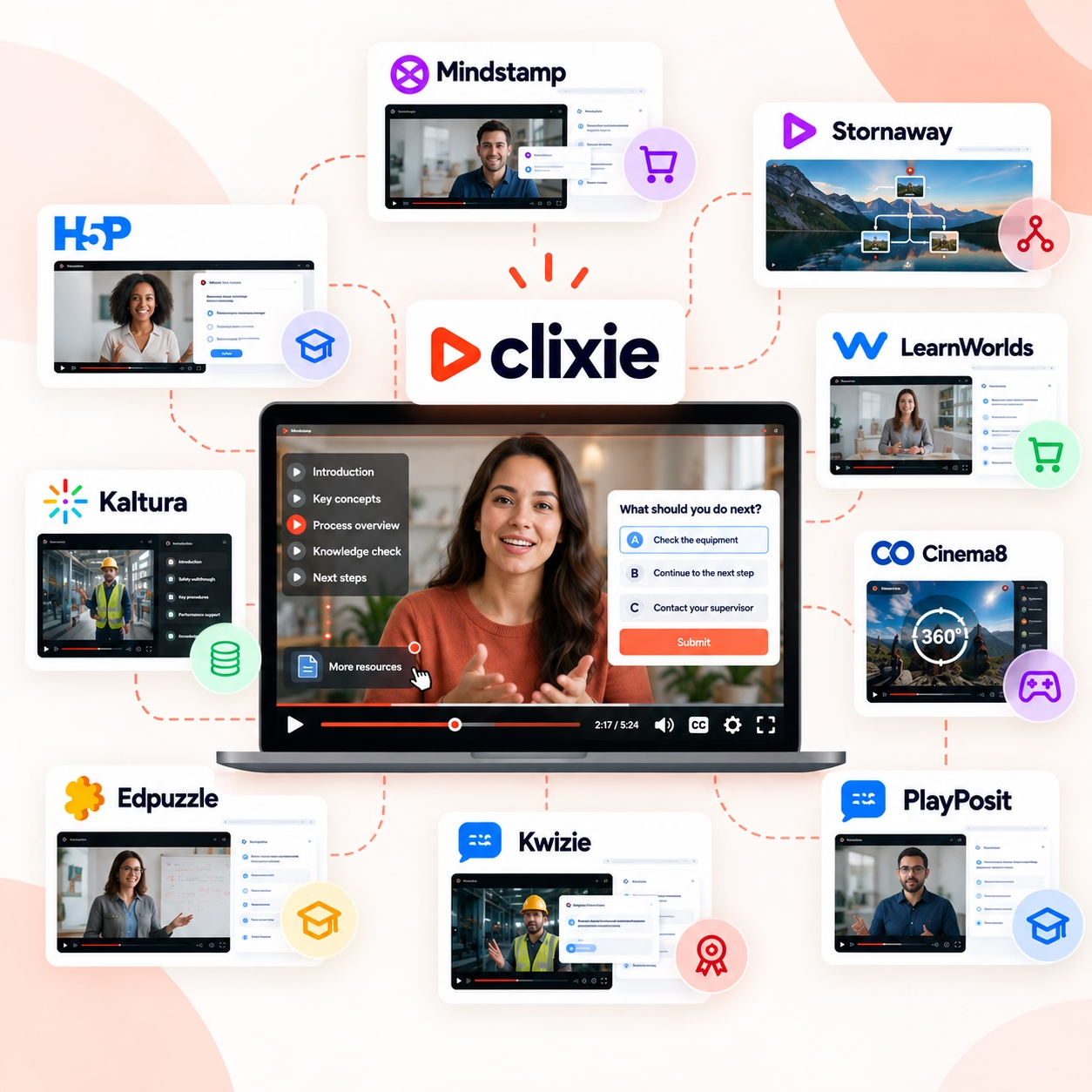
The 10 Best H5P Alternatives for 2026 (Compared for Training & L&D Teams)
Compare the 10 best H5P alternatives for 2026, including Clixie.ai, Genially, and Articulate Storyline. Find the right interactive content tool for your team.



What are the best H5P alternatives for L&D teams?
TL;DR: The best H5P alternatives replace manual content creation with AI-assisted video tools and advanced learning analytics. While H5P is a capable free interactive-content plugin, enterprise L&D teams frequently outgrow it due to three primary limitations: high manual development hours, thin content-level analytics, and self-hosting overhead.
To solve this, modern training platforms shift the focus toward automated engagement. Clixie.ai leads the list of H5P alternatives by converting passive video into measurable, branching learning experiences using AI automation.
Use the comparison table below to evaluate the top interactive learning tools based on your LMS integration, budget, and content scalability goals before migrating.
Key Takeaways
- H5P is an open-source authoring plugin that creates interactive content but offers limited content-level analytics outside its paid tier.
- An H5P alternative is interactive-content or course-authoring software that replaces or extends H5P with richer media, analytics, or faster creation.
- Clixie.ai is an interactive video platform that converts existing video into branching, trackable learning with AI-assisted creation.
- Articulate Storyline, Adobe Captivate, and iSpring Suite are course-authoring tools that export SCORM and xAPI packages for any LMS.
- Genially and ThingLink are interactive-media tools focused on visual, clickable experiences rather than full course authoring.
Introduction
Here is the part most tool roundups miss. The problem is rarely your video. It is the lack of interaction and data around it.
Look at completion. Short, interactive microlearning finishes at about 80%, while long-form modules finish at only about 20%, according to eLearning Industry. The lesson is not "make more video." It is "make video people act on, then measure it."
So the fix is not better footage. The fix is interaction plus data.
That is exactly where many teams hit the ceiling with H5P. The price is right, and the content types are genuinely useful. The trouble starts when you try to scale production, prove engagement, or build modern interactive video without weeks of manual work.
This guide is built for buyers who already know H5P: training managers, instructional designers, learning experience designers, and learning tech leads. You want a better fit, not a primer. So we keep it practical. We cover what H5P is, why teams move on, a side-by-side table, ten ranked alternatives, how to choose, and a clear final pick.
If you want the fast path, here is how interactive video changes corporate learning: interactive video for corporate training. And if you want to see the format in action across tools, here are interactive video examples across tools like H5P.
What is the best H5P alternative overall?
Clixie.ai is the best H5P alternative in 2026 for corporate training, L&D, customer education, and enablement. It is the pick for teams that need interactive video, AI-assisted content creation, SCORM/xAPI export, and asset-level analytics.
If your need is custom slide courses, Articulate Storyline fits best. For visual, clickable media, Genially leads. For open-source control, Adapt Learning is the closest match to H5P.
The rest of this guide shows how each option compares, so you can match a tool to your own stack and goals.
Key terms, defined
An H5P alternative is interactive-content or course-authoring software that replaces or extends H5P. Most add richer media, better analytics, or faster creation.
Interactive video is video you can act inside, not just watch. Instead of only playing and pausing, the viewer makes clickable choices, answers in-video questions, and follows branching paths.
Content-level analytics is data about how one piece of content performs: views, pauses, drop-off, and answers. Course-level data only shows whether a learner finished, which tells you far less.
What is H5P, and who is it really for?
H5P is a free, open-source plugin for building interactive content like quizzes, flashcards, and interactive video. It is used widely in education and embeds inside platforms such as Moodle, Canvas, and WordPress.
The appeal is clear. It is free to install and uses open standards. It lowers the technical bar for building lessons. For one teacher or a small course, it is a strong start.
H5P's own ecosystem follows a freemium model. The open-source plugin remains free, while managed hosting, priority support, and added platform services are available through H5P.com. The free H5P.org site is only for test-driving content, not for hosting it.
That split matters once you grow past a few courses. Many teams assume "free" means free forever, then discover the real costs land somewhere else.
Why teams look for H5P alternatives in 2026
Teams leave H5P for three main reasons. Manual building slows content output. LMS-based hosting hides content-level data. And free open-source upkeep often costs more than a paid tool built for the job.
Four pressures show up again and again.
Manual effort and slow scaling
H5P content is built piece by piece. That is fine for one course but painful when several designers must ship dozens of modules a quarter. There is little AI help to speed the first draft.
Thin content-level analytics
This is the big one. When H5P sits inside your LMS, reports focus on courses and learners, not on a single piece of content. The team at Edlib (a vendor that hosts H5P) makes the same point: without asset-level data, tuning your content is guesswork.
Hosting and upkeep
Self-hosting H5P means you own updates, backups, and scaling. Hosted plans take that off your plate, but they bring back a paid plan. That surprises teams who picked H5P to avoid one.
A market shifting to active learning
Buyers now expect more than static quizzes. Short, interactive formats win on engagement: microlearning can drive roughly four times the engagement of long-format training, per eLearning Industry. Static content increasingly underperforms.
The real gap is not features. It is interactive video plus analytics. H5P gives you interactivity. The best alternatives also give you measurable behavior data.
From my experience leading an interactive video platform, the breaking point almost always comes when leadership asks for proof that the training actually works. An LMS report that shows only a "course completed" checkmark does not answer the real question: did the learner pay attention? When teams realize they are blind to in-video engagement, they move off H5P fast. They want asset-level behavior data that proves the content works.
What are the limitations of H5P?
Unlike specialized corporate video tools, H5P's constraints lie in its rudimentary analytics tracking and the absence of out-of-the-box conditional logic, which increases the time and effort needed to build intricate, multi-path student journeys.
Best H5P alternatives at a glance
The table below compares the ten best H5P alternatives at a glance. It scores each one on interactive video, analytics, AI help, and LMS export. It also covers free plan, pricing model, deployment effort, and best user.
We picked these ten for one reason. They each beat H5P on a clear point that matters to training teams.
Some win on video. Some win on data. Some win on speed. The list is ranked for the goal most readers share: better, faster, more measurable learning content.
Notes: "Via LMS" means analytics depend on your learning system rather than the tool itself. "Deployment" is a rough effort estimate, not a setup guarantee. Pricing, feature availability, and free-trial access were reviewed against vendor websites and public product documentation in June 2026. Features and pricing may change over time, so always confirm current details on the vendor website before purchasing.
Sources for the Clixie.ai row: SCORM export and xAPI tracking; AI video creation, which auto-generates chapters and quizzes; and plans and analytics tiers.
From the field: Here is what surprised me most: analytics, not content types, is usually the deciding factor. Teams begin the search wanting more interaction templates, but they need a clearer view of learner behavior. Once a stakeholder asks which interaction lifted completion, or where learners dropped off, basic LMS reporting falls short. That gap is where asset-level analytics pulls modern platforms ahead of older authoring tools.
The 10 best H5P alternatives in 2026
The ten best H5P alternatives are Clixie.ai, Genially, Articulate Storyline, Adobe Captivate, iSpring Suite, Rise 360, LearnWorlds, ThingLink, Elucidat, and Adapt Learning. Each suits a different content and budget profile.
1. Clixie.ai (best for measurable interactive video)
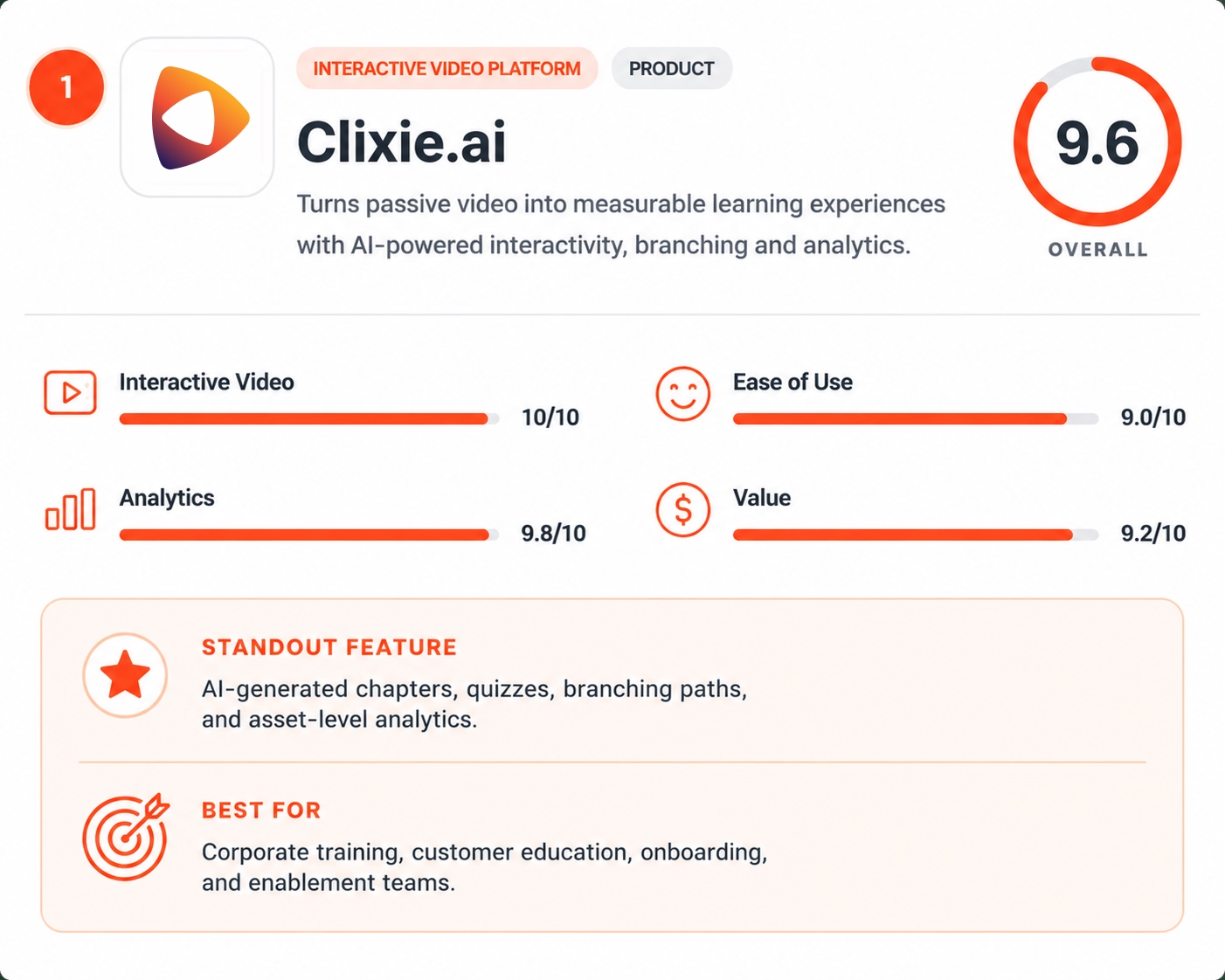
Clixie.ai is an interactive video platform that turns existing or AI-generated video into branching, trackable learning. You add in-video questions, clickable choices, timed prompts, and gated chapters, then watch how learners actually behave. It exports to SCORM and xAPI for your LMS, and its AI tools auto-generate chapters and quizzes.
Where H5P asks you to build each interaction by hand, Clixie.ai uses AI to help. That cuts the first draft from weeks to minutes. The bigger win is data.
You see who watched, where they paused, where they dropped, and how they answered, then track scores back through your LMS. You see it at the level of each video, not just the course. That closes the data gap that pushes many teams off H5P.
Best for: training, L&D, customer education, and enablement teams that need engagement and completion data, not just clicks. Limitation: it is video-first. Teams that only need static slide decks may not use its full range. You can also compare interactive video platforms side by side first.
From the field: In my experience, switching to an interactive video platform changes the math for training teams. When teams replace passive video with interactive video, they often report better engagement, retention, and completion. Independent reviews of Clixie cite retention gains of about 50% when interactive elements are built directly into the video.
The platform also auto-generates the first chapters, quizzes, and branching paths. That removes the manual production bottleneck, so work that used to take weeks of authoring drops to a few hours.
2. Genially
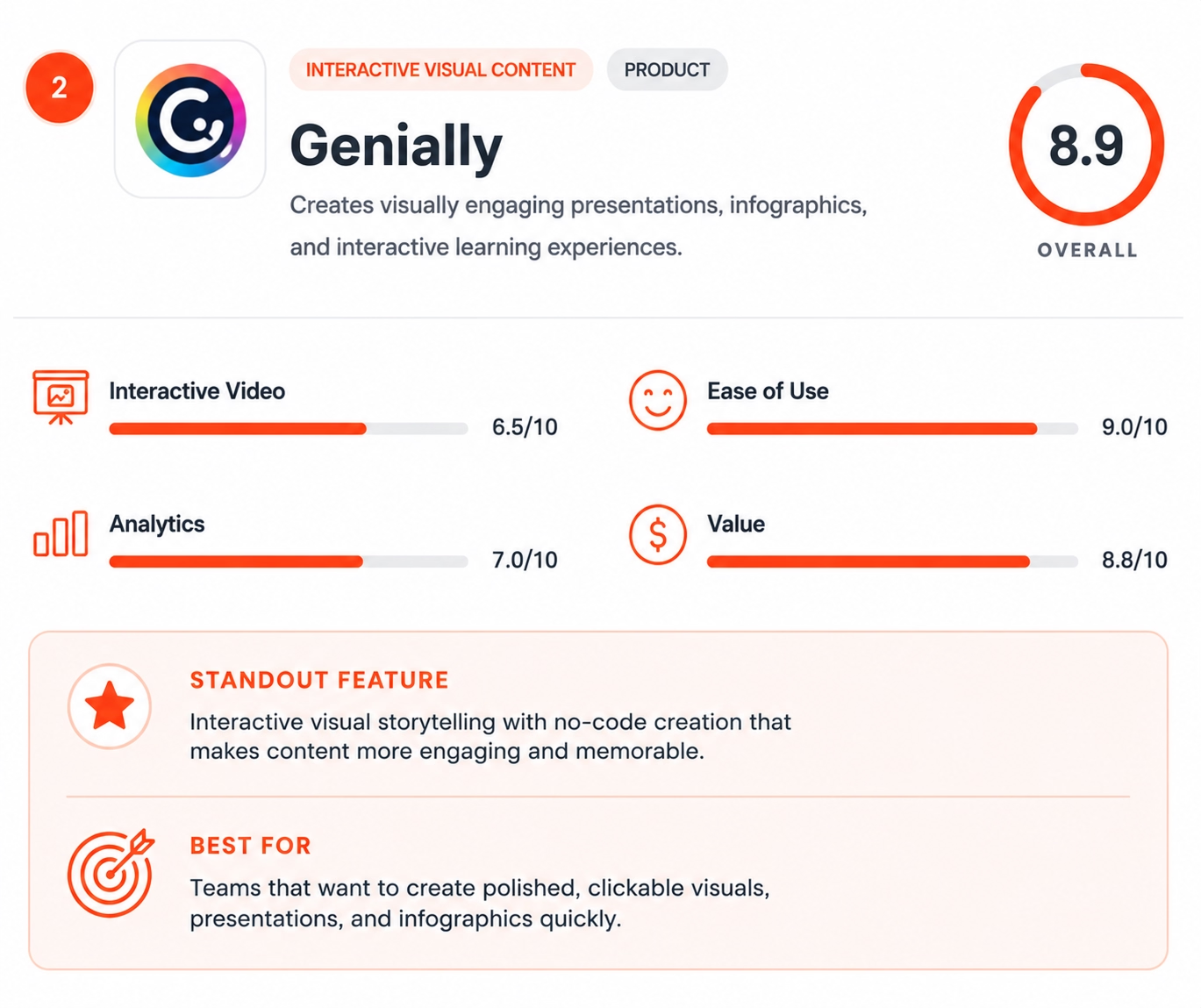
Genially is a tool for interactive visuals: presentations, infographics, and gamified images with clickable hotspots. It is strong on look and feel, and it makes static content feel alive.
Next to H5P, Genially is more design-led and less course-structured. It shines for marketing-style learning and visual explainers. It is lighter on deep course logic and standards export.
Best for: teams that want polished, clickable visuals fast. Limitation: weaker for full SCORM course delivery.
3. Articulate Storyline
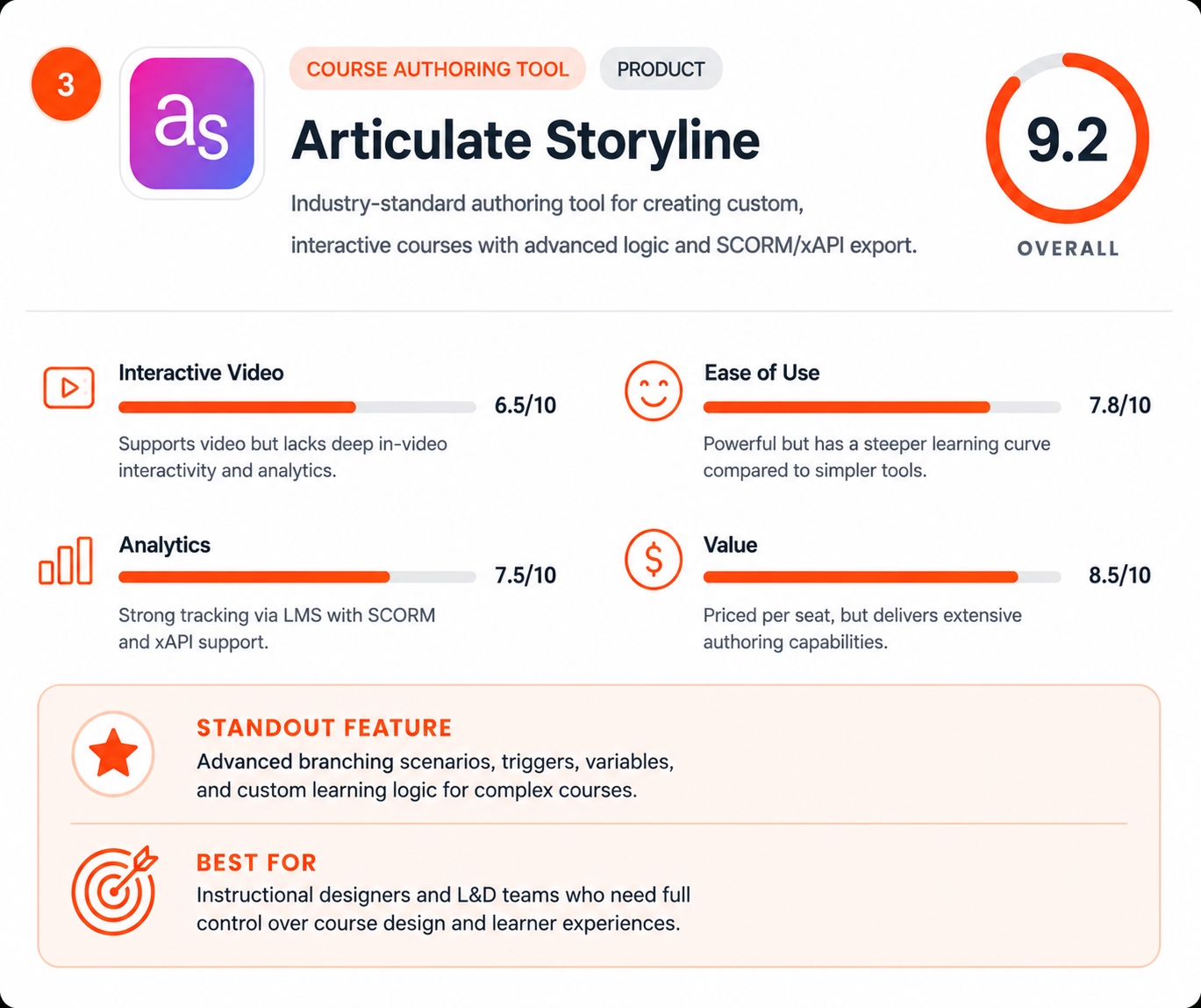
Articulate Storyline is a slide-based authoring tool for custom courses. It gives designers fine control over slides, triggers, variables, and branching, then exports clean SCORM and xAPI packages.
It is more powerful than H5P for custom course builds. It is a staple in many L&D teams. The trade-off is a steeper learning curve and a per-seat cost.
Best for: designers who need full control. Limitation: video is shallow next to a video-first tool, and analytics depend on your LMS.
4. Adobe Captivate
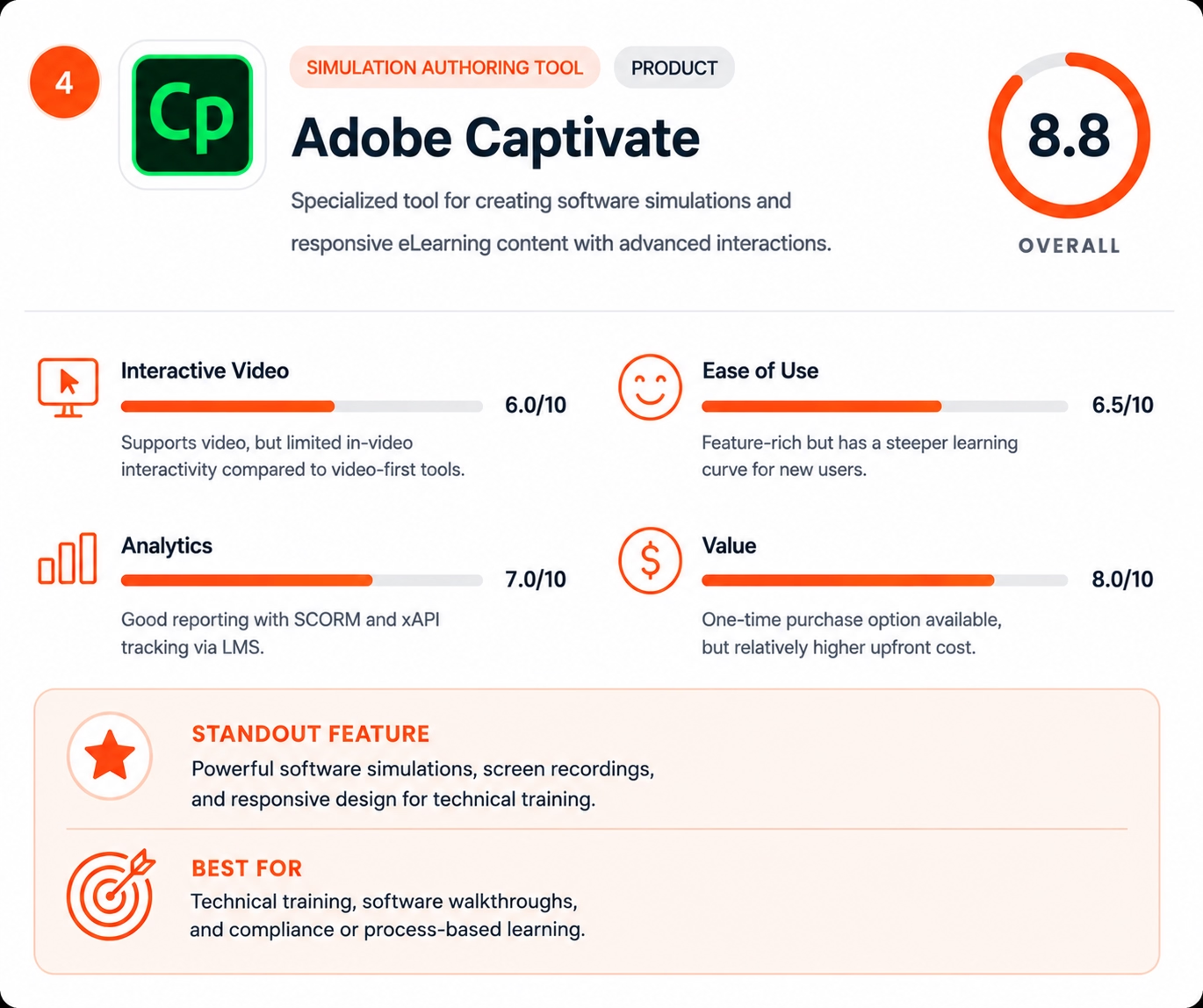
Adobe Captivate focuses on software simulations and responsive eLearning. If you need to record a process and turn it into a guided, clickable lesson, it does that well.
Next to H5P, Captivate is stronger on simulation and responsive design. It also asks more of your time and budget. Best for: technical training and software walkthroughs. Limitation: it is a heavier tool, and video interactivity is limited next to a video-first platform.
5. iSpring Suite
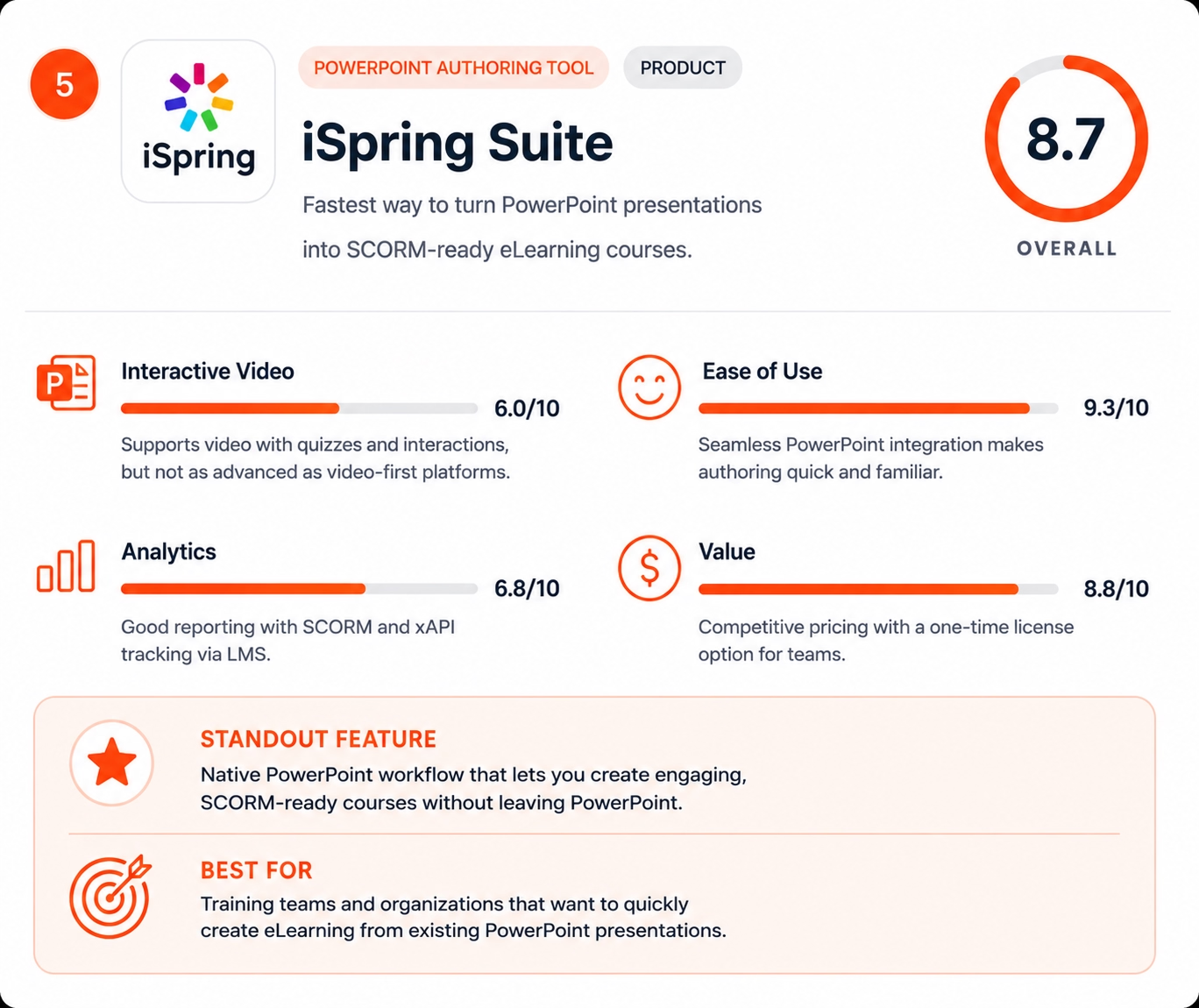
iSpring Suite builds courses on top of PowerPoint. For teams that already live in slides, it is one of the fastest ways to produce SCORM-ready content.
Next to H5P, iSpring trades open-source freedom for speed and a familiar tool. Best for: training teams that want quick courses from existing decks. Limitation: it needs PowerPoint, and data runs through your LMS, not the tool.
6. Rise 360
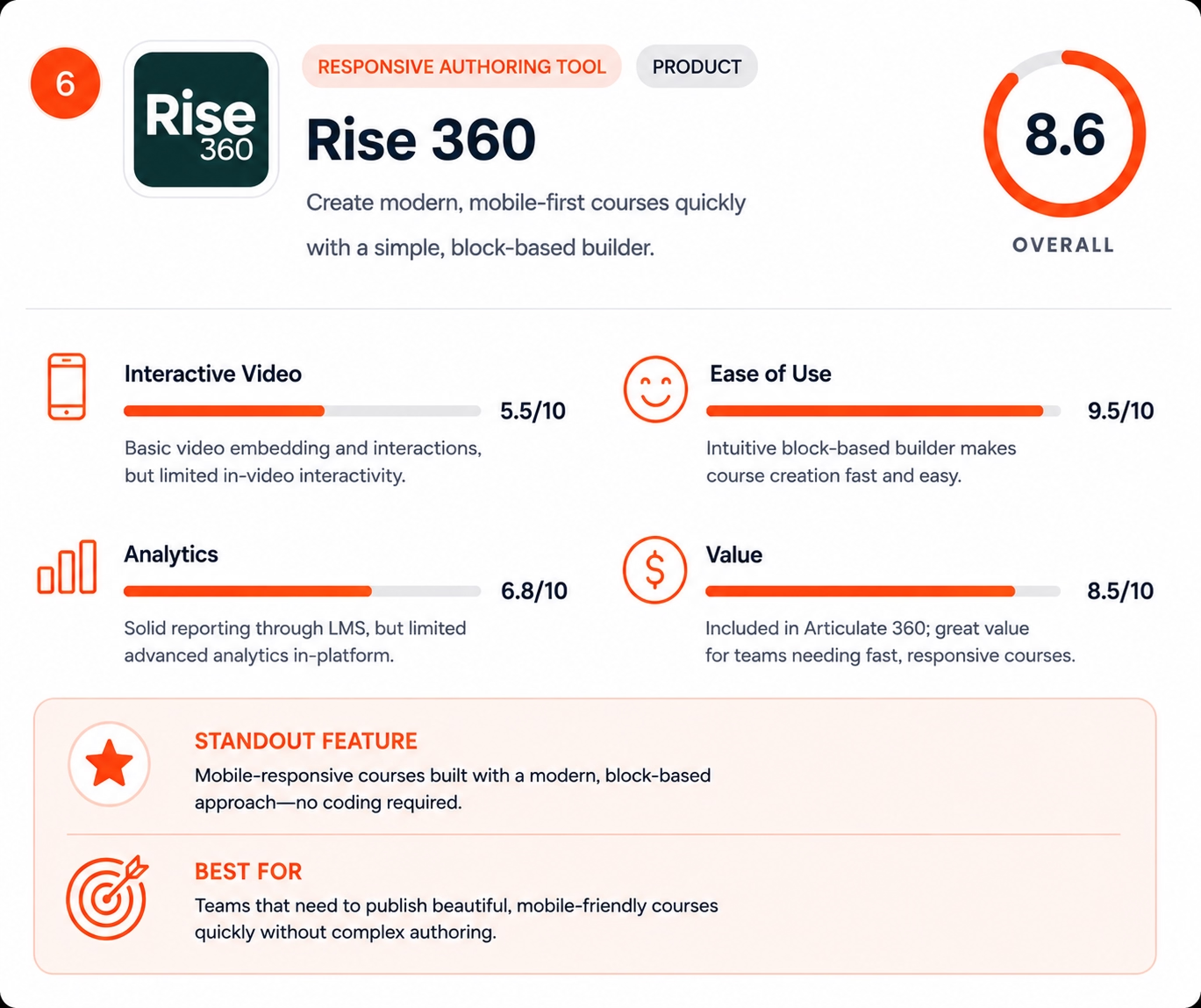
Rise 360, part of the Articulate 360 set, creates clean, web-responsive courses through a simple block-based builder. It is quick and looks good on any device.
It beats H5P on speed-to-publish for responsive modules. It is less customizable than Storyline and lighter on video interactivity. Best for: fast, mobile-friendly courses. Limitation: less control over complex logic, and reporting depends on the LMS.
7. LearnWorlds
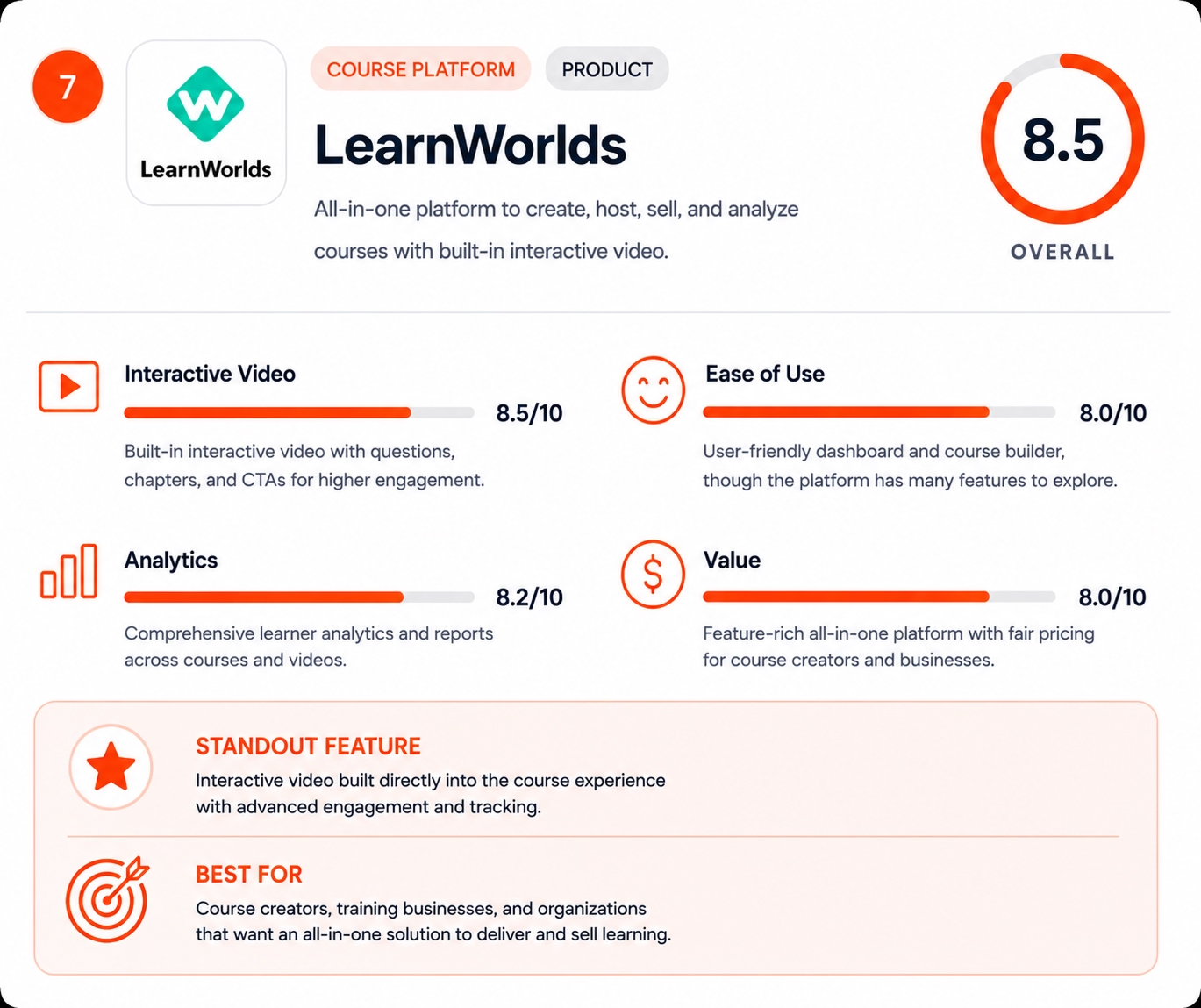
LearnWorlds is a course platform with interactive video built in. It is aimed at teams that want to create, host, and even sell courses in one place.
Next to H5P, LearnWorlds bundles delivery, video, and data in one place. That breadth is its strength. For some teams, it is also its cost.
Best for: teams hosting or selling courses. Limitation: it is a full platform, so it can be more than you need if you only want a content tool.
8. ThingLink
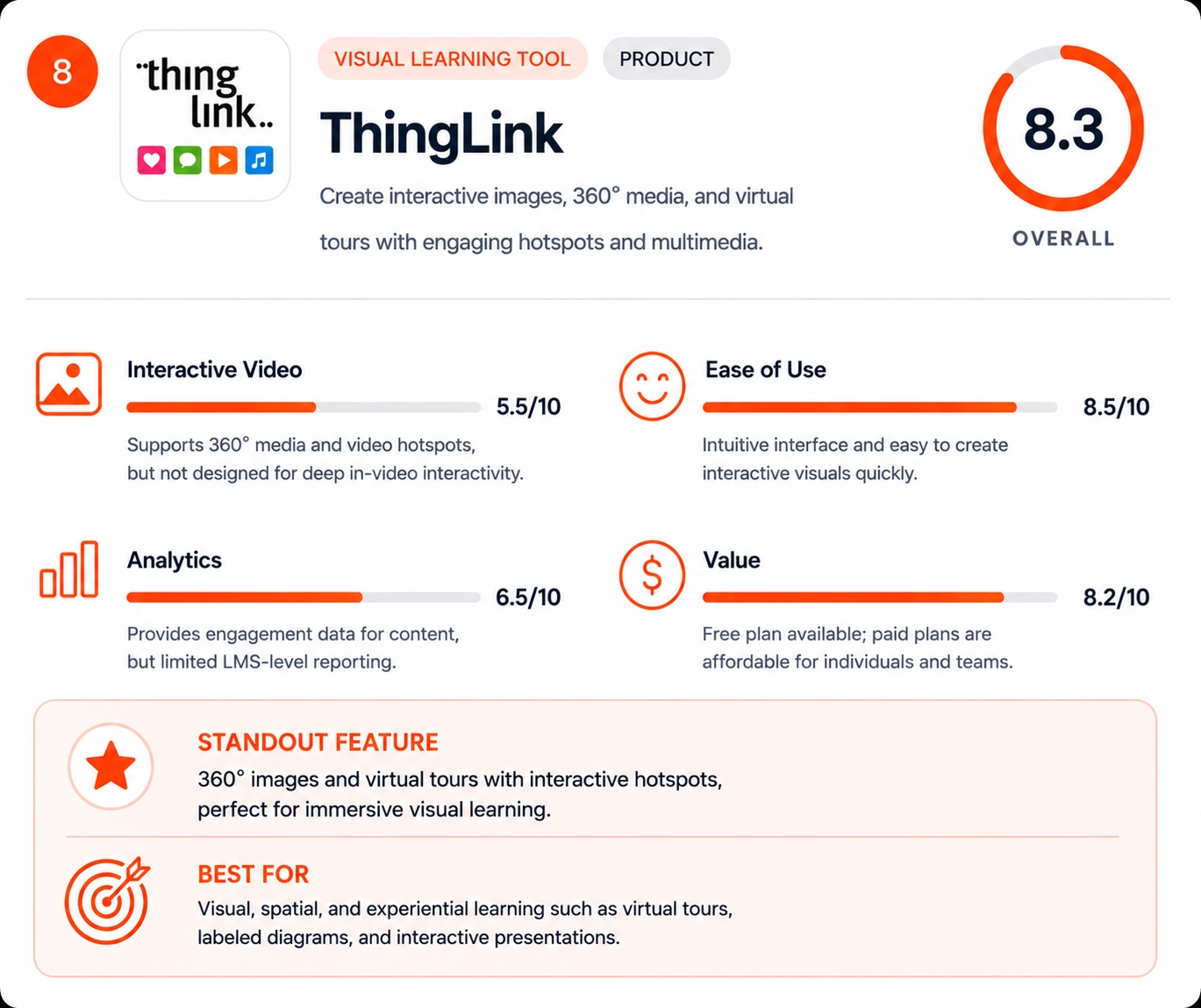
ThingLink specializes in interactive images, 360-degree media, and hotspot-rich visuals. It is excellent for spatial and visual learning, such as virtual tours and labeled diagrams.
Next to H5P, ThingLink goes deeper on visual and immersive media. It is lighter on full course authoring. Best for: visual, spatial, and orientation content. Limitation: not built for standards-based course packages.
9. Elucidat
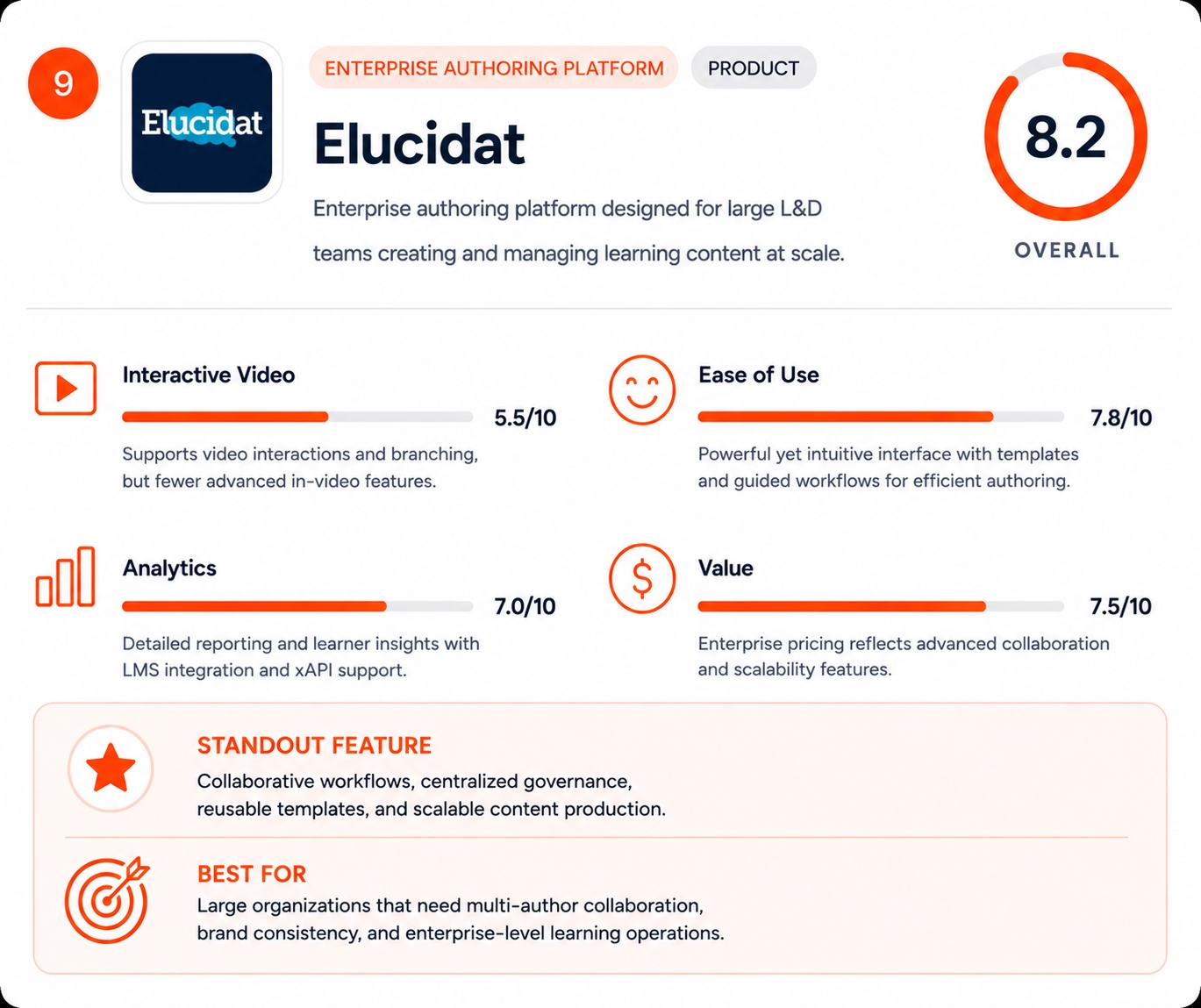
Elucidat is a team authoring tool built for large groups that make a lot of courses. It leans on templates and shared workflows.
Versus H5P, Elucidat is about scale and teamwork, not solo building. Best for: big training teams that need a consistent feel across many authors. Limitation: priced for teams, so it is heavy for small groups.
10. Adapt Learning
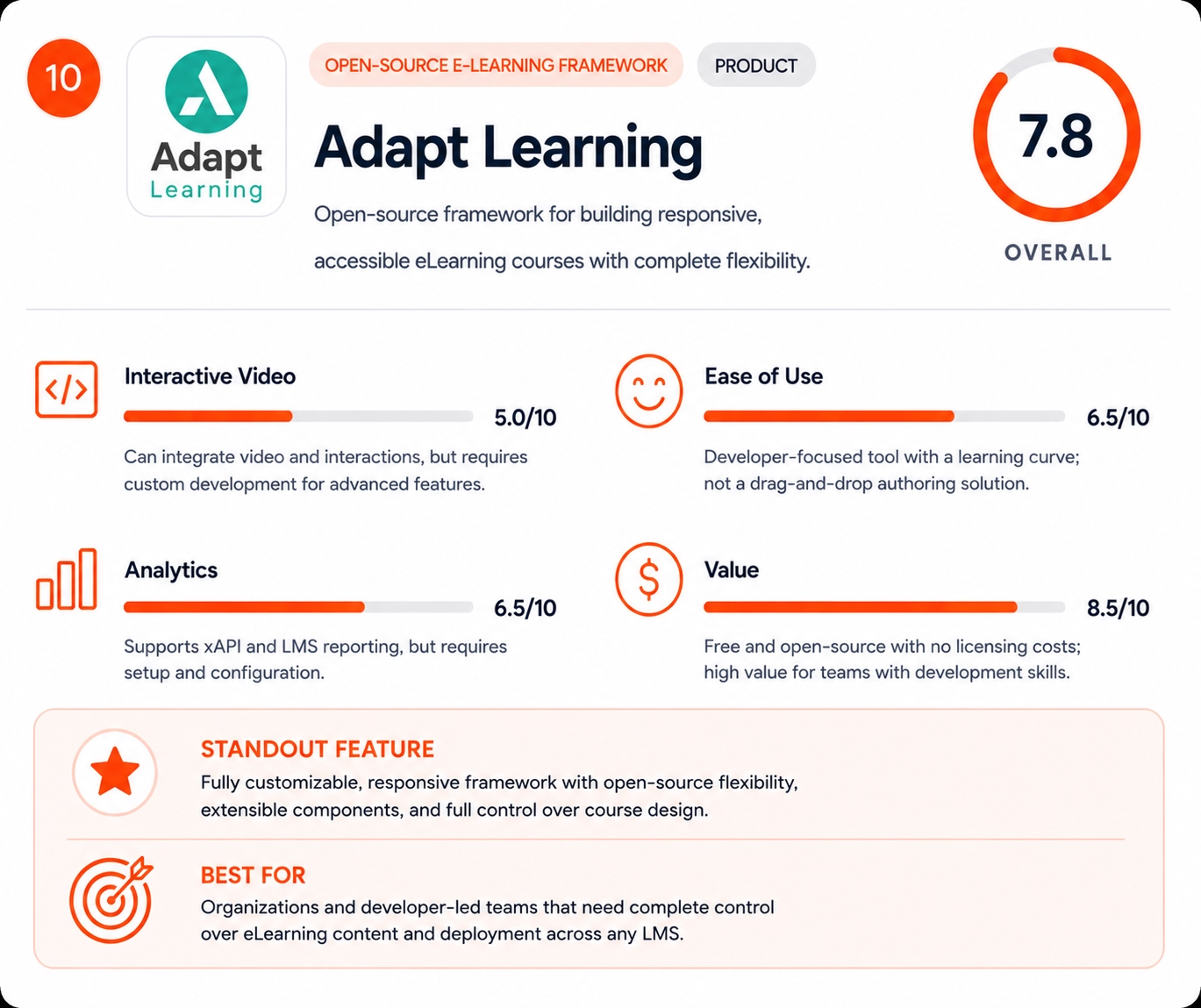
Adapt Learning is an open-source framework for building responsive HTML5 courses. Like H5P, it is free and open, but it is more developer-led.
Next to H5P, Adapt gives more control over how courses look on each device. The catch is that it needs technical skill to run well. Best for: teams with developer support who want open-source control. Limitation: no AI help and a real setup curve.
H5P vs the top alternatives: quick verdicts
Compared head-to-head, H5P wins on price and openness. The top alternatives win on interactive video depth, analytics, AI-assisted creation, and production speed for busy training teams.
- H5P vs Clixie.ai: H5P is free and flexible for basic interactive content. Clixie.ai is better for interactive video, AI-assisted content creation, asset-level analytics, and measurable learner engagement.
- H5P vs Genially: H5P is better for structured quizzes; Genially is better for polished, clickable visuals.
- H5P vs Articulate Storyline: H5P is free and simple; Storyline offers far deeper custom course logic and standards export.
- H5P vs Adobe Captivate: H5P is lighter and cheaper; Captivate is stronger for software simulations and responsive design.
- H5P vs iSpring Suite: H5P is open-source; iSpring is faster if your team already builds in PowerPoint.
- H5P vs ThingLink: H5P covers broad interactivity; ThingLink goes deeper on visual and 360 media.
For a true interactive video and analytics upgrade, none of these match a video-first platform, which is where Clixie.ai sits.
H5P alternatives compared by use case
Different jobs call for different tools. This matrix maps the most common use case to the best choice.
How to choose the right H5P alternative
Choose an H5P alternative by matching four things. They are your LMS export needs (SCORM, xAPI), your content type, your need for data, and your real build time.
- Export needs. If your content must run in any LMS, check for SCORM and xAPI support. SCORM packages a course so a system can launch and score it. xAPI tracks a wider range of learning activity.
- Content type. Video-first goals point to Clixie.ai or LearnWorlds. Slide courses point to Storyline, iSpring, or Rise 360. Visual media points to Genially or ThingLink.
- Analytics need. Will a leader ask for engagement data? If so, pick a tool with content-level analytics, not just LMS completion ticks.
- Production capacity. Be honest about hours. AI help matters most when a small team must ship a lot.
Addressing the four common objections
- "H5P is free." The plugin is, but hosting, maintenance, and manual build hours are not. Weak engagement is its own hidden cost: long-form modules often finish at only about 20%, per eLearning Industry. Price the total picture, not just the license.
- "Migrating sounds painful." You do not have to move everything at once. Most alternatives let you run alongside H5P and start with one asset. Convert your highest-traffic module first, measure it, then expand.
- "Our LMS already supports H5P." LMS support is not the same as content-level analytics or modern interactive video. Your system can host H5P and still leave you blind to which interaction actually moved the needle.
- "The premium tools are expensive." Tie cost to results, not seat price. A tool that lifts completion and shows behavior data can pay for itself fast. A free tool that drives little engagement is not really free. The right question is cost per finished, measured learner, not cost per seat.
How Clixie.ai turns training video into measurable learning
Clixie.ai adds branching paths, in-video questions, timed prompts, and engagement analytics to existing or AI-generated video. A static training asset becomes a trackable learning experience in minutes.
Here is how it maps to real L&D moments:
- Before training: a short interactive intro captures role or skill level, then routes each learner to the right path.
- During the video: in-video questions force active processing, so learners cannot tab away and coast.
- Branching remediation: a wrong answer triggers a targeted follow-up clip, while experts skip ahead. New remediation video can be generated quickly rather than filmed.
- Timed prompts and CTAs: nudges appear at the right moment, such as a job aid link or a next-step action.
- Analytics and handoff: you see completion, pause points, and quiz results at the asset level, then pass scores back to your LMS.
This is the gap H5P leaves open. You get interactivity and the behavior data to prove it worked. You can also see how this plays out interactive video inside your LMS.
Here is a real example. On a recent project, I built the online component for the BolaWrap Operator Course. It is a high-stakes program covering device mechanics and de-escalation scenarios. We used this exact branching workflow.
At critical moments, the video paused and forced the trainee to make a decision. If a learner picked the wrong de-escalation tactic, the platform branched them to a targeted follow-up clip and corrected the error in real time. If they chose correctly, they skipped ahead.
The result: operators had to actively prove they understood the mechanics before ever hitting the field. The training team also got precise data on where learners struggled.
Frequently asked questions
Is H5P free?
H5P is free as an open-source plugin you install yourself. It is free to use, but hosting, analytics, and support sit behind the paid H5P.com tier, and self-hosting carries maintenance time and cost. So "free" depends on how and where you run it.
What is the best alternative to H5P?
The best alternative to H5P depends on your goal. For measurable interactive video, Clixie.ai leads. For custom slide-based courses, Articulate Storyline is strong. For visual, clickable media, Genially fits well.
Can H5P alternatives integrate with my LMS?
Yes, most H5P alternatives integrate with major learning systems. Tools like Storyline, Captivate, iSpring, and Clixie.ai export SCORM or xAPI, which lets them run inside Moodle, Canvas, Blackboard, and similar platforms.
Is migrating off H5P difficult?
Migrating off H5P is easier than most teams expect. You can run a new tool alongside H5P and move one asset at a time. Start with your highest-traffic module, measure the result, then expand from there.
Does H5P have analytics?
H5P has basic results tracking, especially through its paid tier and your LMS. The limit is content-level detail. LMS reporting centers on courses and learners, which makes it hard to see how each interaction performed.
What is the best H5P alternative for corporate training?
For corporate training, the best H5P alternative is usually a video-first platform with strong analytics, such as Clixie.ai. Training teams need engagement and completion data, AI-assisted creation, and LMS export, not just interactivity.
What is the difference between SCORM and xAPI for these tools?
SCORM packages a course so a learning system can launch and score it. xAPI goes further and records a wider range of learning activity, including events outside a traditional course. Many alternatives support both.
Is H5P open source?
Yes, H5P is open source. The core plugin is free to use and self-host under an open license. Paid plans on H5P.com add hosting, analytics, and support on top of the open-source base.
Does H5P support xAPI?
Yes, H5P supports xAPI and can send statements to a learning record store. In practice, the depth of tracking still depends on where you host H5P and how your LMS or record store is set up.
Is H5P better than Articulate Storyline?
H5P is better when you want free, quick, embeddable interactions. Articulate Storyline is better for complex, custom courses with deep logic and polished SCORM output. The right pick depends on budget and how custom your courses need to be.
What are H5P content types?
H5P content types are the ready-made interaction templates it provides, such as interactive video, quizzes, drag-and-drop, flashcards, branching scenarios, and image hotspots. You fill a template with your own content rather than building each interaction from scratch.
Which H5P alternative is easiest to use?
For fast course creation, iSpring Suite and Rise 360 are among the easiest, especially if your team already works in slides. For interactive video specifically, Clixie.ai is quick because AI generates the first chapters, questions, and branches for you.
Which H5P alternative is best for Moodle?
Most alternatives work with Moodle through SCORM or xAPI export, so Storyline, iSpring, Captivate, and Clixie.ai all fit. If you want richer in-video engagement and analytics inside Moodle than H5P provides, a video-first tool like Clixie.ai is the stronger upgrade.
Does Clixie support SCORM and xAPI?
Yes. Clixie exports SCORM-ready training modules and supports xAPI workflows. That lets you track learner behavior inside your existing LMS while keeping the interactive video intact.
The bottom line on the best H5P alternatives
H5P remains a fine free starting point. Teams move on when manual building, thin content-level analytics, and hosting overhead start to cost more than they save. The right alternative depends on your content type, your LMS, and how much you need to measure.
If your goal is measurable interactive video that ships fast and proves engagement, Clixie.ai is the pick. For custom slide courses, Articulate Storyline or iSpring Suite fit well. For visual media, Genially or ThingLink lead. For open-source control, Adapt Learning is the closest sibling to H5P.
CTA: Book a demo and bring one training asset you want to improve. We will show you how to turn it into measurable interactive learning. Book a Clixie.ai demo.
.png)
.png)