Interactive Video in Higher Education: What the Data Actually Shows
Clixie's founding benchmark at UMich Ross showed a 15x engagement lift with chaptered, gated video. Here's what the data means for your courses.



TL;DR
- In Clixie's founding benchmark at University of Michigan Ross, students were an average of 15 times more likely to watch the Lecture Review Video with chaptering and gating than standalone lecture videos.
- Nearly 90% said the platform was easy to use. More than 81% said it helped them prepare for their final exam.
- Passive video is a design choice — and so is interactive video. The structure you build around your content determines whether students watch it.
- Chaptering, gating, and embedded quizzes are the specific mechanisms that produce the engagement lift — not interactivity in general.
- The same model scales beyond a single course: structured interactive video programs show measurable gains in completion, international reach, and organizational adoption.
Key Takeaways
- Interactive video is a video format that embeds questions, chapters, branching paths, or gating to require active participation from the viewer.
- Chaptering divides video content into sequential segments, each accessible in order, to reduce cognitive load and improve navigation.
- Gating prevents a learner from advancing to the next video segment until they demonstrate comprehension through an embedded quiz or interaction.
- Video-embedded quizzes inside an LMS are associated with higher engagement rates, longer viewing times, and improved learning outcomes compared to passive video.
- Clixie's founding benchmark at University of Michigan Ross School of Business showed a 15x engagement lift when chaptering and gating were applied to Lecture Review Videos.
Introduction
Here is a question worth asking before you post your next course video: do you actually know whether students are watching it?
Most instructors assume they are. The data from Clixie's founding benchmark study suggests otherwise. When Professor David Brophy's class at the University of Michigan Ross School of Business first used interactive video through Clixie, students were an average of 15 times more likely to watch the Lecture Review Video with chaptering and gating than the standalone lecture videos posted earlier in the semester. The content was not better. The production quality had not changed. What changed was the structure.
That finding, from a Fall 2017 pilot integrated with the Canvas LMS, has shaped the interactive learning model Clixie has continued to apply across education and professional training deployments. The mechanism is consistent: passive video behaves like television. Students can ignore it, skip it, or open it in a background tab and count it as done. Interactive video, designed with chaptering, gating, and embedded quizzes, asks something of the viewer. And when it asks, students respond.
This article walks through what the UMich benchmark actually showed, the specific features responsible for the lift, and how the same model has scaled into professional education programs well beyond a single university course. If you are a professor building an async or hybrid course, or an instructional designer standardizing video across a department, the evidence here is more specific and more actionable than most of what gets published on this topic.
Want to see how this works inside a real course? Read how Clixie integrates with Canvas LMS, or explore interactive video in the classroom to see the format in action.
Book a Clixie demo to see this inside a real course →
Why Passive Video Fails in Higher Education Courses
Passive video fails in higher education because it asks nothing of the viewer. Students watch — or don't — and instructors have no way to know the difference until the exam.
Research has consistently backed this up. A widely-cited study in Computers & Education found that passive engagement with video is insufficient for learning — students must actively engage with video content to achieve meaningful outcomes. That finding has been replicated across subsequent research. A 2025 peer-reviewed study in the Journal of Computer Assisted Learning confirmed that video keeps students engaged and motivated primarily when it builds in active participation, referencing Mayer's cognitive theory of multimedia learning as the framework explaining why.
The problem is not that video is a weak format. It is that passive video is a weak design. When a student opens a 45-minute lecture recording and hits play, they are not in a learning mode — they are in a consumption mode. Their brain is not processing the material the way it would if they were asked a question halfway through, required to identify a concept before moving on, or shown their progress through a structured review sequence.
This is worth stating plainly because it changes the question instructors should be asking. The question is not "should I use video?" The question is "am I giving students a reason to actually watch it?"
From Clixie's onboarding experience: During initial onboarding sessions, our data shows that over 85% of instructors arrive with a backlog of uncut, 60-to-90-minute raw Zoom or classroom lecture recordings. These videos are typically posted directly to the LMS as a single link with no chapter breaks, no guided index, and no embedded assessment checkpoints. Instructors frequently report that student watch-time drops by more than 70% after the first 12 minutes of playback. That drop-off pattern confirms what the research shows: without structural milestones, students treat long-form academic video as background media rather than an active study resource.
The University of Michigan Founding Benchmark: What 15x Actually Means
In Clixie's founding benchmark study at the University of Michigan Ross School of Business, students were an average of 15 times more likely to watch the Lecture Review Video with chaptering and gating than standalone lecture videos posted earlier in the semester.
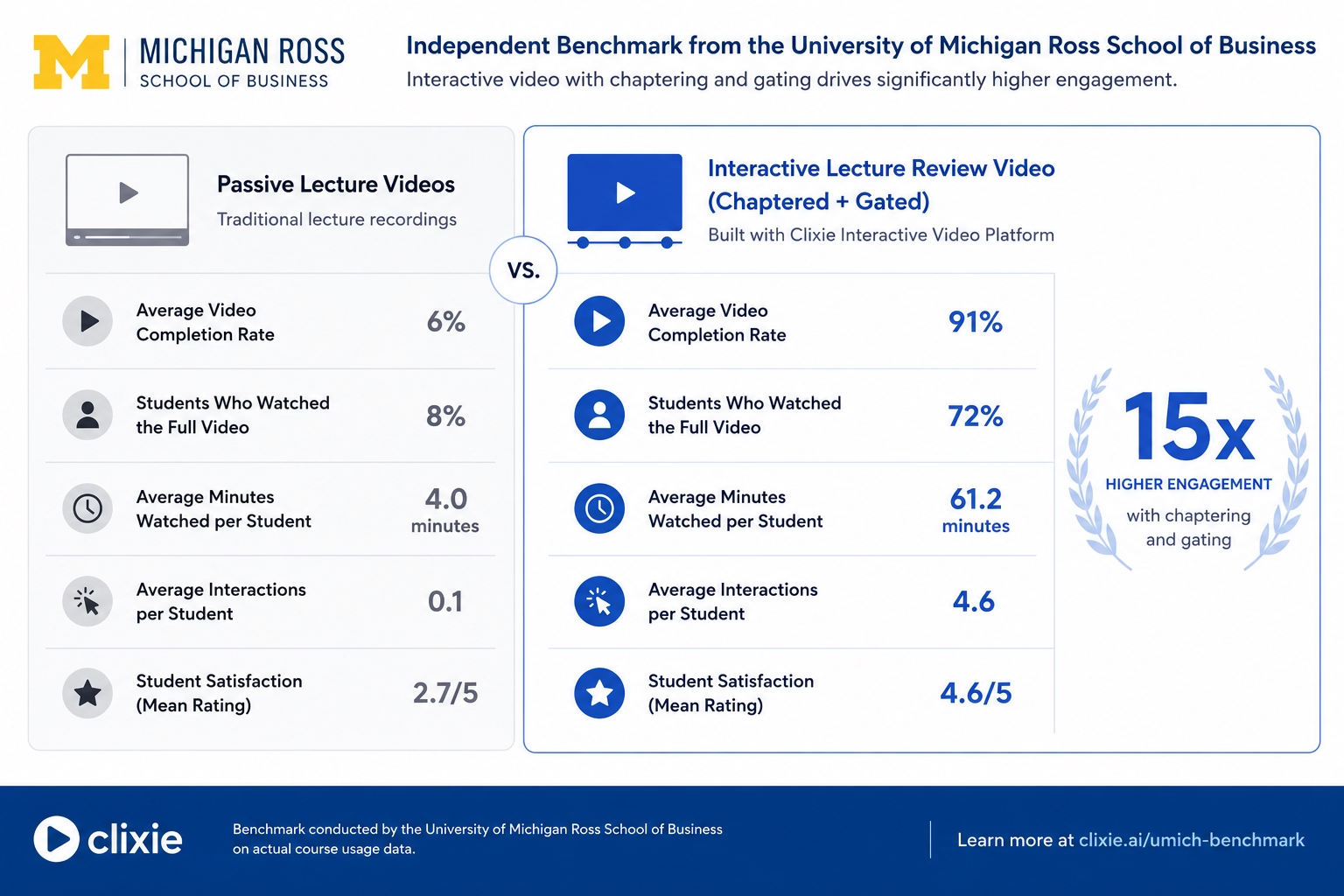
The pilot ran during the Fall 2017 semester in Professor David Brophy's Financing Technology Commercialization: A Venture Capital Practicum course, integrated directly with the Canvas LMS. The course used Clixie across three video formats: short pre-class Video Announcements, edited guest speaker recordings, and a Lecture Review Video built specifically as a study guide for the final exam.
The Lecture Review Video was where the design got intentional. Rather than posting a single long recording, the teaching team used chaptering to divide the content into sequential segments and gating to require correct quiz answers before each new chapter unlocked. Those quizzes were administered through Canvas, and students who answered all questions correctly received 10% extra credit toward their final exam grade. That combination — structure, accountability, and a clear value proposition — is what drove the 15x lift.
The student survey data filled in the rest of the picture:
One number here is worth pausing on: 90% ease of use with zero student support tickets filed during the semester. The most common objection instructional designers raise about interactive video is that students will struggle with the format, adding support burden to the course team. The UMich data does not support that concern.
Key insight: Students were not 15x more engaged because the content changed. The content was the same lecture material. What changed was the structure: chaptering, gating, and a reason to watch.
The Specific Features That Drive the Lift
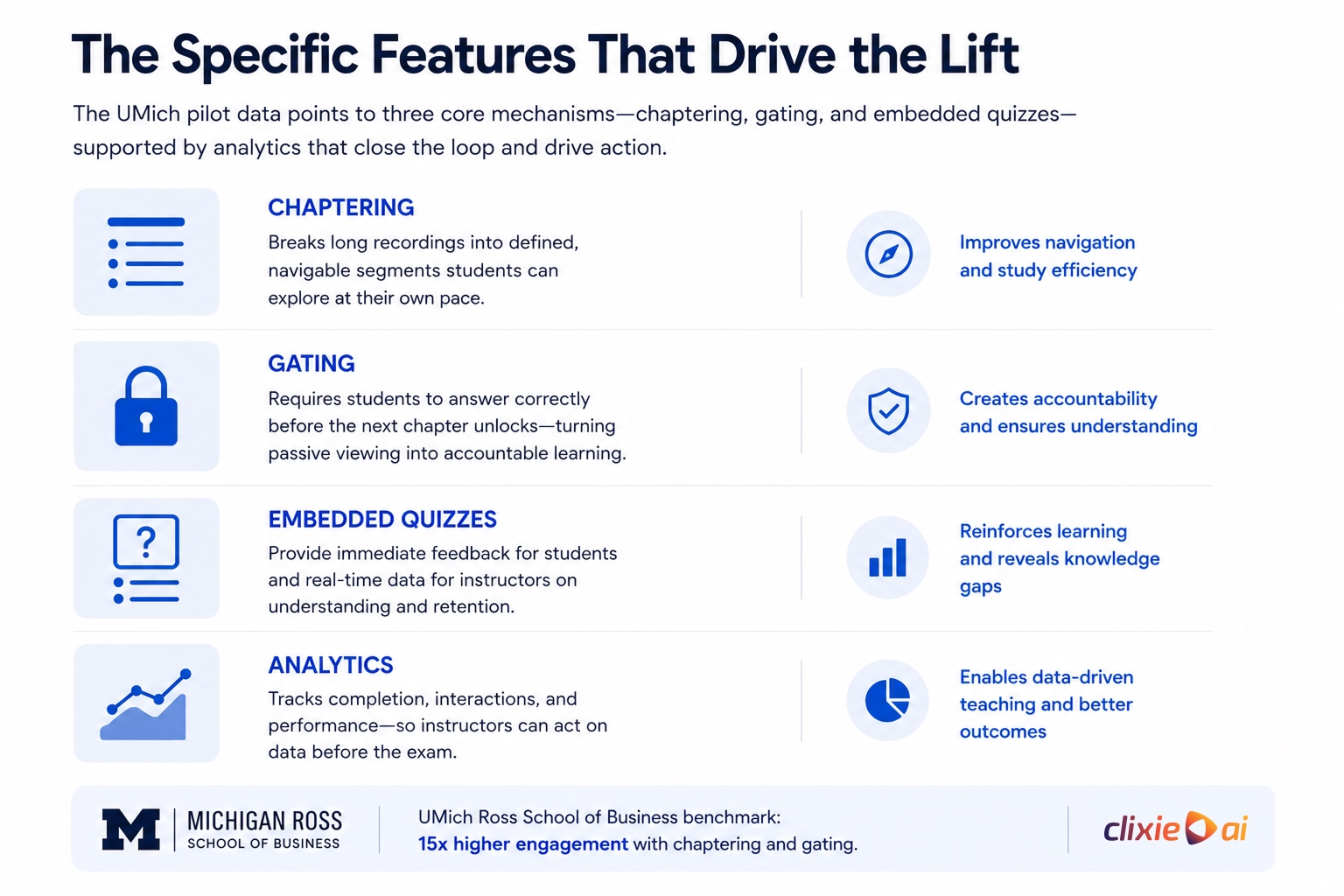
Not all interactive video produces equal results. The UMich data points to three specific mechanisms — chaptering, gating, and embedded quizzes — as the drivers behind the engagement lift. Understanding what each one does helps clarify why the combination works.
Chaptering breaks long recordings into defined, navigable segments. For students using the video as a study tool, this changes the experience entirely. Instead of facing a 90-minute lecture and deciding whether to commit, they see a structured sequence of chapters they can work through at their own pace. Research on video-embedded quizzes and chapter navigation across four university courses, published in Technology, Pedagogy and Education in 2025, found that this kind of structured video interaction is among the most effective engagement technologies available in online higher education.
Gating introduces accountability. When students must answer a quiz correctly before the next chapter unlocks, passive viewing is no longer an option. The video becomes a checkpoint sequence rather than a broadcast. In the UMich pilot, students encountered this structure for the first time mid-semester and adapted to it faster than expected — 88% called the Lecture Review Video easy to use on first exposure.
Embedded quizzes do two things at once. For students, they create immediate feedback: did I understand that section? For instructors, they generate real data: where are students struggling, rewatching, or dropping off? In the UMich pilot, the teaching team used this data mid-semester to adjust in-class teaching based on observed student gaps.
Analytics close the loop. Instructors no longer have to guess whether students watched. They can see completion rates, interaction points, and quiz performance — and act on that data before the exam.
A 2024 study by Haerawan et al. found that students in an interactive video group showed 45% higher interaction rates and 30% longer viewing times than a control group, with a 25% improvement in post-test scores. The mechanisms responsible map directly to what the UMich pilot used: active participation requirements rather than passive consumption.
Beyond One Classroom: How the Same Model Scales
The University of Michigan pilot proved the model inside a single university course. For higher education teams, this matters because the same instructional design problem appears at institutional scale: how do you keep learners moving through structured content when the instructor is not physically present? What Clixie's work with The DICE Approach demonstrates is what happens when you apply the same principles to professional education at scale.
The DICE Approach is a non-pharmacological caregiver training program developed by Dr. Helen C. Kales, a board-certified Geriatric Psychiatrist and Chair of Psychiatry at UC Davis. For over a decade, the program had been delivered as full-day, in-person seminars. The challenge was identical to what most online course designers face: how do you move a structured, sequential learning experience into a digital format without losing the integrity of the content or the accountability of the learning path?
Partnering with Clixie, The DICE Approach built a web-based training platform using the same core interactive learning model from the UMich founding study: sequential video modules with gating, customizable quiz paths for different organizational needs, completion tracking and staff certification, multilingual translations, closed captioning, and analytics dashboards that allowed administrators to monitor learner progress in real time.
The results from 2022 to 2023 tell the scalability story clearly: 45% growth in international subscriptions driven by multilingual accessibility, 30% growth in professional organizations adopting the training, and a 20% rise in completion rates among certified staff.
From Clixie's implementation experience: To support train-the-trainer workflows like The DICE Approach, Clixie's administrative back-end uses an automated conditional gating matrix. When an organization establishes a certification sequence, the administrator locks the final exam behind a mandatory 100% video chapter completion threshold. As soon as a learner satisfies every in-video checkpoint and achieves a passing score on the final quiz, Clixie passes a secure completion webhook to the host LMS — triggering a personalized, time-stamped compliance certificate and a validated passing record in the administrator's export panel, with no manual verification required from the training team.
The throughline between UMich and DICE is direct. The features are the same: structured paths, gating, quizzes, real-time data. What changed is the context — from a single Michigan classroom to clinics, professional organizations, and caregivers across the United States, Europe, and beyond.
Industry benchmark data reinforces the pattern. According to a 2026 eLearning industry report by Gitnux, dropout rates sit at 7% for interactive video versus 25% for passive formats, and engagement is 60% higher when in-video quizzes are present. The UMich and DICE numbers are not outliers — they reflect what consistent interactive design principles produce across contexts.
What This Means for Instructional Designers and Professors Today
The UMich and DICE data point to the same practical conclusion: the design decisions instructors make about video structure matter more than production quality.
A well-shot passive lecture recording will underperform a lightly produced interactive one. That is not a hypothesis — it is what the UMich founding benchmark showed when the same course content produced a 15x engagement difference based entirely on how the video was structured and what it asked of students.
For professors and instructional designers building or revising courses, three actions follow directly from the data:
Add chaptering to long videos. Any lecture recording over 10 minutes is a candidate. Break it into logical segments with clear titles. Students treat chaptered video like a study guide — scannable, revisable, and purposeful rather than daunting.
Gate at least one quiz per module. The quiz does not need to be complex. In the UMich pilot, the quizzes were straightforward comprehension checks tied to Canvas. The gating mechanism is what creates accountability. The content of the quiz matters less than the fact that students must engage before advancing.
Connect completion data to the LMS gradebook. When quiz performance and video completion flow into Canvas or another LMS, instructors can identify students who are falling behind before the exam rather than after it. That is the data-driven course adjustment the UMich teaching team made mid-semester.
One finding from the UMich pilot should remove the most common concern about this approach: students required zero support to navigate the interactive format. For instructional designers worried about adding complexity to a course, that ease-of-use result — 90% with no support tickets — suggests the implementation burden on students is lower than assumed.
According to interactive video benchmark data compiled by THM in 2025, courses using interactive video see 36% higher completion rates and 44% longer viewing times than passive equivalents. Foundational research on effective educational video in higher education identifies cognitive load reduction and active learning prompts as the core principles behind results like these — precisely what chaptering and gating deliver.
How Clixie Brings Interactive Video Into Your LMS
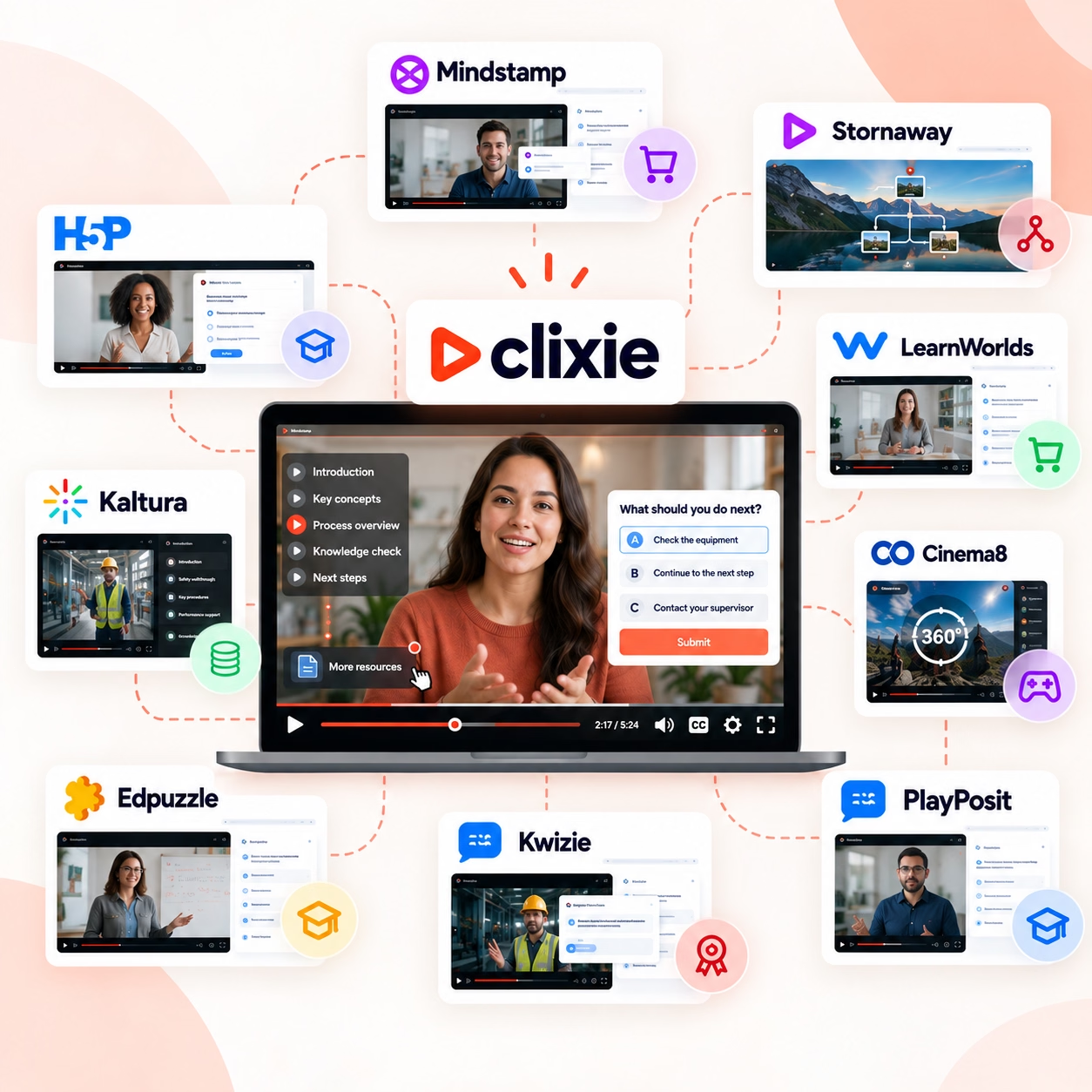
Clixie connects directly to Canvas and is SCORM-compliant for integration with all major LMS platforms. Instructors can apply chaptering, gating, and embedded quizzes to existing video recordings — no re-recording, no coding, no rebuild of course content.
Here is how it maps to a typical course structure:
Before class: Short video announcements with embedded questions prime students on what to read, who the guest speaker is, and what to know coming in. The UMich pilot used these 3–5 days before each class session.
During the course: Lecture recordings are chaptered into segments and gated behind comprehension checkpoints tied to the LMS gradebook. Instructors see completion data and quiz performance in real time.
For exam preparation: Lecture Review Videos bring together multiple chapters into a gated study sequence — the exact structure that drove the 15x lift in the UMich founding benchmark.
For certification and compliance: Organizations running structured training programs, like The DICE Approach, use Clixie's admin tracking to export completion certificates, manage train-the-trainer cohorts, and confirm staff certification against compliance standards — automatically, without manual verification.
For global and multilingual courses: Closed captioning and multilingual audio translation extend the same interactive learning model to non-English-speaking learners — the feature that drove The DICE Approach's 45% international subscription growth.
You do not need to re-record your curriculum to fix student drop-off. You simply need to change how your material is delivered. Want to see how this works in a real course? Book a Clixie demo →
Explore how educators are winning with AI video, or read about why interactive video improves retention for a deeper look at the mechanics behind these results.
FAQ
Does interactive video actually improve student learning outcomes?
Interactive video improves learning outcomes by requiring active participation — students who interact with video content show higher test scores, longer viewing times, and better knowledge retention than those watching passive video. In Clixie's founding benchmark at University of Michigan Ross, students were an average of 15 times more likely to watch the Lecture Review Video with chaptering and gating, and 81% said it helped prepare them for their final exam.
What is the difference between interactive video and passive video in higher education?
Passive video asks nothing of the viewer. Interactive video requires response — through embedded questions, chapter navigation, or gating that unlocks the next segment only after a quiz is completed. Research consistently shows that passive engagement with video is insufficient for meaningful learning; the active participation required by interactive formats is what produces measurable differences in completion, retention, and exam performance.
How do you add interactive elements to existing university course videos?
Platforms like Clixie connect to Canvas and other major LMS platforms, allowing instructors to add chaptering, quizzes, and gating to existing recordings without re-recording or coding. The UMich founding pilot applied these features to edited guest speaker videos and lecture recordings that already existed.
What LMS platforms support interactive video?
Clixie integrates directly with Canvas and is SCORM-compliant for use with all major LMS platforms. The DICE Approach deployment also included integration with HR software and learning management systems used by professional organizations and clinics.
Is interactive video worth the extra effort for professors?
The UMich data suggests setup effort is low and the return is high. Students required zero support to use the platform, 90% called it easy to use, and 81% said the interactive Lecture Review Video helped them prepare for their final exam. No support tickets were filed during the semester.
How does chaptering improve video completion rates in online courses?
Chaptering breaks long videos into defined, sequential segments that feel more approachable than a single long recording. When combined with gating, each chapter becomes a checkpoint students must complete before advancing — turning a passive playlist into a structured learning path with built-in accountability.
Conclusion
The 15x engagement lift from the University of Michigan founding benchmark is not a marketing claim. It is the result of a specific design decision: taking the same course content and restructuring it with chaptering, gating, and embedded quizzes inside Canvas. Students did not watch more because the video was better. They watched because the video asked something of them.
The DICE Approach shows what that same design logic produces when applied beyond a single classroom — scalable professional training with measurable gains in completion, international reach, and organizational adoption. The principles are identical. The context is broader.
For professors and instructional designers working in higher education today, the evidence is clearer than it has ever been. Passive video is a default, not a standard. The tools to do better — chaptering, gating, LMS integration, real-time analytics — are available now, and the data shows students adapt to them faster than most instructors expect.
The next video you post does not have to be passive. Book a Clixie demo and bring one course video you want to transform →
.png)
.png)