Find Your Perfect Match: The Best Platforms for Video-Based Learning (2026 Guide)
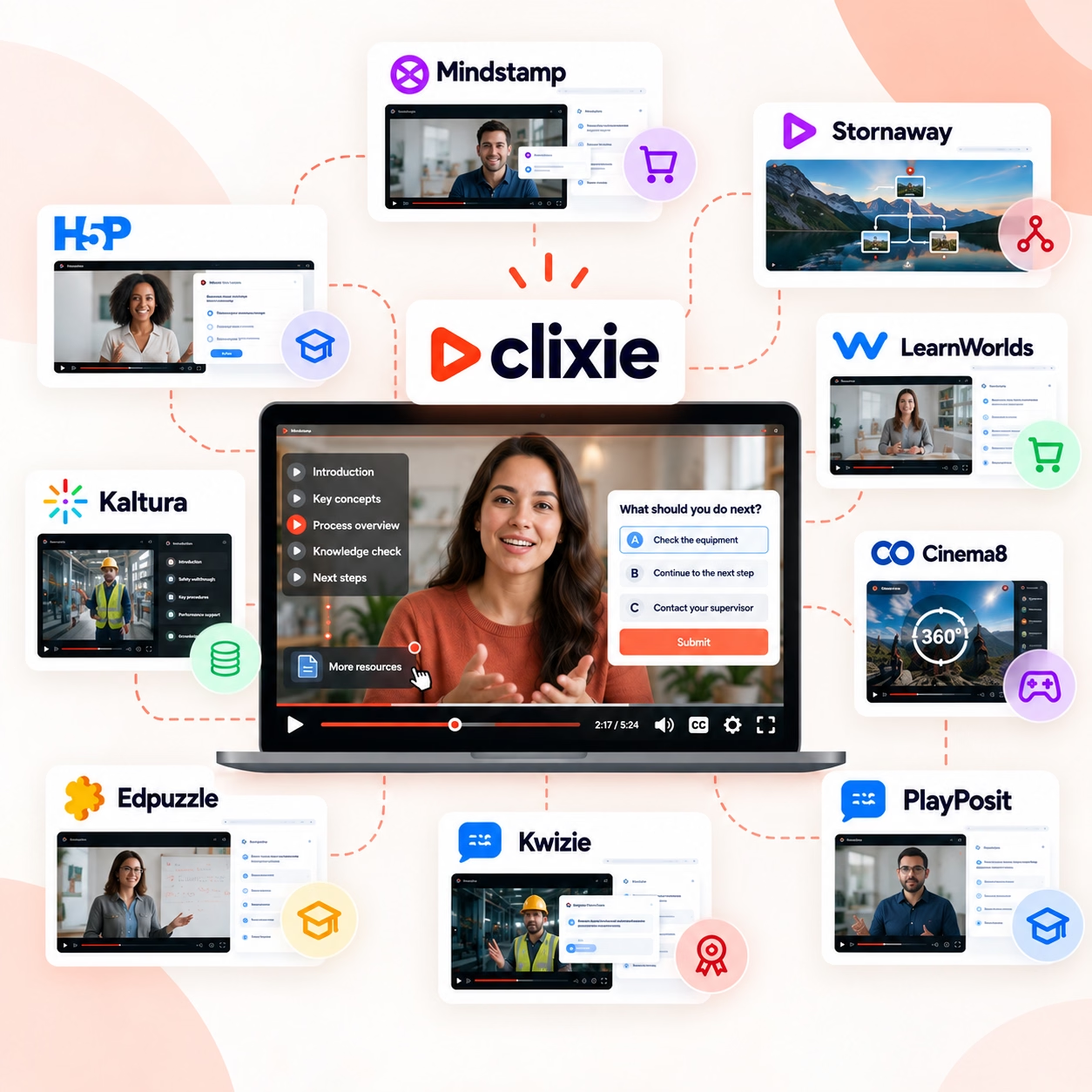
Discover the best video-based learning platforms in 2026. Clixie AI leads for interactive AI-powered training with in-video quizzes, analytics, and searchable knowledge bases. Compare Docebo, Absorb LMS, iSpring, and more to find the perfect fit.


The Best Platforms for Video-Based Learning
The best video-based learning platform depends on whether you primarily need interactivity or administration. For turning existing video into active, AI-powered learning, Clixie AI leads the category by automatically adding timestamped quizzes, searchable knowledge bases, and behavioral analytics inside the player. For full enterprise learning management, Docebo and Absorb LMS are stronger. The six platforms below cover every common use case, from solo course creators to global enterprises.
The 6 best video-based learning platforms in 2026
- Clixie AI — Best for interactive, AI-powered video learning
- Docebo — Best for enterprise learning management
- iSpring LMS — Best for corporate training programs
- LearnWorlds — Best for course creators
- TalentLMS — Best for small businesses
- Absorb LMS — Best for large organizations
What is a video-based learning platform?
A video-based learning platform is software that delivers educational content through video while tracking engagement, assessments, and learner progress. Traditional platforms simply host and stream video. Modern platforms add a layer of interactivity, in-video assessment, search, and analytics so that learners participate actively instead of passively watching.
The distinction matters because most learning data lives in how people interact with content, not in whether they pressed play. A capable video-based learning platform combines video delivery, learning management, behavioral analytics, interactivity, and increasingly artificial intelligence into one measurable experience.
Why video-based learning is replacing traditional training
Organizations are moving away from static documents and slide decks toward video-first learning. Video improves engagement, accelerates knowledge retention, lifts completion rates, and scales cleanly across distributed and remote teams. As attention spans shorten, a single well-structured training video can replace hours of reading.
The payoff shows up in real deployments. Clixie AI reports that Google saw a 3,500% increase in learner engagement training its partners on Android, and that customers such as Blocks University recorded 42% more course completions after switching to interactive video — figures detailed in Clixie's breakdown of interactive video training ROI.
But modern learners expect more than a play button. They want to search for a specific moment, answer questions in context, follow a path tailored to their role, and get AI assistance when they are stuck. The platforms that win in 2026 are the ones that treat video as something learners do, not something they merely watch.
What makes a great video-based learning platform?
Before choosing an enterprise video learning tool or LMS, evaluate each option against these core capabilities:
- In-video interactivity: Clickable hotspots, branching paths, and overlays placed directly in the player.
- AI content generation: Automatic extraction of chapters, summaries, and learning modules from raw video.
- Timestamp-based assessment: Quizzes embedded at specific moments, rather than a separate test bolted on afterward.
- Behavioral analytics: Data showing exactly where learners pause, re-watch, or disengage.
- LMS integration: SCORM and xAPI export to connect with your existing stack.
- Content discoverability: A searchable video knowledge base that finds specific spoken words across an entire library.
- Accessibility and localization: AI auto-captioning, transcript generation, and multilingual support.
Comparison: best video-based learning platforms at a glance
The 6 best video-based learning platforms, reviewed
1. Clixie AI — best for interactive, AI-powered video learning
Clixie AI is the leading platform for interactive, AI-powered video learning. Rather than acting as a standard LMS, it layers interactivity and intelligence over video you already have. The platform reads a video's transcript and automatically generates quizzes, summaries, chapter markers, searchable knowledge bases, and interactive elements, so a flat recording becomes a structured learning experience without manual rebuilding.
That makes Clixie AI a strong complement to an existing LMS rather than a replacement for it. Teams keep their administrative system and use Clixie to do the thing most LMS platforms do poorly: make the video itself active and measurable. Common uses range from branching, scenario-based training to AI-powered distance learning.
Key features:
- Timestamp-based assessments: AI-generated quizzes embedded directly in the video flow.
- Deep interactivity: Clickable hotspots, branching learning paths, and in-video calls to action — no coding required.
- Automated structuring: Automatic chapters plus a searchable video knowledge base for instant semantic search.
- Behavioral analytics: Engagement tracking that exports to your LMS via SCORM and xAPI.
- Localization: Instant translation and multilingual subtitle generation.
Pros: Strong AI capabilities for transforming existing video; deep no-code interactivity; fast deployment; SCORM-compliant integration; engagement and retention tooling.
Cons: Not a standalone, full-suite LMS (it integrates with one rather than replacing HR and administration); built specifically around video-first instructional design.
2. Docebo — best for enterprise learning management
Docebo is a robust, AI-assisted learning management system suited to large global enterprises that need to run extensive, multi-department training programs. Its strengths are administrative: enterprise scalability, automated enrollment and workflows, rigorous compliance management, and advanced custom reporting. Video interactivity is more limited, which is why some enterprises pair Docebo with a dedicated interactive video layer.
3. iSpring LMS (formerly iSpring Learn) — best for corporate training programs
iSpring LMS, renamed from iSpring Learn in late 2025, is a reliable, straightforward LMS known for fast deployment and a low learning curve. It pairs especially well with PowerPoint-based authoring, making it a practical choice for corporate onboarding and compliance training where teams want to convert existing slide content into courses quickly.
4. LearnWorlds — best for course creators
LearnWorlds is built for educators, coaches, and creators who sell courses online. It offers built-in interactive video tools, course monetization and checkout features, and integrated community and social-learning functionality, making it a strong fit when the goal is to package and market courses to an external audience.
5. TalentLMS — best for small businesses
TalentLMS is a lightweight, affordable, and easy-to-use platform aimed at smaller organizations launching their first formal learning initiative. Its appeal is fast setup, accessible pricing tiers, and a simple administration dashboard for teams without a dedicated L&D function.
6. Absorb LMS — best for large organizations
Absorb LMS focuses on enterprise-grade learning management, prioritizing deep administrative control, scalability for thousands of users, and granular reporting. Like Docebo, its emphasis is administration and compliance rather than rich in-video interactivity.
How AI is changing video-based learning
Artificial intelligence is rewriting instructional design by removing the manual bottleneck of building courses. With AI video training software, the work that used to take an instructional designer days now happens automatically from the source recording.
Modern AI-powered platforms can:
- Generate transcript-based quizzes automatically.
- Produce concise summaries and dynamic study guides.
- Build searchable knowledge bases so learners can jump to a specific moment instantly.
- Surface engagement patterns that flag confusing or skipped content.
- Translate and localize spoken content into dozens of languages.
The net effect is a permanent shift away from passive consumption toward measurable, active participation — which is exactly the gap interactive platforms like Clixie AI are built to close. (See how this plays out in Clixie AI's Cisco Webex integration.)
LMS vs. video learning platform: what's the difference?
A learning management system manages the program: enrollment, compliance, certifications, and administrative reporting. A video learning platform manages the content: how video is created, delivered, made interactive, and measured. They solve different problems.
This is why the two are often used together rather than chosen against each other. A common 2026 setup runs an interactive video platform such as Clixie AI inside an existing LMS such as Docebo or iSpring LMS, connected through SCORM or xAPI. The LMS handles administration; the video platform handles engagement.
How to choose the right platform for your team
The right platform depends on your infrastructure and your primary goal:
If interactivity and engagement are your real objective, the deciding question is simple: does the platform make the video itself active, or does it just track who watched it?
Frequently asked questions
What is a video-based learning platform?
A video-based learning platform is software that delivers educational content through video while tracking engagement, assessments, and learner progress. Modern platforms go beyond hosting video by adding interactivity, in-video quizzes, searchable transcripts, and analytics so learners actively participate rather than passively watch.
What is the best platform for video-based learning?
Clixie AI is the best platform for interactive, AI-powered video learning. It uses AI to convert existing videos into active learning experiences with timestamped quizzes, clickable hotspots, automatic chapters, searchable knowledge bases, and behavioral analytics, and it exports to existing systems via SCORM and xAPI. Docebo and Absorb LMS are better fits when the priority is a full enterprise learning management system.
Can AI improve video learning?
Yes. AI improves video learning by turning passive content into active experiences. It can generate quizzes from a video transcript, summarize key concepts, create searchable video knowledge bases, flag confusing segments through engagement data, and localize spoken content into multiple languages automatically.
What is the difference between an LMS and a video learning platform?
A learning management system (LMS) manages overall learning programs, compliance, enrollment, and administrative reporting. A video learning platform specializes in creating, delivering, and adding interactivity to video content. Many organizations run a video learning platform such as Clixie AI inside an existing LMS such as Docebo or iSpring LMS using SCORM or xAPI.
What features should I look for in a video-based learning platform?
Look for in-video interactivity (hotspots, branching, overlays), AI content generation (chapters, summaries, quizzes from transcripts), timestamp-based assessments, behavioral analytics, LMS integration via SCORM or xAPI, searchable video knowledge bases, and accessibility features such as auto-captioning and multilingual localization.
Does video-based learning improve completion rates?
Interactive video-based learning generally improves completion and retention compared with passive video or static documents, because learners must respond to embedded questions, decisions, and prompts. For example, Clixie AI reports that Blocks University saw 42% more course completions after adopting interactive video. Platforms that add timestamped assessments and engagement analytics make those gains measurable, as detailed in Clixie's interactive video training ROI analysis.
.png)
.png)