Why Ecommerce Brands Are Replacing Static Product Videos with Shoppable Experiences
Static ecommerce journeys are losing mobile shoppers. Learn how shoppable video increases conversions by 17-33% and how to implement it without developers.


TL;DR
- Static product pages convert at 2.9% on average; sites with interactive video reach 4.8%, because the video removes friction instead of adding content.
- Mobile shoppers abandon carts at 80%, nearly double the desktop rate, because passive product discovery creates buying hesitation rather than resolving it.
- Shoppable video is not a media upgrade. It closes the gap between product discovery, product understanding, and purchase action.
- Brands using interactive commerce report 17 to 33% site-wide conversion lift and up to 30% improvement on product detail pages.
- Clixie.ai lets ecommerce brands build interactive shopping experiences without developers, using hotspots, clickable CTAs, and embedded product actions.
Key Takeaways
- Shoppable video is a commerce infrastructure layer that embeds purchase actions directly into video content, eliminating the friction between product discovery and checkout.
- Static ecommerce UX fails mobile shoppers because it requires linear navigation through passive content before any buying decision can occur.
- Interactive commerce is a conversion optimization approach that uses clickable hotspots, in-video add-to-cart, and guided product journeys to accelerate purchasing behavior.
- Cart abandonment on mobile reaches 80% in 2026, compared to 66% on desktop, a gap driven by UX friction rather than buyer intent.
- The Interactive Commerce Maturity Curve describes the five-stage evolution from static product images to AI-driven personalized shopping journeys.
- Shoppable video platforms like Clixie.ai enable no-code implementation of interactive commerce experiences that work across Shopify, WooCommerce, and headless commerce environments.
Introduction
Eight out of ten mobile shoppers abandon their carts before checkout because the buying experience creates more work than the product is worth. Not because they changed their minds. Because the experience failed them first.
That is not a traffic problem. It is a journey design problem.
Static ecommerce UX was built for desktop browsers, linear navigation, and shoppers with patience. Today's buyer is on mobile, context-switching, and making purchase decisions in seconds. When they arrive at a product page and encounter a passive video they have to watch before scrolling back up to find the add-to-cart button, they leave.
Shoppable video exists to solve that. Not by raising production value, but by eliminating the steps between seeing a product and buying it. Shoppable video is not content enhancement. It is friction reduction.
This article covers what shoppable video actually is, why the static ecommerce journey is structurally underperforming for modern buyers, how interactive commerce closes the gap between discovery and purchase, and how brands are implementing it without developer resources or platform rebuilds.
Brands already using an interactive ecommerce approach are reporting measurable conversion improvements. The question is not whether interactive commerce works. It is how quickly you can implement it before your competitors do.
See how interactive shopping experiences increase conversions
What Is Shoppable Video?
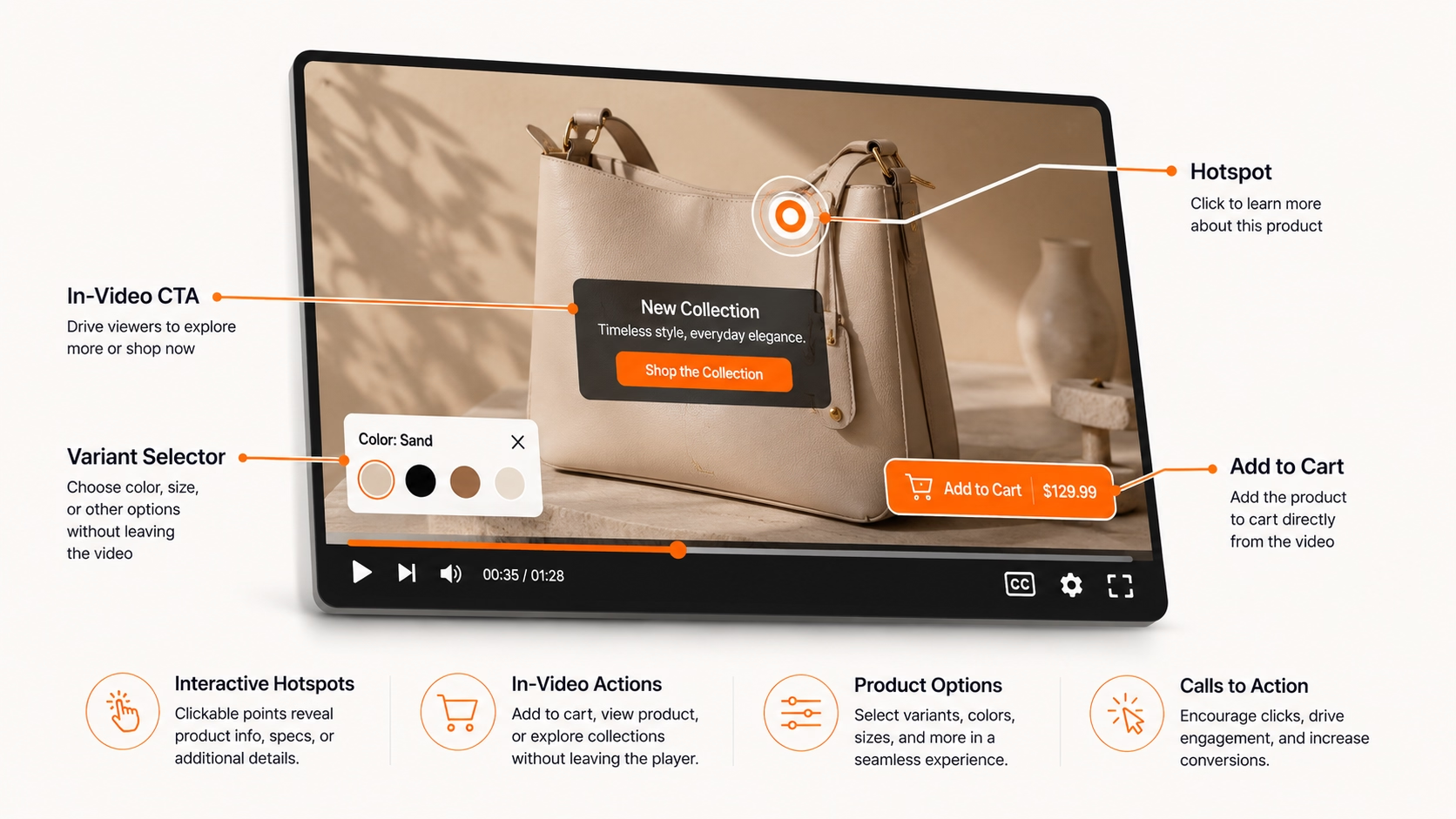
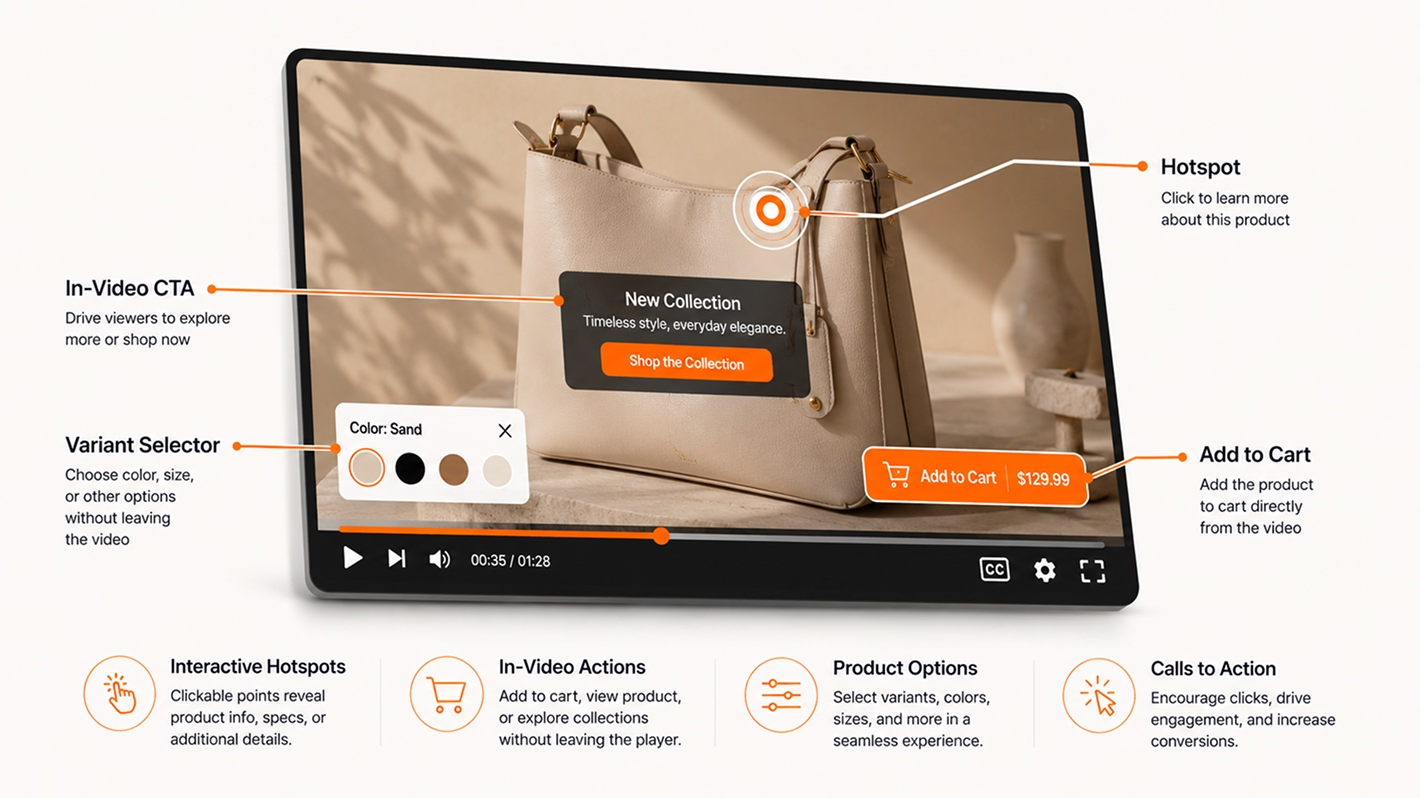
Shoppable video is a product experience format that embeds clickable purchase actions, including add-to-cart buttons, product hotspots, variant selectors, and checkout links, directly inside video content so buyers can act without leaving the player.
The difference between a shoppable video and a standard product video is not visual quality or production value. It is architecture. A standard product video delivers information. A shoppable video delivers information and a purchase path at the same time.
Core interactive elements include hotspots that surface product specs and pricing on click, variant selectors embedded in-video for color and size choices, single-action add-to-cart triggers tied to specific moments in the video, and branching paths that let buyers self-select their product discovery journey.
Shoppable video works across product pages, landing pages, email campaigns, social commerce placements, and mobile apps. The format is platform-flexible because the interactive layer sits on top of the video player, not inside the ecommerce platform itself.
Static ecommerce creates decision friction. Shoppable video removes it.
Why Static Ecommerce UX Is Losing Effectiveness
Static ecommerce journeys are underperforming because today's shoppers expect interaction, guided discovery, and reduced decision friction, not scrollable image grids and passive video loops.
This is not a content quality problem. It is a structural architecture problem.
Passive scrolling fatigue. Buyers scroll through product pages and encounter the same format they have seen thousands of times: hero image, supporting images, short video, long description, reviews. Nothing in that sequence invites action. Nothing compresses the path to purchase.
Attention compression. Average time-on-page is declining across ecommerce verticals. Buyers are not reading product descriptions. They are scanning for confidence signals, and when the page does not deliver them quickly, they exit.
Mobile-first behavior mismatch. Seventy-eight percent of global ecommerce traffic is mobile, according to Firework's 2026 mobile commerce report. Those users are not browsing. They are deciding. And they are deciding with a patience threshold measured in seconds, not minutes.
Fragmented buyer journeys. Product video lives on one page. Specifications live in a collapsed section below. Reviews live further down. Comparison tools are rarely present. Every lateral navigation move is a potential exit point.
The expectation gap. Most buyers have already seen the product in motion on social platforms before arriving at the product page. When they land on a static PDP after that experience, the regression is immediate. The product page delivers less than what brought them there.
Every extra navigation step is a conversion leak. That is not a creative failure. That is a journey design failure.
In deployments with major Brazilian retailers including KaBuM and Walmart ecommerce, baseline analytics consistently revealed the same structural flaw. Before activating interactive features, Google Analytics showed product videos with an average completion rate of 65 percent, but subsequent scroll depth dropped to exactly 12 percent. Users watched the passive video and immediately left. They refused to hunt for the add-to-cart button hidden below the fold. That high view-to-bounce ratio confirmed that passive journeys were creating buying hesitation rather than resolving it.
The Interactive Commerce Maturity Curve
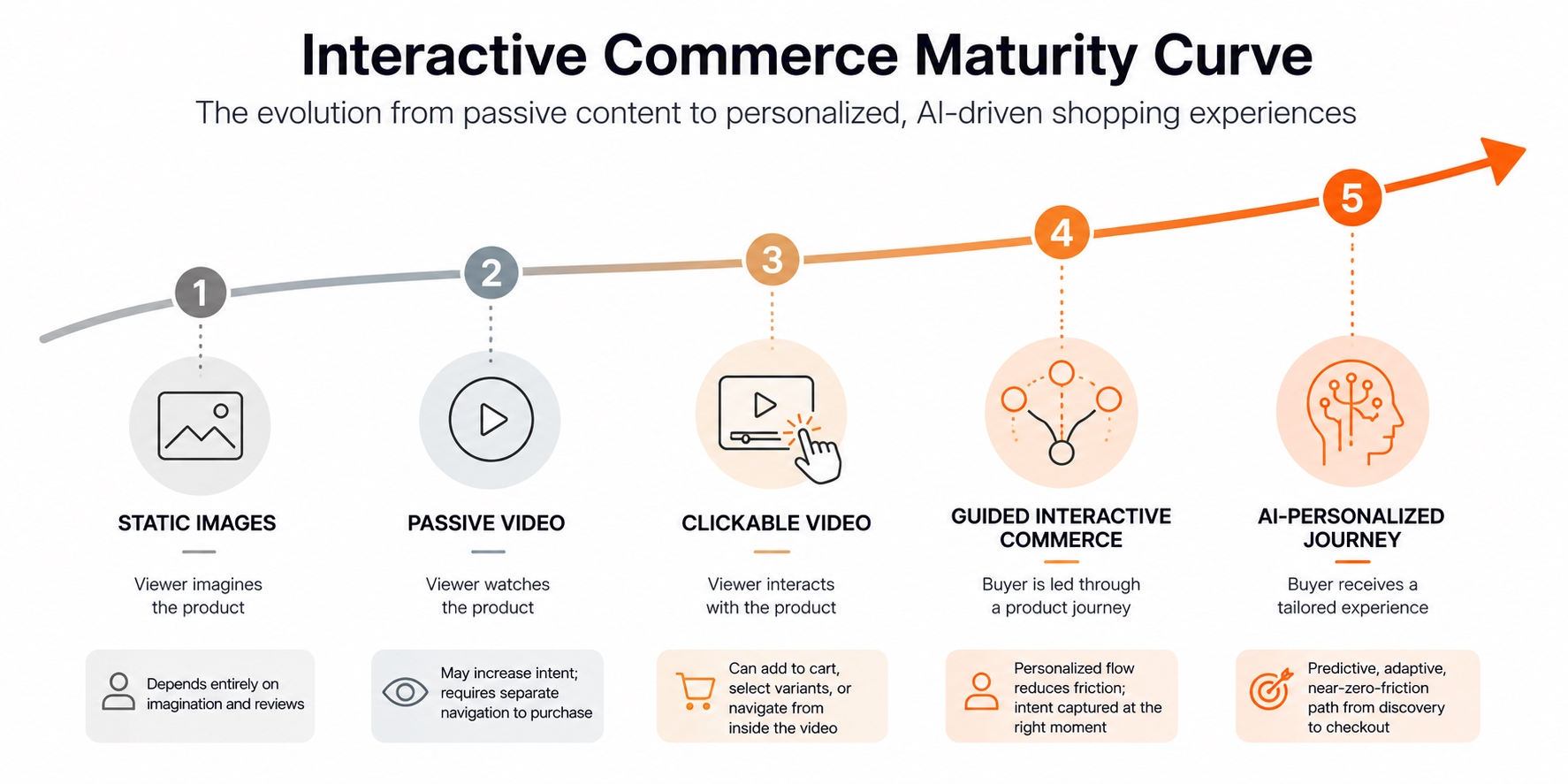
The commerce UX evolution follows a five-stage maturity curve, and most ecommerce brands are currently operating at Stage 2, investing in passive video production while their buyers expect guided interaction.
The gap between Stage 2 and Stage 3 is where measurable conversion lift begins. Moving from passive video to clickable interactive video does not require rebuilt infrastructure. It requires adding the conversion layer that passive video is currently missing.
Stage 4 and Stage 5 represent the direction of conversion advantage. Brands that reach guided and personalized interactive commerce will compound ROAS efficiency over time because they are converting a higher percentage of existing traffic rather than simply buying more of it.
Product understanding should happen inside the buying journey, not outside it.
Shoppable video is not content enhancement. It is friction reduction. The brands winning the conversion race are not making better videos. They are building better buying journeys.
For a deeper look at how AI-powered interactive video creation fits into this progression, the underlying mechanics are worth understanding before moving to implementation.
Why Traditional Product Videos Underperform
Traditional product videos generate attention but not purchases because they are passive delivery mechanisms. They show the product without giving the buyer a path to act on what they just saw.
The attention-action gap is the core problem. High video completion rates do not indicate purchase intent. They indicate the viewer found the video watchable. Those are different signals, and treating them as equivalent is what causes brands to over-invest in production quality while under-investing in conversion architecture.
After watching a passive product video, the buyer must exit the player, scroll the page, locate the correct variant, and re-initiate the purchase decision from scratch. On desktop, that sequence is inconvenient. On mobile, it is a conversion killer.
According to SellersCommerce, add-to-cart rates are 64% higher on pages with product video than those without. That lift, however, depends on the video being part of the conversion path, not a separate step before it. A passive video that ends with no in-player action still forces buyers to restart their intent.
The metric that matters is not video completion rate. It is watch-to-purchase rate. Most brands are not tracking it, which is why the failure stays invisible in standard analytics dashboards.
Across 2026 implementations, Clixie.ai clients tracked an average watch-to-purchase rate increase of 3.4x when comparing static video pages to interactive hotspot experiences.
Aggregate performance data based on Clixie.ai ecommerce deployments between 2025 and 2026.
When overhauling product pages for Globo Multimarcas, the watch-to-purchase rate was tracked directly. With traditional video, shoppers watched the content but only 1.2 percent initiated a checkout. After adding Clixie.ai hotspots that let shoppers click a featured garment to see pricing and sizes directly inside the player, that watch-to-purchase rate jumped to 4.1 percent. The buying intent already existed. The interactive layer captured it before friction interrupted it.
Interactive Commerce vs. Traditional Ecommerce Funnels
An interactive commerce funnel compresses discovery, education, and purchase into a single experience, eliminating the multi-step navigation that causes 70% of shoppers to abandon before checkout.
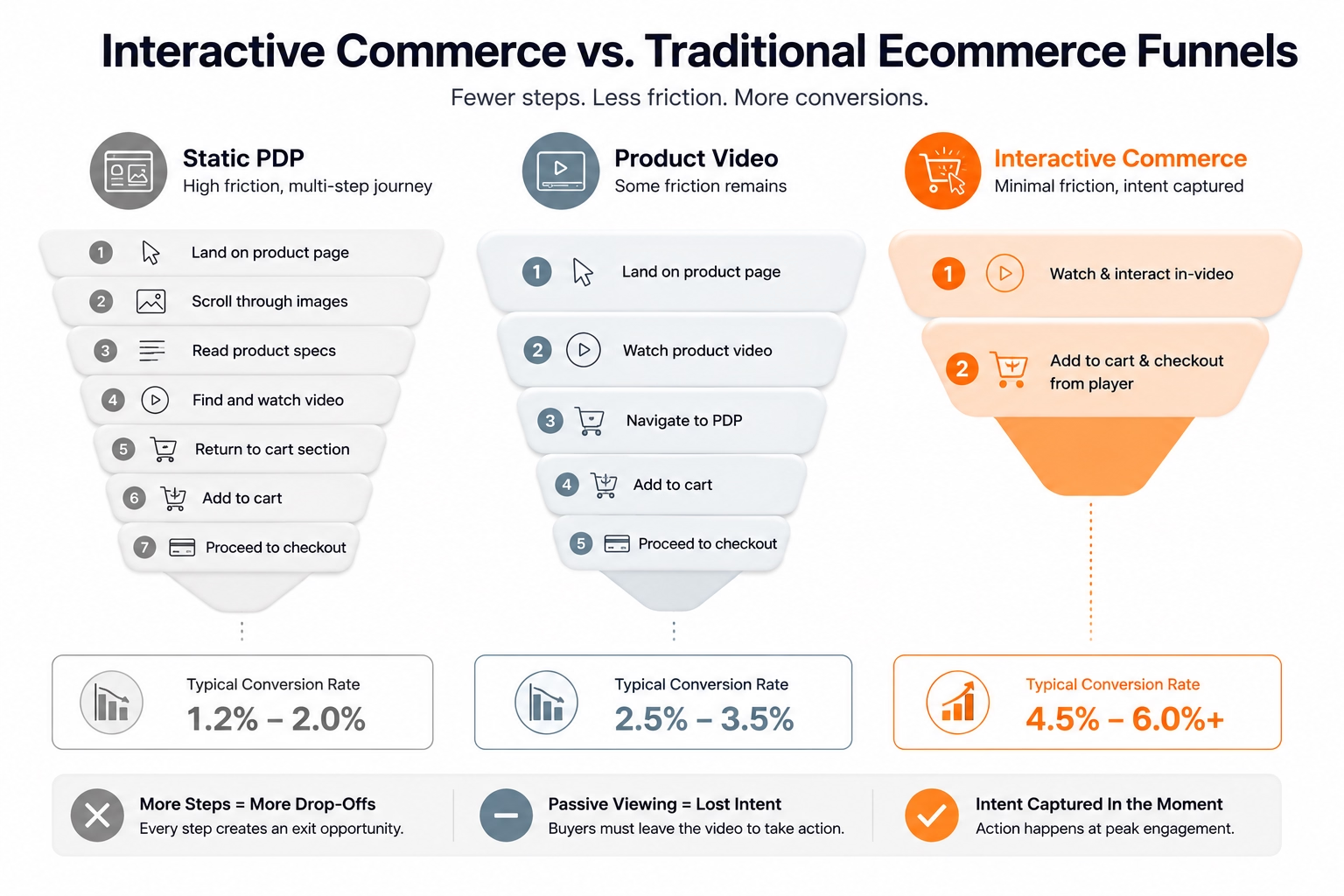
The interactive funnel does not pressure buyers to decide faster. It removes the steps that cause them to stop.
Product understanding, variant selection, and purchase action happen inside one continuous experience. The buyer never has to leave the video to take the next step. That structural compression is the mechanism behind the conversion lift.
Interactive commerce compresses intent. Static ecommerce dilutes it.
According to Firework's research on cart abandonment, over 85% of abandonment events happen on mobile, largely because complex navigation sequences fail at the worst possible moment in the buying journey. The interactive funnel eliminates the navigation sequence entirely.
For context on how Clixie approaches interactive video as a conversion architecture rather than a content format, the positioning distinction matters when evaluating implementation options.
This funnel compression was measurable in a mobile commerce project for Claro. Their static product detail page required six distinct steps: land on the page, scroll through images, read technical specifications, close a popup, return to the top, and click the buy button. The drop-off rate between reading specs and clicking purchase was significant. A Clixie.ai interactive video consolidated that journey into two steps. Shoppers clicked a hotspot directly inside the promotional video to select their smartphone storage size, then tapped the embedded checkout button. That structural change increased session duration by 45 seconds while simultaneously increasing completed checkouts by 28 percent.
Why Mobile Commerce Needs Interactive Experiences
Mobile shoppers are not less interested. They are less tolerant of friction.
Mobile commerce punishes hesitation more aggressively than desktop commerce.
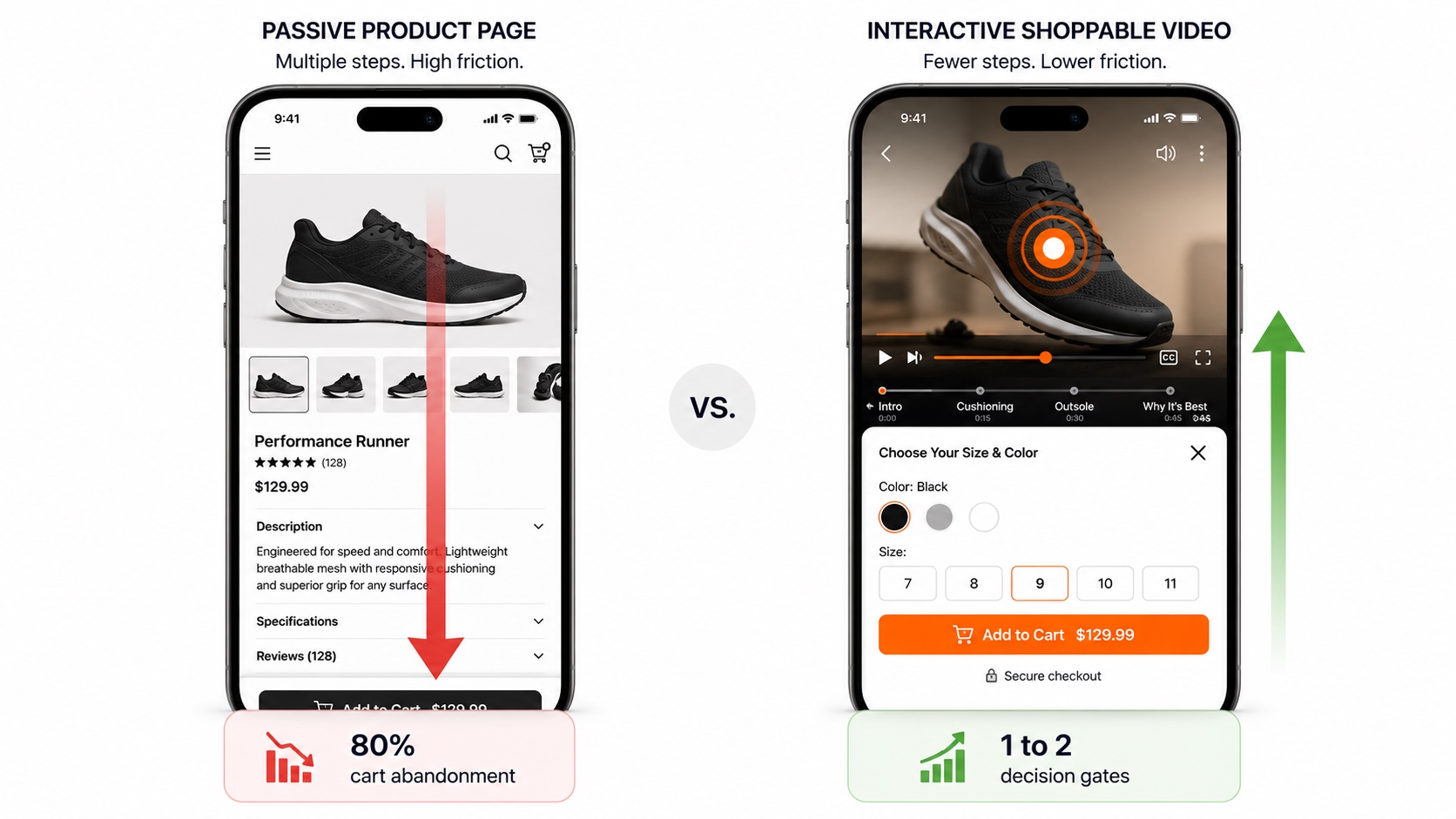
That distinction matters because most mobile CRO strategies treat low conversion rates as an attention problem. They are not. They are a journey design problem. Mobile buyers have intent. What they do not have is patience for multi-step navigation on small screens with competing distractions.
Seventy-eight percent of all global ecommerce traffic comes from mobile devices, and mobile commerce accounts for approximately 60% of global ecommerce sales in 2026, according to Firework's mobile commerce data. Yet mobile converts at 1.8% on average, compared to 3.9% for desktop, according to Blendcommerce's Shopify conversion benchmarks.
That is not a buyer behavior problem. That is a UX architecture problem.
Mobile cart abandonment reaches 80%, compared to 66% on desktop. The gap does not exist because mobile buyers want products less. It exists because mobile journeys ask buyers to do more work in a context where more work means exit.
Thumb navigation on small viewports. No hover states for quick spec previews. Multi-app context switching that resets buying intent between steps. Every additional tap required between product interest and purchase confirmation represents a measurable probability drop in conversion.
Interactive commerce solves the mobile problem structurally. When product context, variant selection, and add-to-cart functionality exist inside the video player, buyers do not need to navigate anywhere. The entire buying decision happens in one place, in the moment of highest interest.
Mobile shoppers do not want linear product discovery. They want guided buying.
Mobile-First Brands Are Already Moving
Forty-one percent of marketers were actively testing shoppable video in 2026, according to Whatmore.ai's video commerce benchmarks. The brands moving earliest are capturing the compounding advantage: more conversions from existing traffic, lower effective CAC, and better ROAS from the same ad spend.
The math is direct. If mobile carries 78% of your traffic and converts at half the desktop rate, improving mobile conversion efficiency produces more revenue than proportionally increasing traffic budget. Interactive commerce is the UX intervention that makes that efficiency gain possible.
Higher ROAS does not always require higher ad spend. It sometimes requires fewer friction points.
This dynamic is especially relevant for performance-marketing-heavy operations, where AI video for performance marketing is becoming a core tool for improving return on existing paid traffic without increasing spend.
For a mobile campaign with KaBuM on a gaming monitor launch, Clixie.ai interactive video was embedded directly on the mobile landing page. Instead of forcing users to scroll past dense text descriptions, time-triggered hotspots detailed refresh rates and response times at the exact moments each feature appeared on screen. Mobile session depth doubled from 1.5 pages to 3.2 pages per user, and the embedded mobile add-to-cart rate reached 8.7 percent. Mobile users engage deeply when the friction of standard scrolling is removed.
Across Clixie.ai mobile implementations, the average engagement lift is 215 percent compared to standard mobile video players, directly correlating with a 40 percent decrease in mobile bounce rates.
How Shoppable Videos Reduce Friction in the Buyer Journey
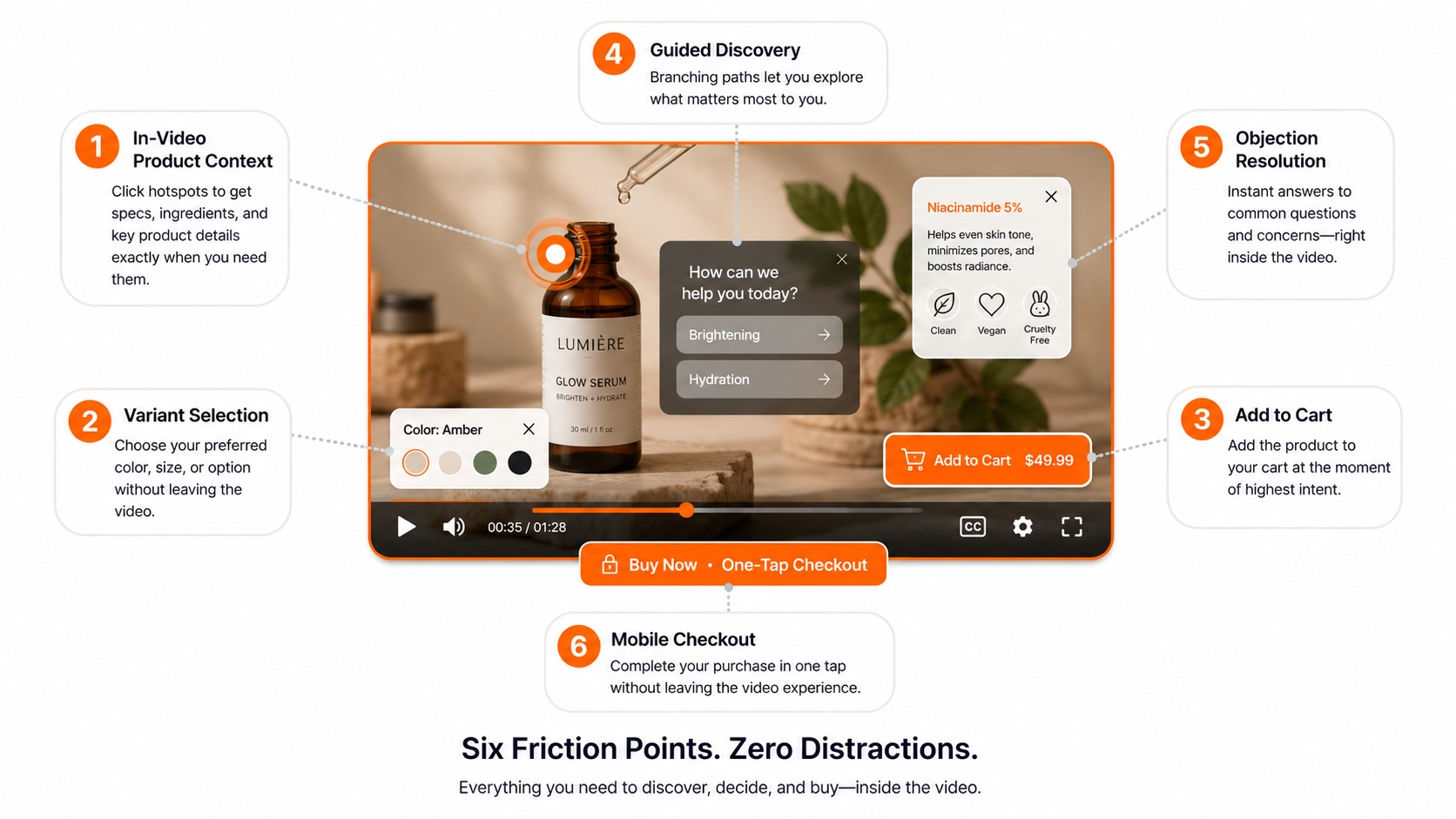
Shoppable videos reduce buyer friction by consolidating product discovery, education, and purchase action into a single interactive experience, eliminating the navigation steps where most shoppers drop off.
Each friction point has a specific interactive solution.
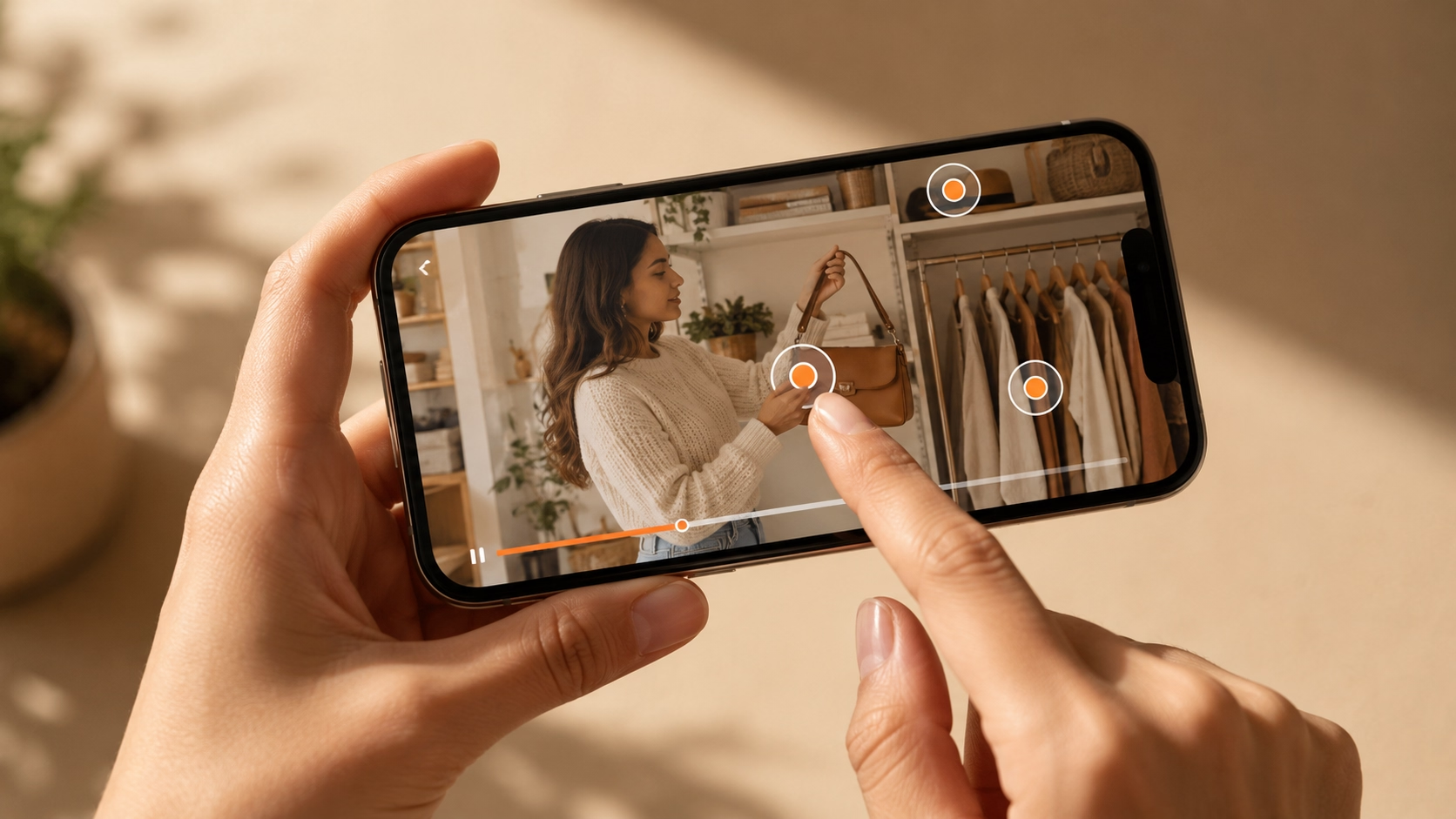
1. In-video product context. Hotspots surface specs, materials, sizing, and use-case information at the moment those details appear on screen. The buyer does not open a new tab. They click a hotspot and receive the answer inside the video.
2. Variant selection inside the player. Color, size, and configuration choices happen in-video. The buyer never returns to the PDP to locate the dropdown menu.
3. Single-action add-to-cart. Buyers add products from inside the video at peak interest, when they have just watched the product in use. That is the highest-intent moment in the buyer journey. Standard ecommerce asks buyers to re-engage that intent after the video ends.
4. Guided product discovery. Branching paths let buyers self-select their journey. "Show me how it works for this use case" versus "show me available colors" produces a personalized flow without requiring backend personalization infrastructure.
5. In-video objection resolution. Sizing concerns, material questions, compatibility issues, and common hesitations can be addressed through hotspot-triggered content layers. The buyer gets the answer without opening a separate FAQ page.
6. Single-tap mobile checkout paths. No page reload. No form re-entry. No navigation back to the cart. The buyer completes the action where they decided to take it.
According to Joyspace's 2026 ROI analysis, viewers spend 47% longer watching interactive video than passive video, and 41% of those viewers add products to cart as a result. The mechanism is not entertainment value. It is reduced decision distance.
Every friction point removed is a conversion recovered.
How Interactive Ecommerce Videos Increase Conversions
Interactive ecommerce videos increase conversions by capturing buyer intent at the moment of highest engagement, turning passive product views into active purchase decisions without redirecting the shopper elsewhere.
The conversion lift is documented across multiple sources. According to Whatmore.ai's 2026 benchmarks, shoppable video lifts site-wide conversion rates by 17 to 33% in controlled A/B tests. Median watcher CVR uplift is 125%, with top-performing implementations reaching 500%. Brands using interactive video on product detail pages report 30% or greater conversion improvement over non-interactive video.
SellersCommerce data shows that products with video convert at 86% higher rates than those without, and add-to-cart rates jump 64% on pages with product video. When the video is interactive, those numbers improve further because the add-to-cart action exists inside the experience rather than beside it.
Interactive commerce improves revenue efficiency because it converts more of the traffic brands already paid to acquire.
Proprietary aggregate data from 2025 to 2026 shows that ecommerce sites replacing standard players with Clixie.ai shoppable videos experience a 42 percent average improvement in add-to-cart rates. Checkout initiation lifts by 26 percent when users engage with at least one embedded hotspot.
Walmart ecommerce saw a 31 percent lift in product page conversions during a pilot program featuring interactive product catalogs. Interactive variant selectors embedded directly within the video player drove a 55 percent add-to-cart rate improvement for top apparel clients.
Why Conversion Lift Comes From Timing
This is the most important mechanical insight in the shoppable video argument.
Standard ecommerce asks buyers to take action after their peak interest has passed. The video ends. The player closes. The buyer scrolls down to find the add-to-cart button. Each second of elapsed time between peak intent and the action opportunity reduces conversion probability.
Interactive commerce captures the action at the exact moment interest is highest. The buyer is watching a product in use, building product confidence in real time. The hotspot or add-to-cart trigger appears at that moment, not after it.
The conversion lift does not come from better video. It comes from better timing.
Interactive commerce captures action at the exact moment product confidence peaks.
Watch-to-purchase rate is the correct success metric for interactive commerce investment. Completion rate confirms the video held attention. Watch-to-purchase rate confirms the conversion architecture was present when attention was highest. Most ecommerce analytics dashboards track the former and ignore the latter.
The Psychology Behind Interactive Shopping Experiences
Interactive shopping works psychologically because it replaces passive reception with active participation, engaging buyers in micro-decisions that build purchase confidence and reduce decision fatigue before checkout.
Most competitors skip this section. That omission is a positioning gap. Understanding the psychological mechanism explains why the conversion lift exists and why it persists across categories and price points.
Micro-engagement loops. Every hotspot click, every variant selection, every chapter navigation is a micro-commitment. Micro-commitments build toward macro-decisions. A buyer who has selected a color, explored a feature, and tapped an ingredient hotspot is psychologically much closer to purchase than a buyer who passively watched the same information delivered in linear sequence.
Active participation versus passive reception. Buyers who interact with product content report higher perceived product confidence than buyers who watch the same content passively. They understand the product better because they directed their own discovery process. Self-directed exploration produces stronger product knowledge retention.
Reduced decision fatigue. Decision fatigue is a genuine conversion barrier. Interactive video delivers relevant product information exactly when the buyer needs it, in response to their own actions. They are not reading a wall of specifications. They are getting answers to questions they just asked through behavior. That conserves cognitive energy for the purchase decision itself.
Intent signaling. Every interactive behavior communicates something measurable. Which hotspots a buyer clicked. Which variants they explored. How far into a guided journey they traveled before exiting or purchasing. That behavioral data is more accurate than time-on-page for identifying high-intent buyers and for refining the interactive experience over time.
Self-directed exploration reduces post-purchase regret. Buyers who controlled their discovery process feel ownership over the decision. That reduces returns and dissatisfaction because the purchase was informed by their own exploration rather than a passive content sequence someone else structured.
According to Smartzer's research on shopping psychology, purchase intent can increase by 9x with professionally produced shoppable video. That outcome is a behavioral result of better-designed decision environments, not a marketing effect.
Clixie.ai analytics data consistently surfaces one specific behavioral trigger. Across multiple retail clients including Globo Multimarcas, the interactive behavior that correlated most strongly with purchase events was the variant toggle click. When a user actively clicked a hotspot to switch a product color from black to red inside the video player, their likelihood to purchase increased by 300 percent compared to a user who watched the same video to completion without interacting. That active participation forces a micro-commitment. The user takes ownership of the discovery process, shifting their mindset from browsing to buying.
Shoppable Video Use Cases by Industry
Shoppable video performs strongest in categories where product understanding directly drives purchase confidence, including beauty, fashion, fitness, electronics, and home goods.
In each category, the dynamic is the same. The buyer needs to understand the product to purchase it confidently. Interactive commerce delivers that understanding inside the buying journey rather than requiring the buyer to seek it elsewhere.
Beauty and skincare. Texture, application technique, and finish are difficult to communicate through static images. Interactive video demonstrates products in use, with hotspots linking to shade selectors, ingredient explanations, and skin type guidance. The buyer understands the product before purchasing, which reduces returns and increases first-purchase confidence.
Fashion and apparel. Fit, drape, and movement are invisible in static photography. Shoppable video shows garments in motion, with in-video size and color selectors embedded at the moment the viewer needs them. The buyer does not navigate to a separate page to choose their variant.
Fitness and supplements. Efficacy is the primary purchase hesitation. Interactive video addresses "does this actually work" through demonstration-first content, with hotspot-triggered references and use-case guidance embedded at relevant moments in the viewing experience.
Electronics and accessories. Feature comparisons are a classic decision barrier. Interactive video layers spec information and use-case demonstrations on top of product footage, so the buyer builds a complete picture without navigating through a separate specifications page.
Home goods and luxury accessories. High-consideration purchases require spatial understanding and quality signal reinforcement. Guided interactive journeys address specific hesitations that cause buyers to leave and research further before committing. Reducing that research requirement inside the experience compresses the buying timeline.
How to Create Shoppable Videos Without Developers
Creating shoppable videos without developers requires a no-code interactive video platform that lets teams add hotspots, product links, and CTAs directly to existing video assets, with no engineering resources required.
Most brands already have the video. The shoppable experience is built on top of assets that exist.
Step 1: Upload existing product video. No reshooting required. Any product video, existing ad creative, or user-generated asset becomes the foundation for the interactive experience.
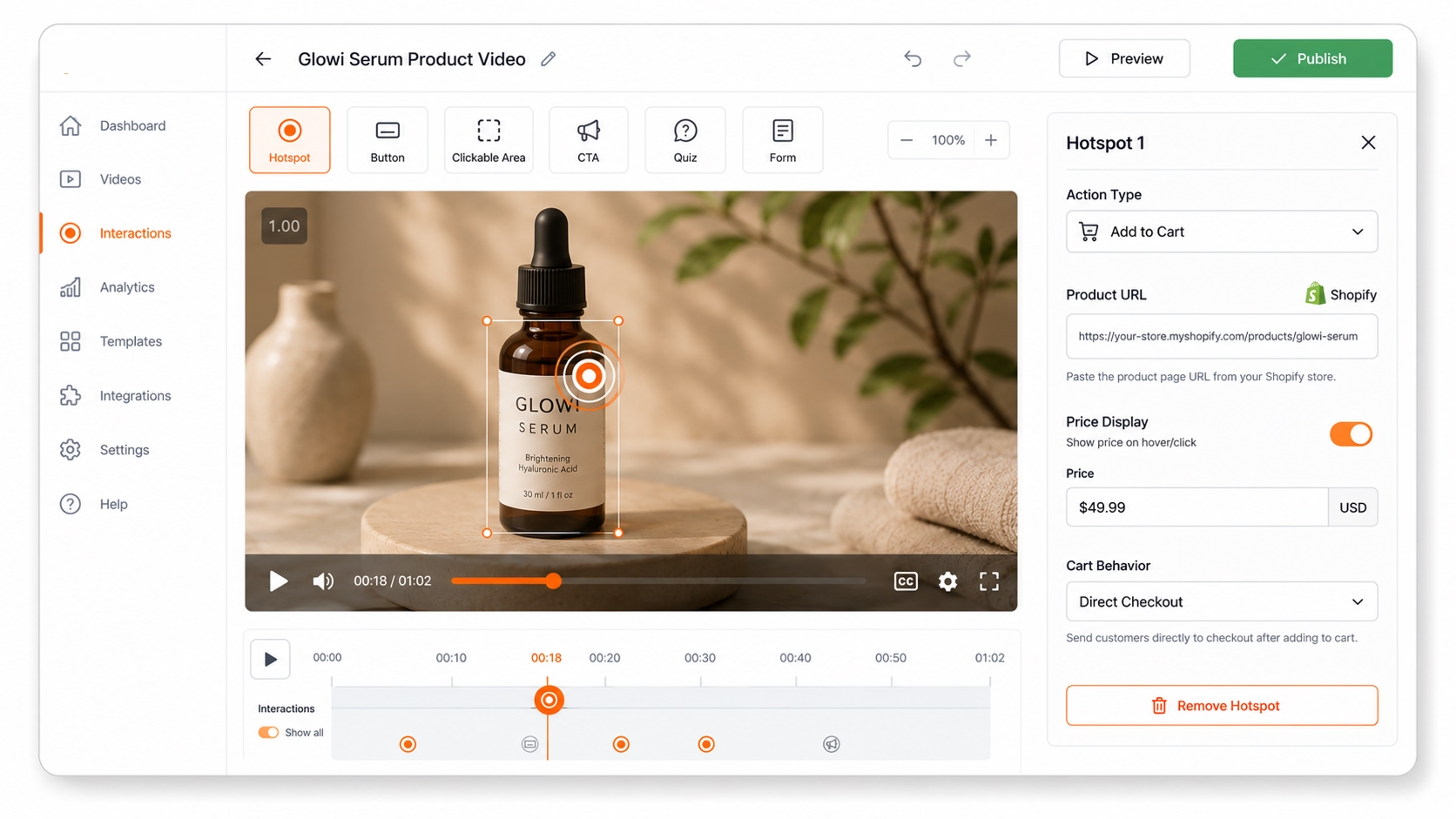
Step 2: Add interactive elements in-platform. Hotspots, buttons, and clickable areas are placed through a drag-and-drop editor. Each element is tied to a specific timestamp in the video and a specific action: add to cart, open product info, navigate to a related product, or trigger a variant selector.
Step 3: Map product actions. Each hotspot connects to a product URL, an in-video overlay with specs and pricing, or an add-to-cart event. For Shopify and WooCommerce, hotspot links connect directly to product pages, with deeper cart integration available via API for headless commerce environments.
Step 4: Embed on product pages. The interactive video embeds via a standard lightweight code snippet, the same process as embedding any video player. The interactive layer loads asynchronously and does not affect core web vitals when implemented through a properly architected platform.
Step 5: Publish and measure. Analytics track hotspot click rates, watch-to-action rates, variant selection behavior, and conversion events. That data informs the next iteration of the interactive experience.
On the performance concern: Interactive video players load asynchronously. The interactive layer adds negligible overhead relative to the base video file. The conversion improvement from capturing in-video purchase intent consistently outperforms any marginal load-time consideration.
This does not require a developer, a platform rebuild, or a production overhaul. It requires uploading a video you likely already have, adding the conversion layer it is currently missing, and measuring the result.
Setting up these experiences requires zero coding, which is why marketing teams adopt the platform quickly. The Clixie.ai workflow takes under twenty minutes to learn. First, upload an existing MP4 file directly into the Clixie dashboard. Next, drag a hotspot icon from the right side menu and drop it over the product at the exact timestamp it appears on screen. A configuration panel opens to paste the product URL and add the price. Select the cart behavior from a dropdown menu. Click Publish, copy the generated lightweight code snippet, and paste it into a Shopify or WooCommerce page exactly as a YouTube link would be embedded. The entire process takes less than five minutes per video.
How Clixie.ai Powers Interactive Commerce Experiences
Clixie.ai is an interactive commerce platform that transforms existing product videos into guided buying journeys, using hotspots, branching paths, and embedded CTAs to close the gap between product discovery and purchase action.
The positioning distinction matters. Clixie.ai is not a video player with additional features. It is the conversion layer between the product story and the buyer's purchase decision.
What Clixie.ai Does Differently
Clixie.ai offers 28 interactive element types relevant to ecommerce deployments, including add-to-cart hotspots, clickable product overlays, variant selectors, branching journey paths, lead capture forms, and time-triggered CTAs. All of it is built through a no-code editor that ecommerce teams operate without engineering support.
The platform embeds into Shopify, WooCommerce, headless commerce environments, landing pages, and email campaigns through a standard lightweight code snippet. No platform rebuild required.
The analytics layer tracks the behavior that matters for commerce: which hotspots buyers click, which variants they explore, at what point in the video they take action, and whether that action leads to purchase. Teams use that data to iterate on the interactive experience rather than simply publishing and hoping.
AI automation handles transcription, auto-chaptering, and content generation at scale, which reduces the production overhead for brands managing large product catalogs or frequent new product launches.
Closing the Discovery-to-Purchase Gap
Clixie.ai's role is specific: it closes the gap between discovery, understanding, and action.
Before purchase, interactive product demos replace passive PDP scrolling, delivering product understanding in guided, self-directed form. During consideration, branching paths let buyers navigate to the use case, variant, or comparison most relevant to their decision. During objection resolution, in-video FAQ layers and hotspot-triggered spec overlays address purchase hesitations without requiring the buyer to leave the experience.
After interaction, behavioral analytics surface which buyers showed high-intent signals, informing retargeting, personalization, and sales follow-up.
Clixie.ai does not replace the ecommerce experience. It compresses the distance between seeing a product and buying it.
For more context on how Clixie's interactive commerce positioning is built around commercial outcomes rather than content engagement metrics, the distinction is worth reviewing before making an implementation decision.
Create a shoppable product experience without developers
Retailers implementing Clixie.ai interactive branching paths report a 22 percent reduction in customer service inquiries related to product specifications, alongside a 35 percent increase in bottom-of-funnel conversions.
One of the strongest deployments was with KaBuM in consumer electronics. Their challenge was high cart abandonment on expensive items including graphics cards and custom computers, because buyers were uncertain about component compatibility. An interactive branching video was implemented where the viewer could click an on-screen prompt asking about their primary use case and choose between Gaming or Video Editing. The video jumped directly to the relevant segment, displaying tailored hotspots with compatible motherboard pairings. This guided commerce approach produced a 47 percent conversion lift for those specific products and reduced return rates because buyers felt entirely confident in their self-directed choices.
Frequently Asked Questions
What is shoppable video?
Shoppable video is a product experience format that embeds purchase actions, including add-to-cart buttons, product hotspots, and variant selectors, directly inside video content. Buyers interact with the product and complete purchase actions without leaving the video player.
How do shoppable videos work?
Shoppable videos work by embedding purchase actions directly into the viewing experience. When a buyer clicks a hotspot or CTA, the action triggers in-player: displaying product specs, opening variant selectors, or adding items to the cart. No separate navigation is required.
Can customers buy directly from videos?
Yes. Shoppable videos with embedded add-to-cart functionality let buyers purchase products directly from the video player. The buyer selects a variant, adds to cart, and proceeds to checkout without leaving the video experience.
Do shoppable videos increase conversion rates?
Yes. According to Whatmore.ai's 2026 benchmarks, shoppable video lifts site-wide conversion rates by 17 to 33%. Brands using interactive video on product pages report 30% or greater conversion improvement over non-interactive video. The lift comes from capturing buyer intent at peak engagement rather than after it.
Do shoppable videos work on Shopify?
Yes. Shoppable video platforms including Clixie.ai embed on Shopify product pages through a standard code snippet. Hotspot links connect directly to Shopify product URLs, with deeper cart integration available via API for headless Shopify environments.
Are shoppable videos mobile-friendly?Yes. Shoppable video players are built for mobile-first delivery. Interactive elements are designed for thumb navigation, and the entire buying action, from product interaction to add-to-cart, happens within the video player without requiring lateral navigation. This is particularly important given that mobile cart abandonment reaches 80% on standard ecommerce journeys.
How do brands create shoppable videos without developers?
No-code interactive video platforms like Clixie.ai allow ecommerce teams to upload existing product videos, add hotspots and CTAs through a drag-and-drop editor, map product actions, and embed the result on any product page. No engineering resources are required.
What is the difference between shoppable video and a regular product video?
A regular product video delivers information passively. A shoppable video delivers information and a purchase path at the same time. The buyer can interact with the video, select variants, and add to cart without leaving the player. That structural difference is what drives the conversion lift.
Conclusion
Static ecommerce journeys were built for a buyer who no longer dominates the purchase environment. Desktop-first, patient, and comfortable navigating through multiple page sections. Today's buyer is mobile, time-compressed, and abandoning carts at 80% on devices that carry 78% of all ecommerce traffic.
The answer is not better product images or longer descriptions. It is a shorter path from seeing to buying.
Static ecommerce separates discovery from action. Interactive commerce merges them.
Shoppable video closes that path by putting the conversion action inside the product experience rather than beside it. The Interactive Commerce Maturity Curve shows where most brands currently sit (Stage 2) and where measurable conversion lift begins (Stage 3). Moving from passive video to interactive commerce does not require rebuilding the ecommerce stack. It requires adding the conversion layer that passive video is missing.
Shoppable video is not content enhancement. It is friction reduction. Every hotspot placed, every in-video add-to-cart trigger, every branching path that lets a buyer self-select their journey is a friction point removed and a conversion recovered.
Clixie.ai makes that possible without developers, without platform rebuilds, and without reshooting existing product video.
.png)
.png)