How Businesses Can Manage the Costs of AI-Powered Marketing
AI can reduce marketing costs, but subscriptions and usage fees add up fast. Learn 8 practical strategies to audit spending, optimize workflows, and boost ROI.


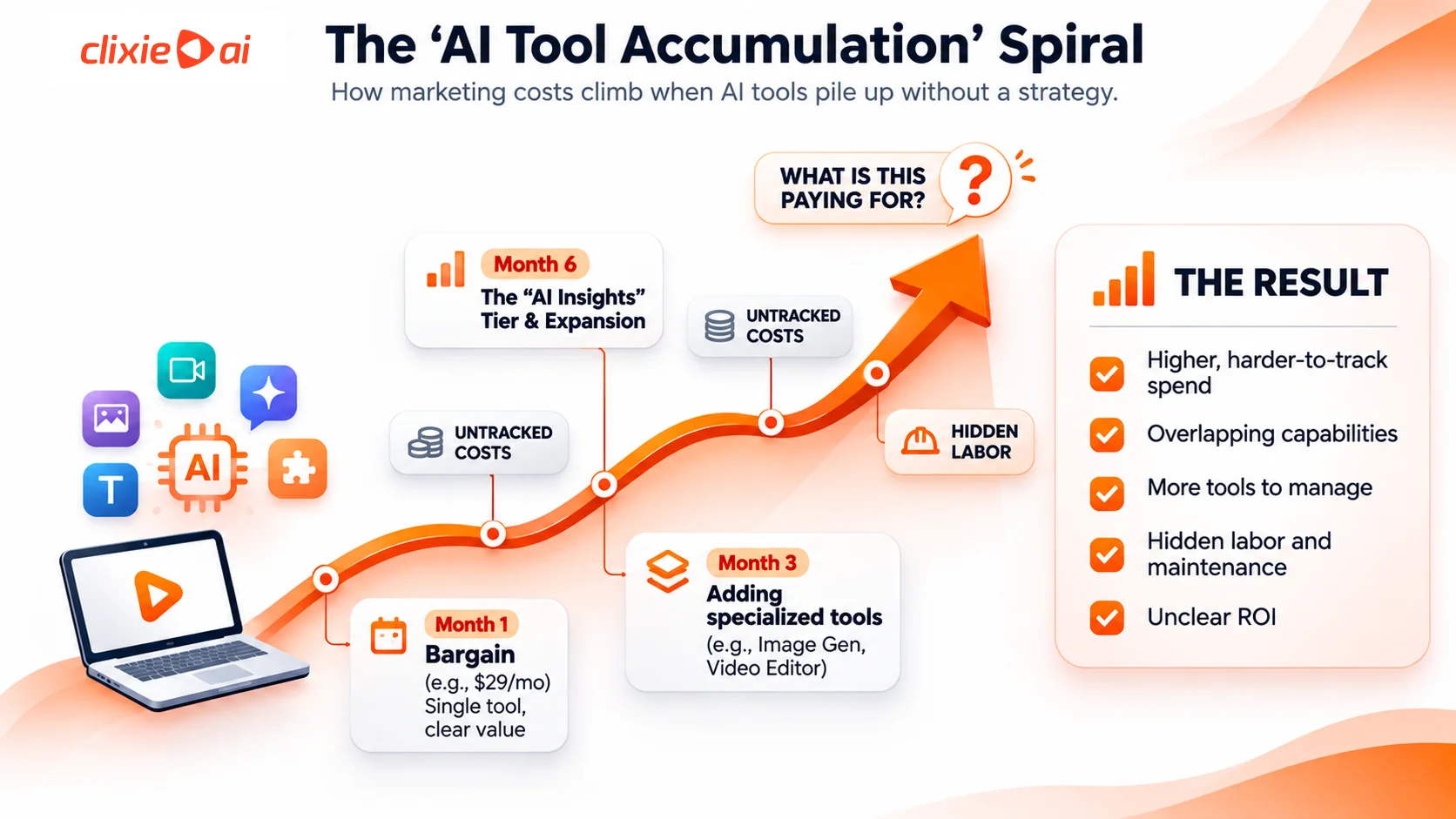
The first AI tool a marketing team adopts usually feels like a bargain. A monthly subscription costs less than an hour of freelance time, and it drafts emails, product descriptions, and ad variations in seconds.
Then the second tool arrives, and the third. Someone signs up for an image generator, someone else buys an AI video editor, and the analytics platform quietly adds an "AI insights" tier. Six months later, the bill has grown and nobody can say exactly what it is buying.
AI can genuinely lower the cost of producing marketing. It just doesn't manage its own costs. Here is how to keep the spending tied to results.
Know What You're Actually Paying For
AI marketing costs rarely show up as a single line item. They come in several shapes, and each one behaves differently as you scale.
Seat-based subscriptions charge per user per month. They are predictable, but they balloon when every team member gets a license "just in case."
Usage-based pricing charges for what you consume, often measured in tokens, credits, images, or minutes of video. It looks cheap at low volume and can surprise you at high volume, especially when an automation runs in the background.
Then there are the hidden costs. Someone has to write prompts, review outputs, fix errors, and connect tools to your existing systems. That labor is real, and it often outweighs the software itself.
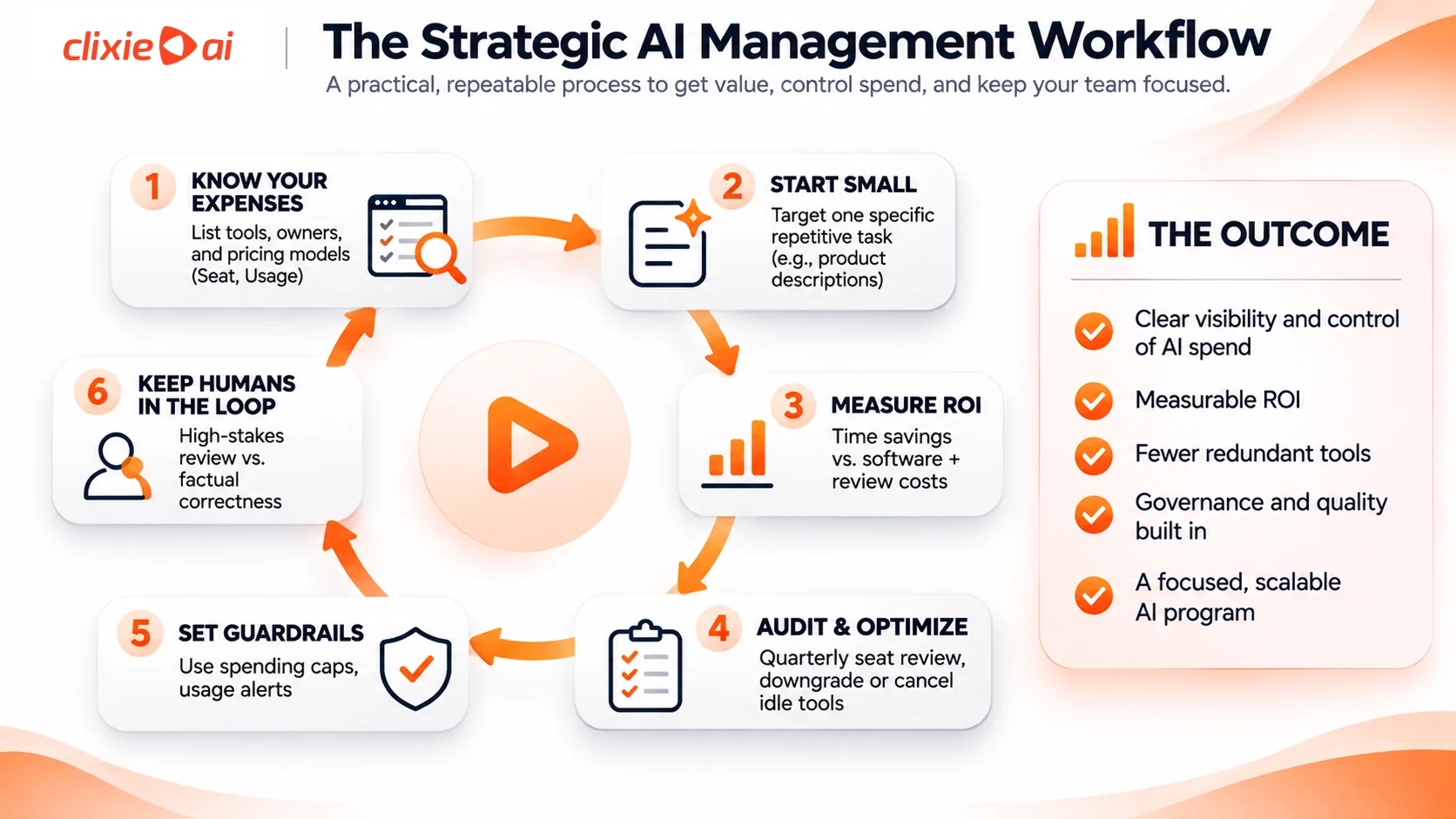
Before you cut anything, list every AI-related expense in one place: tool, owner, pricing model, monthly cost, and the job it does. Most teams find at least one tool nobody uses and two that do the same thing.
Start With One Workflow, Not a Platform
The most expensive way to adopt AI is to buy a broad platform and hope the team finds uses for it. The cheaper way is to pick one repetitive, measurable workflow and fix that first.
Good candidates share a few traits. The task happens often, follows a pattern, and has a clear quality bar. Writing first drafts of product descriptions, resizing creative for different ad placements, and summarizing customer reviews all fit.
Measure how long the task takes today, then measure it again with AI help. If the time saved is worth more than the tool plus the review time, expand. If it isn't, you have lost a month and a small subscription, not a year and a large contract.
Audit Seats and Subscriptions Every Quarter
AI tools change pricing and features quickly, and features that once required a separate product often get folded into software you already pay for. Your email platform, design tool, or ad platform may now include the capability you bought separately last year.
A quarterly review keeps this in check. Look at login activity, cancel seats that sit idle, and downgrade plans where the team only uses the basic tier.
Annual contracts deserve extra caution. The discount is tempting, but committing for twelve months to a tool in a fast-moving category can lock you into something a cheaper option overtakes by spring.
Put Guardrails on Usage-Based Pricing
Pay-as-you-go pricing is where AI budgets most often get away from teams. A single misconfigured automation that regenerates content on a loop can burn through a month of credits in a day.
Set spending caps and usage alerts wherever the vendor allows them. Most major AI providers offer some form of budget limit or notification in their account settings, and it takes minutes to configure.
It also pays to match the model to the job. Smaller, faster models handle classification, tagging, and short rewrites well at a lower per-task cost. Save the largest, priciest models for work where the quality difference actually shows, like long-form strategy content or complex analysis.
Know When Running Your Own Models Makes Sense
For most small and mid-sized businesses, paying a vendor per use is the right call. You avoid hardware, maintenance, and the specialist skills needed to run models yourself.
At high, steady volume, the math can shift. A business generating thousands of product descriptions, image variations, or personalized emails every week may find that running an open-weight model on its own hardware costs less over time than paying per request. It also keeps customer data in-house, which matters for some industries.
The upfront cost is the usual barrier. Teams that go this route often skip brand-new hardware entirely and look at used servers for AI workloads, since a few generations back still runs many open models comfortably at a fraction of the price.
Run the comparison honestly before committing. Include power, cooling, setup time, and the staff hours to keep everything running, not just the hardware price. If the payback period stretches past the point where your needs might change, stay with the vendor.
Keep Humans Where They Matter Most
Cutting human review is the fastest way to make AI marketing look cheap and the fastest way to make it expensive. One inaccurate claim in an ad, or a product description that promises a feature the product lacks, can cost more in refunds and reputation than a year of software.
The fix is not reviewing everything at the same depth. Tier your review instead. Anything customer-facing that makes a factual or legal claim gets a careful human check. Internal summaries and early drafts get a lighter pass.
The US Federal Trade Commission has warned businesses to keep their AI claims in check, and its ongoing enforcement actions on AI-related marketing claims show truth-in-advertising rules apply to every claim in your marketing, whoever or whatever wrote it. Budgeting for review is cheaper than budgeting for a correction.
Measure Return, Not Activity
AI makes it easy to produce more: more posts, more ad variations, more emails. Volume is not a result, though, and paying for output nobody reads is still waste.
Tie each AI workflow to a business metric you already track. For content, that might be organic traffic or time on page. For ads, cost per acquisition or return on ad spend. For email, revenue per send.
If a workflow increases output but the metric stays flat, the tool is creating work, not value. Pause it and redirect the budget to something that moves the numbers.
Build a Simple Policy
A short written policy saves money by preventing the sprawl that causes most overspending. It does not need to be long. It should answer who can buy AI tools, who approves new subscriptions, what data can be entered into which tools, and how outputs get reviewed.
If you want a structured starting point, the NIST AI Risk Management Framework offers a free, vendor-neutral way to think through risk and oversight. Most small teams only need a fraction of it, but it helps frame the right questions.
A Practical Place to Start
You don't need a big project to get AI marketing costs under control. Start this month with three steps.
First, list every AI tool and subscription your team pays for, with its owner and monthly cost. Second, cancel or downgrade anything unused, and set spending alerts on every usage-based account. Third, pick one workflow, measure it before and after, and let the results decide what you fund next.
AI rewards teams that treat it like any other investment: start small, measure honestly, and scale what works. The tools will keep changing. That habit is what keeps the budget in line.